By Jeroen Fürst, digital experience architect at TrueLime
Yesterday we did something new: The first ever Boye & Co “annual collab meeting” in Amsterdam felt like a mini CMS Summit Frankfurt: same open, curious energy, only in a smaller room with lightning talks on content, accessibility, AI and structure.
It was a packed agenda and below I have tried to share a brief summary of what we covered:
First up was Zurich-based inclusion expert Stefan Barac who showed how accessibility sits at the very base of usability and innovation, now backed by the European accessibility requirements that came into force in June 2025. Clear structure, less visual noise and proper semantic HTML help everyone, and the not so accessible TV we used for the presentations became a slightly painful but perfect live example of how often we still get this wrong.
Rafaela Ellensburg is an internationally recognised content engineering expert and she focused on content as a true strategic asset, something you intentionally structure, centralise and enrich instead of treating it as a byproduct. Her emphasis on ontology and meaning really stood out, because without clear concepts and relationships in your content model, AI has nothing solid to build on and you will struggle to get reliable outcomes at scale.
From a research angle, Gabriela Savaris of Booking.com showed that customer centricity is first and foremost a cultural choice. You can have sophisticated research and plenty of dashboards, but if your incentives still reward internal KPIs more than actual customer value, teams will naturally optimise for the wrong things, which makes an honest review of metrics and rewards unavoidable.
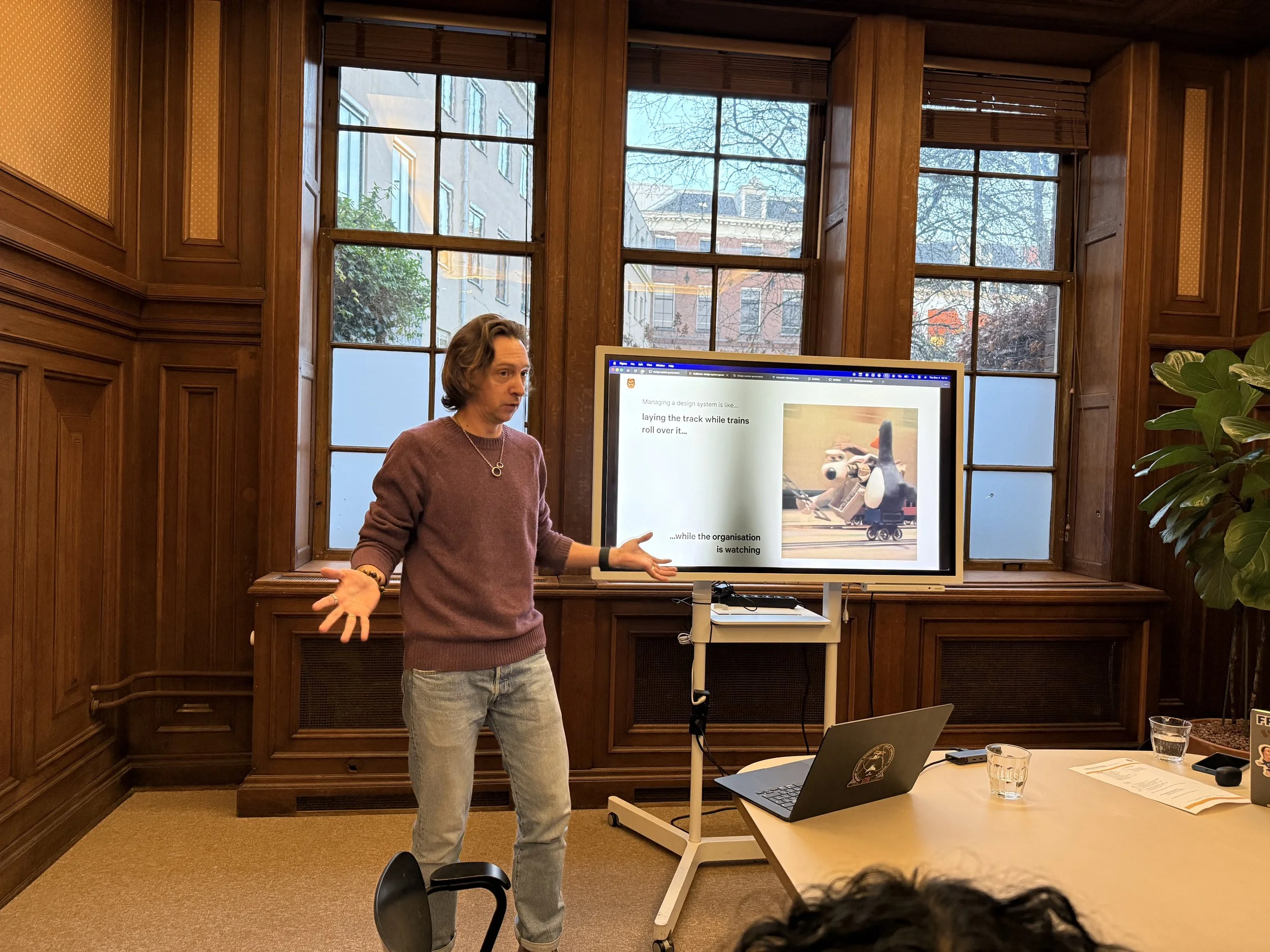
David Wieland is UX Design Team Lead at ABN AMRO Bank
With his experiences at ABN AMRO, UX Design Team Lead David Wieland made governance around design systems very tangible.
Once you move beyond a simple style guide, you need clear ownership, good documentation and, above all, shared language. His seemingly simple question, what do we actually mean when we say “component”, opened one of the most valuable discussions of the afternoon and showed how important aligned definitions are before you can scale anything across teams.

Victor Pikula works as Director, Customer Success Engineering at GitHub
On the AI and support side, Victor Pikula shared how GitHub uses AI to scale its support operation without lowering quality. Victor works as Director, Customer Success Engineering and is responsible for understanding and improving customer success journeys using automation, virtual support and self help.
AI handles a big part of the first line by suggesting answers and surfacing relevant docs, while support engineers can immediately improve that documentation through pull requests. The goal is to lift the knowledge level of every engineer, not to replace them, with well maintained source content as a non negotiable foundation for everything AI does.
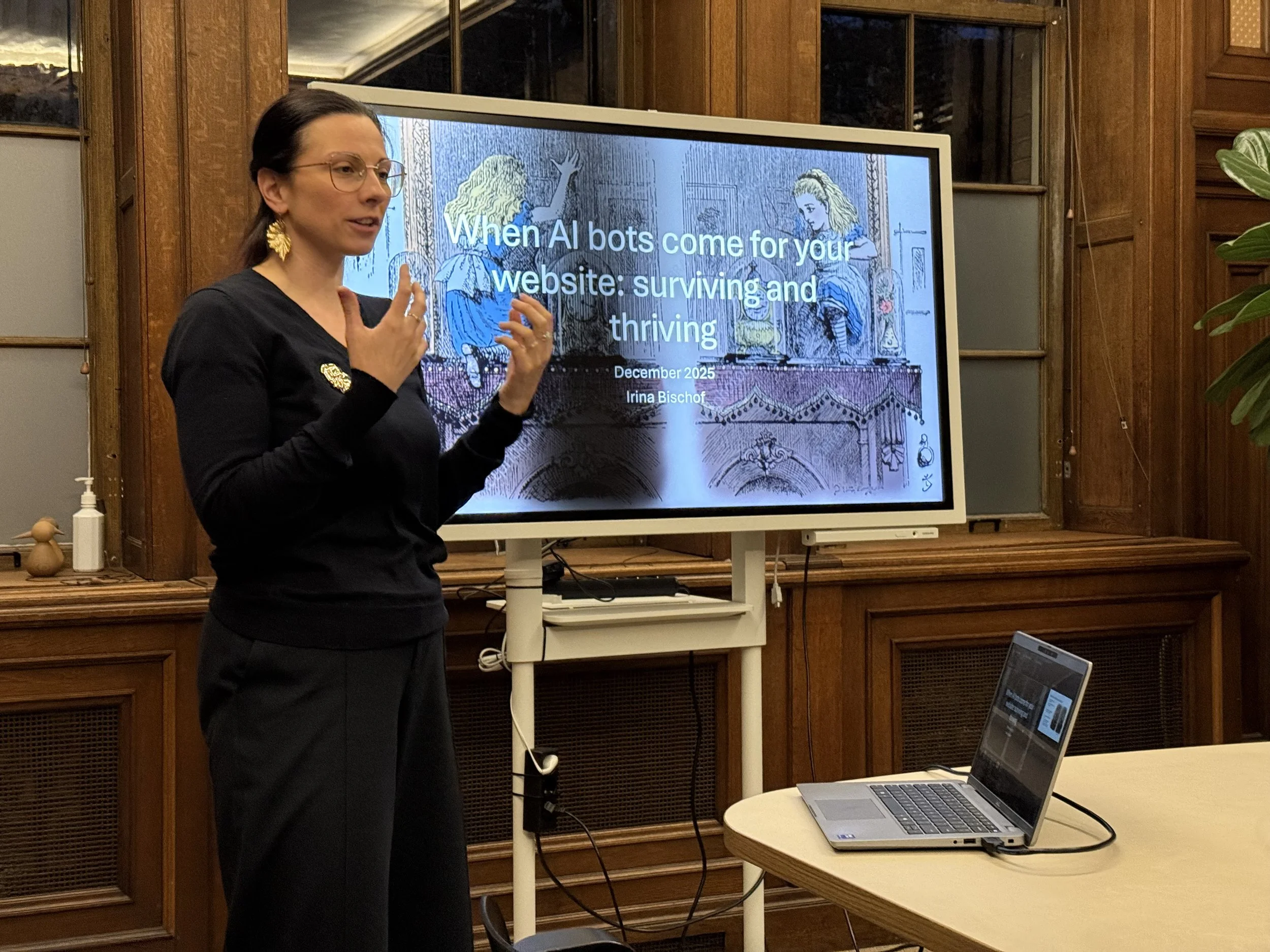
Irina Bischof is Senior Product Manager at Elsevier
Senior Product Manager Irina Bischof from Elsevier then pulled back the curtain on what happens when AI bots come for your website. On large information heavy properties, automated crawlers can generate a huge share of traffic, which has real impact on cost, performance and legal questions. Her story made it clear that we need more mature strategies for how we expose and protect content so that it works for both humans and machines.
Finally, Steven Pemberton, researcher at CWI and long time web standards expert, took us into the world of invisible structure. He showed how enormous the growth of largely unstructured data has become and how explicitly describing document structure lets machines do meaningful work with it. You can find his slides on his personal website, naturally created as HTML: Invisible Structure.
His remarks about how systems represent time naturally flowed into a group effort to think along with Frido van Driem from Timepath about the challenge of building timelines around year 0, a nice example of how the group collectively leans in on each other’s questions.
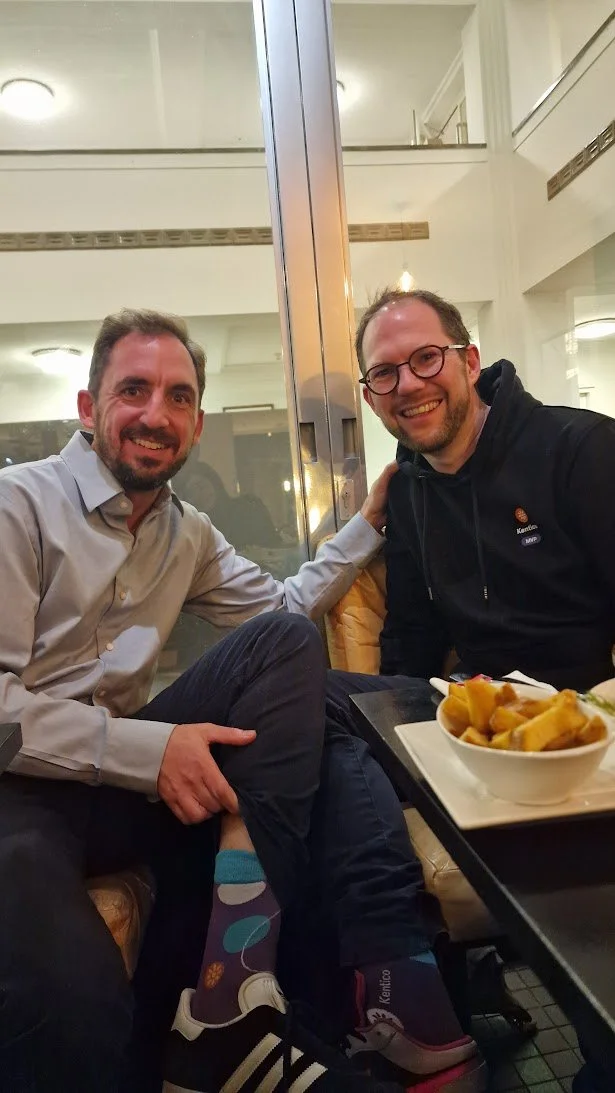
What I enjoyed most is how Janus creates a space where people share honest stories from day to day practice and how naturally the group leans in to help each other. The conversations just kept going over dinner, with AI as a recurring theme, and Steven’s line “English is not a programming language” was a perfect reminder of why AI sometimes gives surprising results.
It was also great to travel up to Amsterdam together with my former Truelime colleague Maarten van den Hooven, who now works at Kontent.ai, and to catch up with people like fellow Boye group member Maarten Fokkelman at Crossphase, CMS specialist Quirijn Slings and Xaviera Ringeling. As a fun detail Janus and I discovered we were wearing matching Kentico socks.
We definitely missed having Bart Omlo and Pieter Brinkman with us this time!
I am already really looking forward to the next meeting and picking up the conversations again.
Learn more and be a part of it
The conversation naturally continues in our peer groups at conferences in Europe and North America. Why not join us and be a part of it?
The European CMS Experts community meets next in January in Germany and then there is CMS Kickoff 26 held in January in Florida - the vendor-neutral industry conference.
We’ll naturally also do another end of year collab meeting in Amsterdam next year. Stay tuned!