The Utrecht Statement
We are the attendees of Open Source CMS 26: people from across the open source content management communities, the ones who build, maintain, host, and implement this software, and the organizations that run it every day. The software our communities make powers most of the web. In Utrecht, in October 2026, we met across our projects for the first time and agreed to keep working together.
We share customers, we share challenges, and we share a conviction: the organizations that choose open source own what they build. We commit to speaking with one voice, in our customers’ language, about everything that is true of all of us.
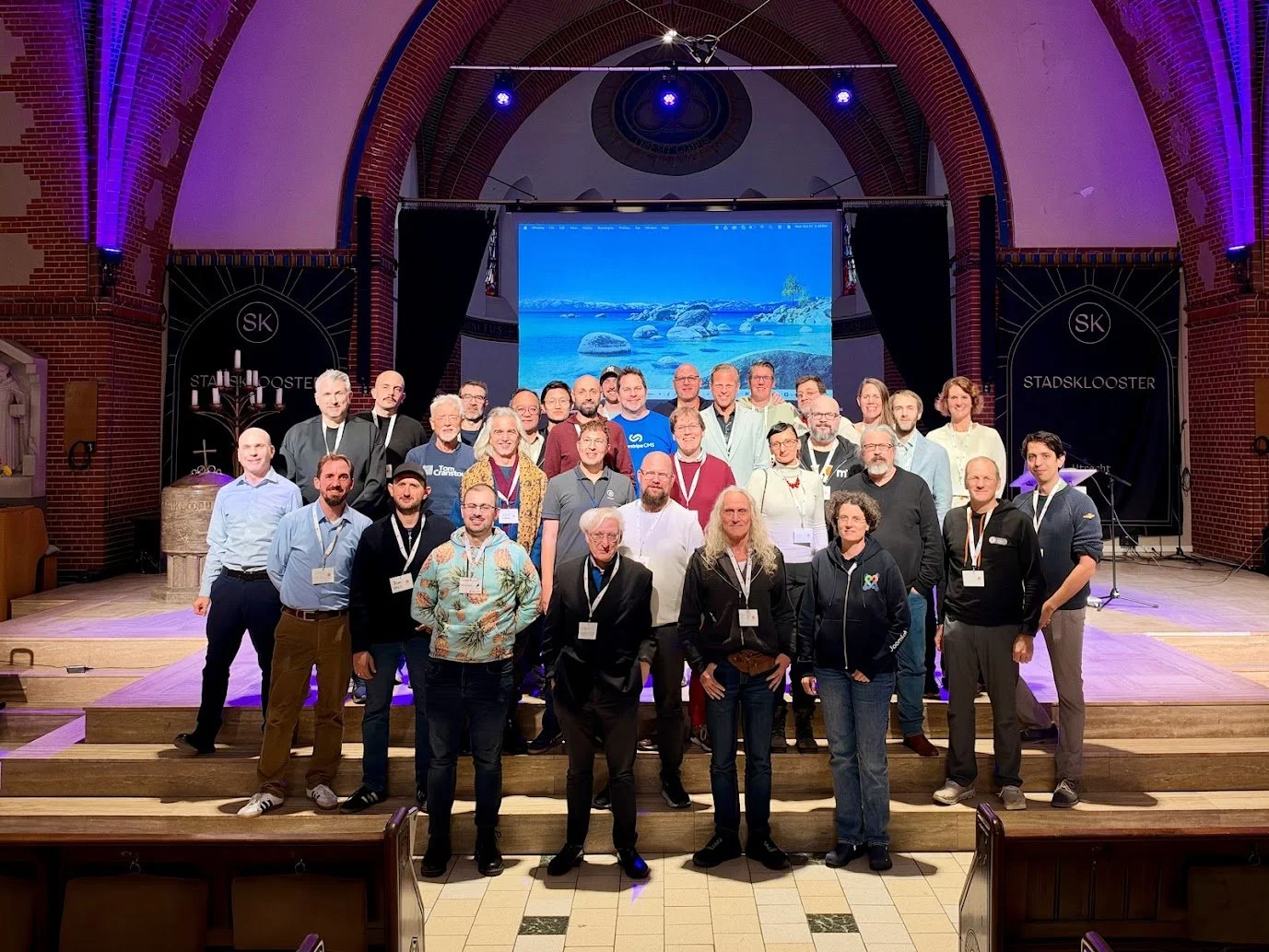
A group photo from the Open Source CMS 26 conference held in Utrecht
We invite everyone who builds with open source CMS to join us.
Many projects. One voice. Software you own.
Five commitments
Grow the market together.
A customer who chooses open source is a win for all of us. We bring organizations to open source first and help them find the right project second.One voice, in the customer’s language.
We build a shared vocabulary from the words customers already use. We create sales and marketing materials together and release them under permissive licenses, with attribution, for any project to reuse.Secure, compliant, and accessible, together.
We share security practices, accessibility work, and regulatory know-how, and we speak to policymakers as one industry.Open by design.
We commit to interoperability, open standards, and infrastructure more than one of us can use. Where we face the same problem, we name it and solve it once.Built to last.
We fund the work, bring in new contributors, look after the ones we have, and show what good governance looks like by practicing it.
What we believe
Open source gives an organization ownership of its digital platform, and ownership is what organizations are asking for.
They own their data. It lives where they decide, under the laws they choose, for as long as they need it.
They own their code. Every line can be read, audited, changed, and kept running by anyone they trust.
They own their roadmap. They set their own priorities, fund the capabilities that matter to them, and take part in where the software goes next.
Governments call this digital sovereignty. Enterprises call it control, resilience, and cost of ownership. We call it open source, and we will describe it in whichever words our customers already use.
Where we start
We start where our needs already overlap. Every project in this community maintains, secures, updates, hosts, and defends the same kind of software for the same kind of customer. Four areas are common to all of us:
Security. Coordinated response, shared practices, and a common way to talk to customers about risk.
Updates and maintenance. How we keep long-lived installations current, and how we explain that work to the people who pay for it.
Infrastructure. Hosting, tooling, and testing that more than one project can use.
Compliance and regulation. Accessibility, privacy, procurement, and the public-sector requirements that apply to all of us equally.
Each project keeps its own identity, governance, and roadmap. What we build together sits alongside them.
How we proceed
We meet twice in the next twelve months.
April 2027, online. We confirm who is carrying each of the four areas, with people from more than one project on each, and agree what working together looks like in each one.
October 2027, Utrecht, in person. At Open Source CMS 27, back in the same space, we show what we have done together, say what we learned, and set the direction for the following year.
Between those dates, the work belongs to the people who volunteer for it. By October we expect each area to have something real to show: a shared document, a joint practice, a piece of infrastructure in use. Small and real counts for more than large and planned.
Join us
This statement is open to anyone in the open source CMS communities who shares these commitments, whatever project they call home. Sign it, bring your community, and bring the problems you would rather not solve alone.
Utrecht, October 2026