
by Janus Boye
People working in similar roles often face similar challenges, yet rarely have a place where they can discuss them openly.
Inside their own organisations, conversations are shaped by internal priorities, reporting lines and expectations. At conferences and networking events, there are opportunities to exchange ideas and make connections, but often limited time to explore a difficult question in depth.
For many years, we've brought professionals together in Boye & Co groups to learn from one another. We've also spent years trying to find the right words to describe these gatherings. As meetups have become increasingly common, I've questioned whether that word captures what actually happens in our groups.
Meetups can offer thoughtful discussions, useful inspiration, strong communities and lasting relationships. A peer group offers all of that, with three characteristics at the heart of how it works: confidentiality, continuity and curation.
Confidentiality makes honest conversations possible
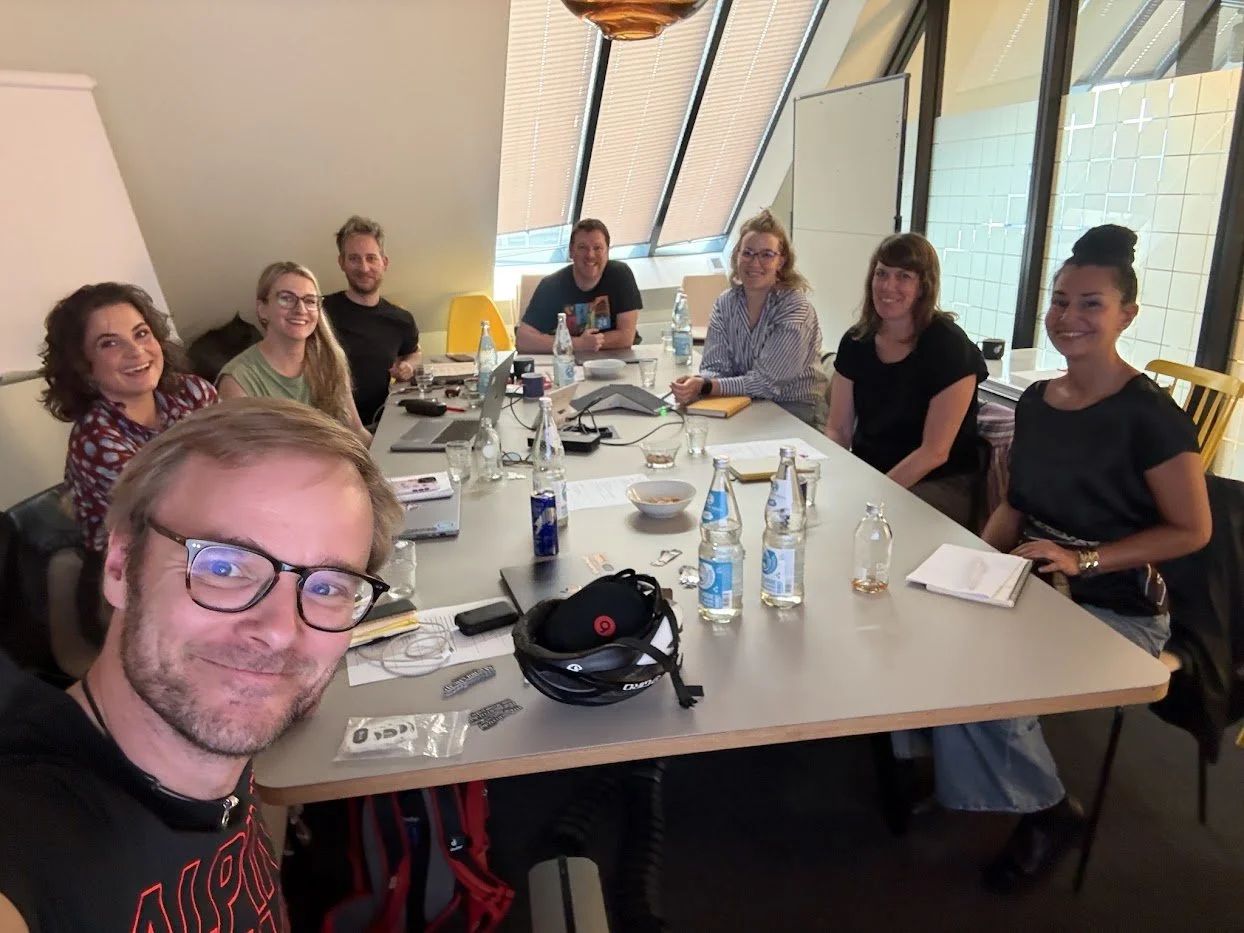
A photo from our recent Hamburg Design Leaders group meeting, led by Thorsten Jonas. To encourage open and honest conversations, our meetings are in person, with no live streaming or recordings.
Some of the most valuable conversations begin when someone admits that something isn't working.
Perhaps a project is struggling, a decision has proved difficult or an organisational change has created unexpected problems. These are precisely the situations where outside perspectives can help, but sharing them requires trust.
Members can share experiences without worrying that their comments will be repeated or attributed to them outside the group.
One of our German members, Florian Keitgen, Chief of Staff at digital agency b13 in Stuttgart, describes it like this:
"In a peer group, people don't have to prove they're the best or constantly sell their company, product or approach. They're comfortable sharing what doesn't work, where they don't have an answer yet, and what is genuinely keeping them busy."
Our groups are spaces without marketing and sales agendas. That matters because the most useful conversations aren't necessarily about success stories. They're often about unfinished work, difficult decisions and questions where nobody has a clear answer.
Continuity means picking up where we left off
A useful conversation can happen almost anywhere. The difference is what happens afterwards.
Imagine a member describing a difficult CMS migration or an attempt to introduce AI into an established workflow. At a one-off event, the conversation may end with useful advice. In a peer group, the same people meet again and can ask: How did that go?
Olivier Dobberkau, co-founder of Frankfurt digital agency dkd and President of the TYPO3 Association, has been part of our community for years. He puts it this way:
"Continuity is the right starting point. Members are peers with similar roles and questions, rather than an audience listening to speakers. 'How did that go?' is central to the format, so the time between meetings matters just as much as the meetings themselves."
Over time, members get to know one another's organisations, challenges and ambitions. They can return to unfinished questions, learn from what happened and build on previous conversations.
This also means following up between meetings, remembering open questions and giving members an opportunity to report back. We could certainly do more of that in our groups. Simply putting another meeting in the calendar isn't enough.
Curation brings the right people together
Who is in the room shapes what becomes possible.
Our groups bring together professionals with similar responsibilities, but different organisational backgrounds, experiences and perspectives. Members recognise one another's challenges while bringing approaches that others may not have considered.
Curation is about more than selecting people with matching job titles. We've learnt that a good group needs enough common ground for members to understand one another, but also enough diversity to challenge assumptions and introduce new perspectives.
Thoughtful moderation matters too. Our group leaders work with members to shape the agenda, encourage participation and connect discussions across meetings. They don't need to have all the answers, and neither do the members.
Everyone has something to contribute, and the most useful learning often comes from hearing how someone else approached a similar problem.
What makes a peer group worth returning to?
Confidentiality, continuity and curation reinforce one another. Together, they create the conditions for conversations that become more valuable over time.
Olivier suggested a question worth asking our members:
"What would they miss if the group turned into an open meetup?"
I'd like to explore that question further. We've been bringing people together for years, and I'm still learning from our members and group leaders about what makes a group work.
Perhaps you've experienced something similar in another professional community, or found different ways to build trust and keep conversations going.
I'd be interested to hear what makes a group worth returning to for you.