
By Janus Boye
It took me a long time to realise this.
For years, I believed it was all about getting the right people in the room. Find the best speakers, bring together smart participants, and the rest would follow. That still matters. Yet over time, it has become clear that the room itself plays a more active role than we often admit.
The environment shapes the conversation.
You can have capable people, a strong agenda, and a clear purpose. Still, conversations never quite take off. Even with a polished setup, something holds them back.
When space changes behaviour
We often treat venues as neutral containers. In practice, they are anything but.
A well-designed room quietly influences how people participate. Light, openness, proximity, and even small signals like seating arrangements all affect how comfortable people feel speaking up, listening, or challenging each other.
In a professional setting, these details can seem secondary. In reality, they shape the tone of the entire interaction. They influence who speaks, how long conversations last, and whether ideas are explored or left hanging.
In our work with peer groups, this becomes visible very quickly. The same group, with the same topic, can behave very differently depending on the setting.
Where the room shifts the conversation
A few recent experiences brought this into sharper focus.
In Aarhus at Godsbanen, the setting is a charming cultural venue that will host us again for Boye Aarhus 26. The former freight train halls have been repurposed into a creative hub, where the industrial character is still very present. There is a mix of activity around you. Workshops, exhibitions, and people working on their own projects. It feels less like a conference venue and more like a place where things are being made.
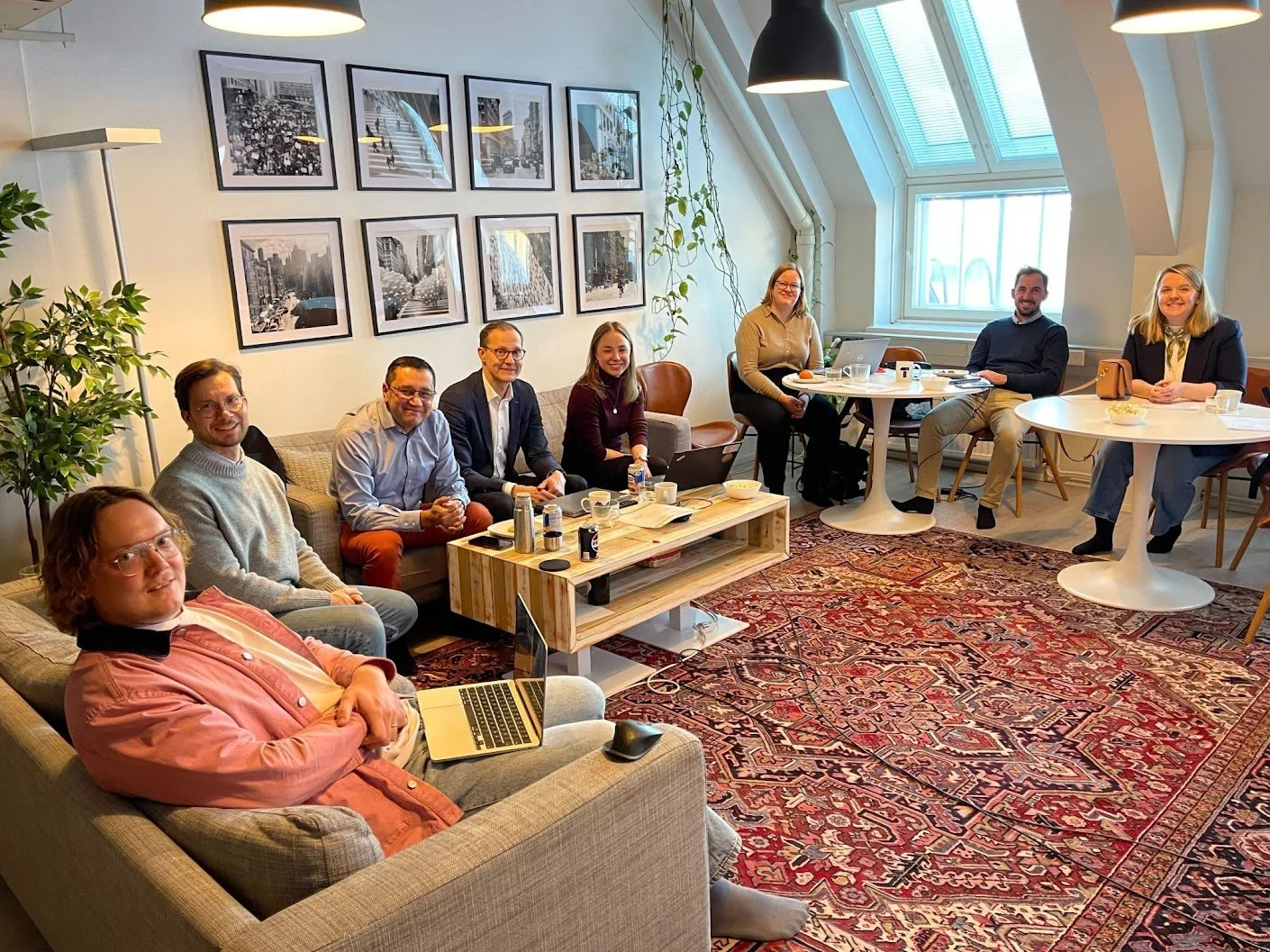
Helsinki peer group meeting with an informal, table-free layout and small signals like leaving your shoes off shape how people engage.
In Helsinki, during one of our peer group meetings hosted by Markus Bäckman at tech startup CHAOS, everyone took their shoes off. A small detail, but the tone shifted immediately. The conversation became more open, more relaxed, and more honest.
In London, a green garden room filled with light had a similar effect. People lingered. Discussions deepened. The space invited it.
At our annual CMS Kickoff at The James Museum in St. Pete, we gathered around a table rather than rows of chairs, surrounded by the museum’s collection of Western and wildlife art. The space is open and calm, with a different kind of atmosphere than a typical conference setting. That changes how people engage. It feels less like an audience and more like a shared working session.
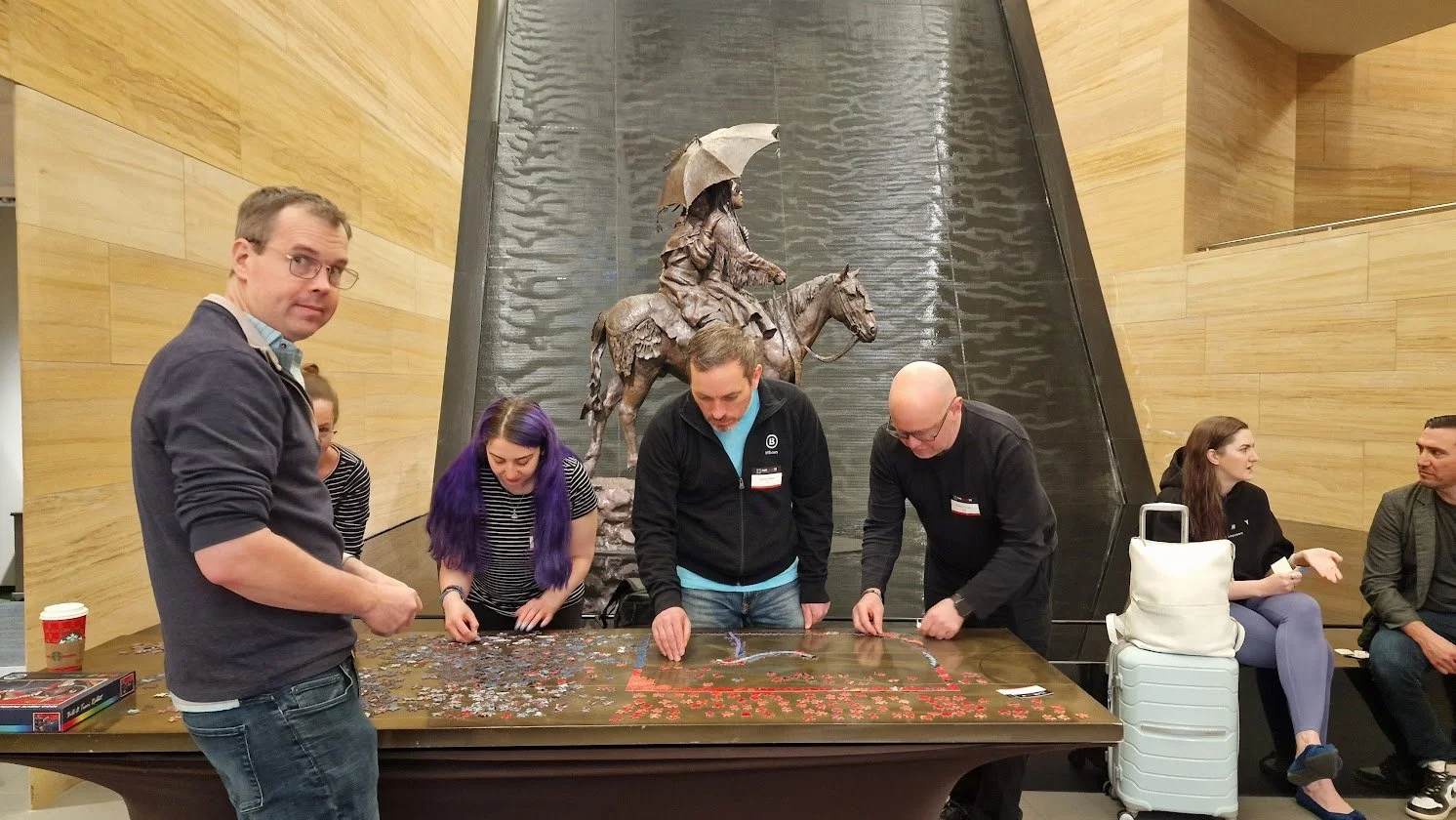
Each of these settings shaped behaviour in subtle but meaningful ways.
Designing for participation
This raises a more practical question. If space influences behaviour, how deliberately do we design for it?
In many organisations, venue selection is still treated as a logistical task. Availability, cost, and capacity tend to dominate the decision. These factors matter, but they say little about the kind of interaction a setting will support. The result is often a mismatch between intent and outcome. We ask for participation, but place people in environments that subtly discourage it.
For peer groups, this becomes more visible. The aim is not simply to exchange information, but to create the conditions where people can think together. That shifts the role of the room. It becomes part of how the work happens, not just where it happens.
In practice, this shows up in small but consequential ways. Layouts that reduce hierarchy rather than reinforce it. Proximity that makes it easier to join a conversation rather than observe it. Settings that allow discussions to stay with complexity a little longer, instead of pushing towards quick summaries.
These qualities are rarely accidental. They are the result of choices, whether conscious or not.
The room as part of the programme
Over time, this has become part of how we think about our own work.
For CMS Summit 26 in Frankfurt, for example, we are not just looking at content and speakers. We are also thinking carefully about the environment. The setting at the Museum für Kommunikation is part of how people will move, gather, and interact across the two days.
It influences how people arrive, how they settle, and how willing they are to contribute. It shapes whether a session becomes a presentation or a conversation.
In the right setting, people open up. Conversations become less polished, more real. That is where the interesting work tends to happen.
Finding the right venue
In the right setting, people open up. Conversations become less polished and more real, and the learning tends to stay with the group afterwards.
This is not only about the people involved. It is also about the conditions that make it easier to lean in, to challenge each other, and to contribute more than expected.
That is where venue choice starts to show up in what people actually do together.