
By Janus Boye
“I can’t join you in the morning, I have to work.”
“Sorry, I can only join from 5pm.”
I’ve heard versions of this for years.
I’m writing this on a Saturday morning, having travelled to an event I was invited to. Looking around, it brings back a familiar disconnect in how learning is treated across organisations.
In Scandinavia, learning is part of the working day. That is the norm. In many other places, it is something to fit in before or after “real work”. That difference may seem small, but it shapes how seriously learning is taken in practice.
When learning sits outside the work
In many organisations, learning is positioned as something extra. It sits outside delivery, outside deadlines, outside the calendar that defines what actually gets done.
The consequence is predictable. Learning becomes optional in practice, even if it is encouraged in principle.
When people are expected to deliver first and learn later, learning is pushed to the edges of the day. It happens when energy is low, attention is fragmented, and the conditions for reflection are weak. Over time, it becomes something you intend to do rather than something you actually do.
This is not a question of motivation. It is a question of structure.
What happens during the working day
Almost all of our meetings are deliberately placed during working hours. That has been the case since we held our first peer group meeting in Copenhagen in 2004.
It is when people are at their best. When the brain is fresh. When there is space to reflect, challenge assumptions, and take something in. The kind of conversations that change how you think rarely happen at 18:30 after a full day of calls, or during a weekend meant for recovery.
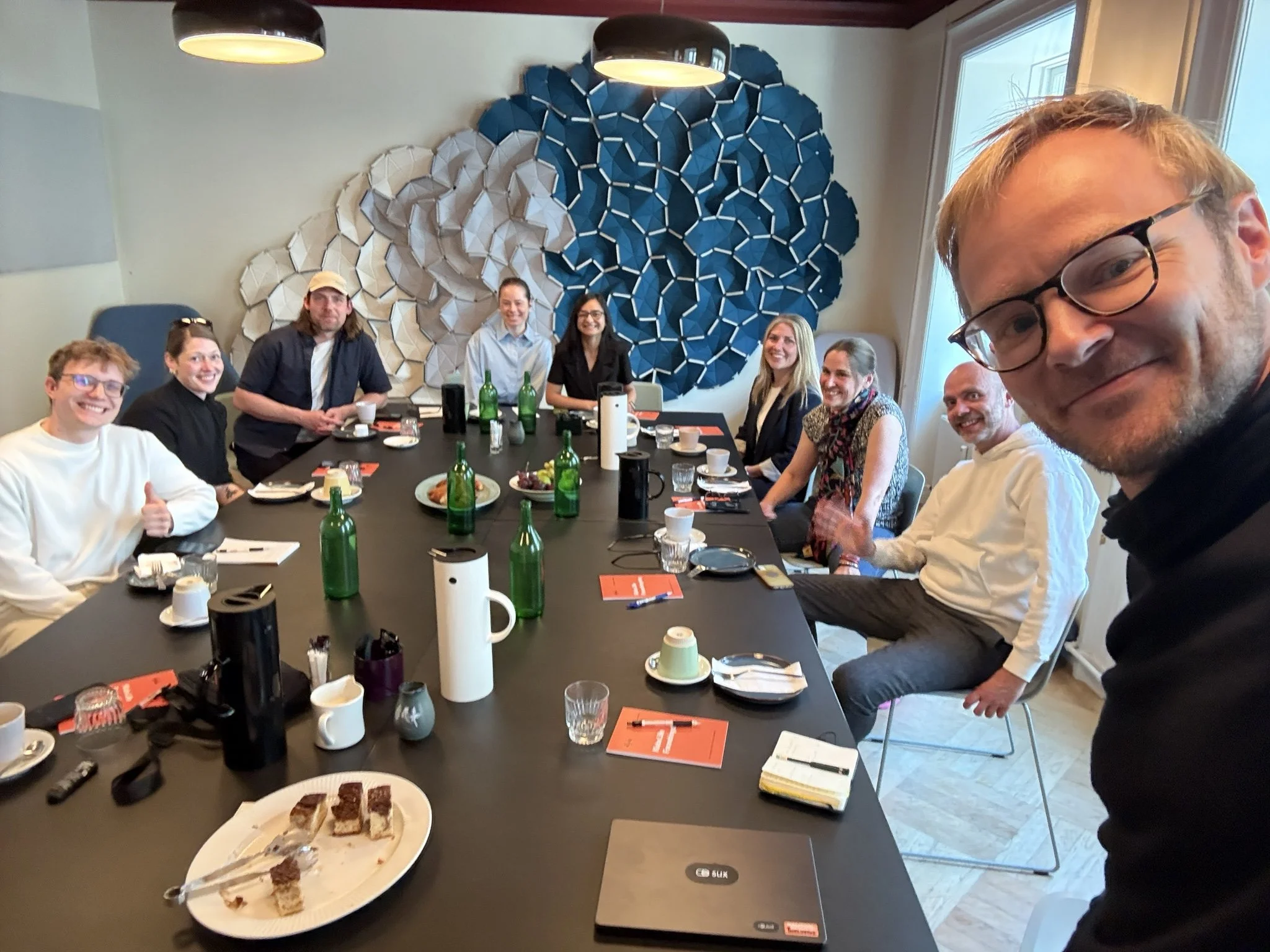
This week, our Copenhagen design leaders group met at Klub on Thursday, from 9:30 to 14:30, hosted by Thorsten Jonas.
Timing shapes how seriously learning is taken, and what people are able to take from it.
What we choose to make time for
Peer groups, conferences, and similar settings are part of the work. They are where people compare approaches, question decisions, and adjust how they operate. When they sit outside the working day, they become discretionary, something people attend when they can, rather than something that shapes how they work.
Every organisation makes implicit decisions about what counts as work. These decisions show up in calendars more clearly than in strategy documents. If learning is not given space within the working day, it competes with everything else and will usually lose.