Sometimes a conversation leaves you with more questions than answers.
That's certainly how I felt after our recent Employee Experience Group meeting in Hamburg.
Whether it's true or not is almost beside the point. It captures something many people seem to be feeling right now.
Work is changing. Tools are changing. Some tasks that once took hours now take minutes. Others may disappear altogether.
Yet what struck me during the discussions in Hamburg wasn't anxiety about technology. It was how often the conversation returned to very human themes: trust, judgement, culture, learning, and the relationships that make organisations work.
We were hosted by Sven Ditz and the team at Sitegeist, in a workspace that includes a street art exhibition woven into the office itself. It was a fitting setting for the kind of conversation these groups are meant to create: small, open, practical, and honest enough for people to say what they are actually thinking.
The tools may be changing quickly. The need for people who can make sense of complexity together isn't going away.
Trust before AI
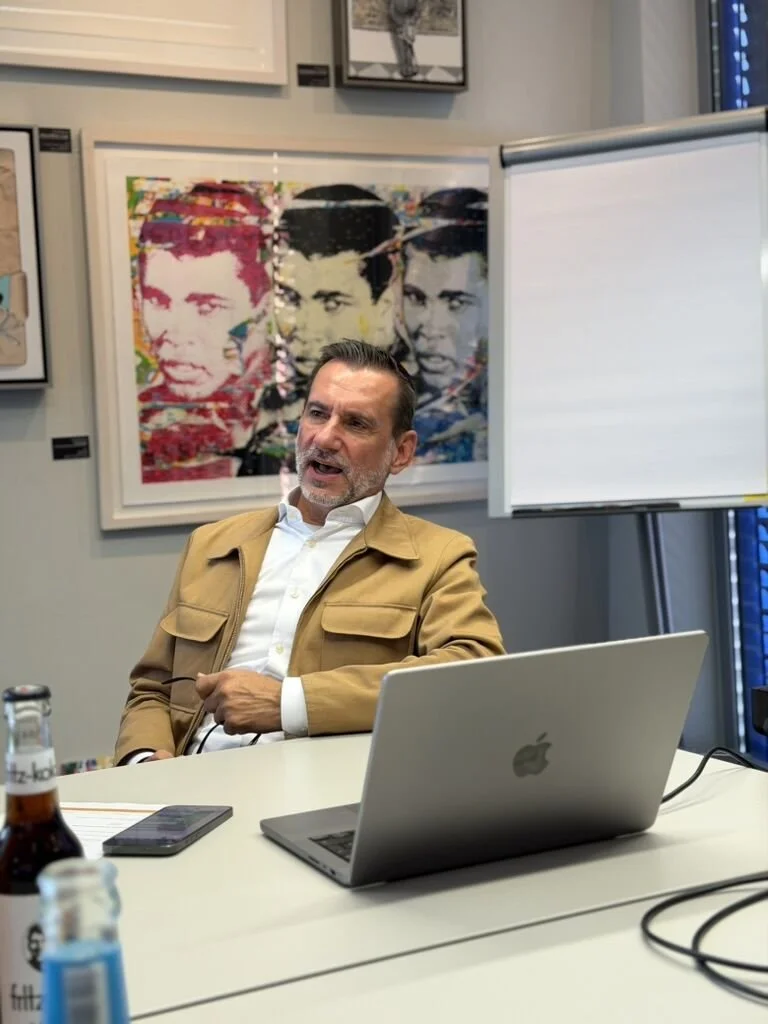
Sven Ditz hosted us at sitegeist
At this one, the conversation did not start with AI, but rather with trust.
Sven Ditz shared how Sitegeist has evolved its approach to client work over the years. No fixed-price contracts. No lengthy requirements documents. No attempt to pretend everything can be known in advance. Instead, projects are built around a small number of agreed goals, rough estimates, and transparency about the work being done.
One comment from Sven stuck with me:
When projects come in under budget, clients become fans.
The more we talked about it, the more it seemed to explain why the approach works. Clients gain visibility. Conversations become more direct. Trust increases rather than decreases. Instead of spending energy negotiating every detail up front, everyone focuses on the outcome they're trying to achieve.
What interested me most was how naturally the discussion moved from customer relationships to employee experience.
The two are more connected than we often acknowledge. If trust runs through the way an organisation works, clients feel it. Employees do too. The quality of the work changes. The conversations change. People spend less energy protecting themselves and more energy solving problems together.
That became a recurring theme throughout the afternoon. The future of work may be uncertain, but people can handle a surprising amount of uncertainty when they trust the people around them.
Culture is sometimes hidden in the tools
From there, the conversation moved to tools.
Marc Paczian shared an update on Wire, the encrypted messaging platform now approved for classified communication within the German federal government. That could easily have become a narrow conversation about secure messaging, but it quickly became something broader.
How much of workplace culture lives inside the tools we use every day?
Someone shared examples of organisations moving from Slack to Teams and then seeing employees leave afterwards. I doubt anyone leaves a company solely because of a messaging platform. But I also think it would be a mistake to dismiss the story entirely.
Tools shape behaviour.
They influence who speaks to whom, how quickly information moves, whether informal conversations happen, and how easy it is to feel part of something larger than your own role.
A company can have carefully written values and still lose part of its culture if the everyday spaces where people connect suddenly change. The small interactions matter more than we sometimes admit.
That is also a useful reminder in conversations about AI. The question is not only what a tool can do. It is what the tool does to the way people work together.
The nine-month question
Later in the afternoon, a group member from one of those large, complex organisations shared what he called his team's "9/11 moment." After experimenting with tools such as Claude Code and other AI systems, they realised something surprising: they did not yet fully know how to make use of the expertise already available inside their own organisation.
I liked that framing because it moved the conversation away from the familiar question of whether AI will replace people. The more interesting question may be whether organisations really understand the capabilities of the people they already have.
That was when the nine-month comment from the title came up. Someone mentioned a colleague on maternity leave who was worried about whether her role would still look the same when she returned. The concern was understandable. Technology is moving quickly, and many people are trying to work out what that means for their careers.
At the same time, the lesson is not that people should be worried. A role is not the same as a person. A task is not the same as a career. Tasks have always changed, disappeared, and been replaced by new ones. What tends to endure are the capabilities behind them: understanding context, exercising judgement, solving problems, collaborating with others, and continuing to learn.
Those capabilities become more valuable when routine work becomes easier to automate. The organisations that thrive won't simply be the ones with the best tools. They will be the ones that help people develop the skills that matter alongside those tools.
Scepticism is healthy
There was also a good amount of scepticism in the room.
One participant pointed out that every major technology wave over the past couple of decades has arrived with predictions that everything would change. Some things did change. Others changed far less than expected.
We've been hearing for years that technology would remove boring work, free people up for creativity, and transform organisations overnight. Reality is usually more complicated.
That scepticism felt healthy. It kept the conversation away from panic and also kept it away from hype.
AI is clearly changing how many people work. Some use cases are already delivering real value. Others are still more promise than reality.
The useful question is not whether everything will change or nothing will change. It is where work is actually changing, what that means for people, and how organisations can respond thoughtfully.
What do employers owe their people?
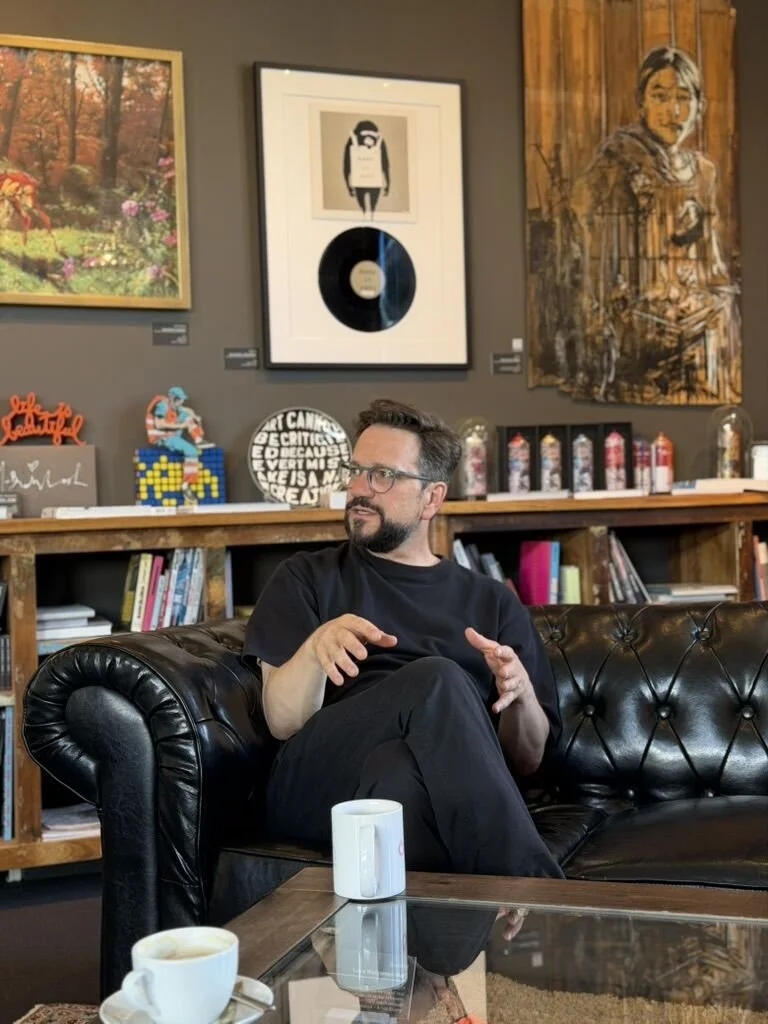
Thomas Dugaro from HafenCity also joined us
That eventually led us to one of the more difficult questions of the afternoon: if work is changing this quickly, what responsibilities do organisations have to help people adapt?
There was no shortage of opinions. Most of us would probably agree that learning is ultimately an individual responsibility. Nobody else can stay curious for you, keep your skills current, or pay attention to how your field is evolving. The people who thrive tend to be those who continue learning throughout their careers.
At the same time, that's only part of the story. If someone has spent years — perhaps decades — doing the work an organisation asked them to do, and that work starts to change dramatically, organisations have to ask themselves what role they should play in helping people navigate that transition.
The discussion wasn't really about job security. It was about trust. Do people understand where things are heading? Are they being given opportunities to learn, experiment, and develop new skills before change is forced upon them? The organisations that do this well are unlikely to promise that every role will stay the same. They know it won't. What they can do is help people build confidence that they will continue to have a place in the organisation, even as the work evolves.
People are far more likely to embrace change when they can see a future for themselves within it. The future may require different tools and different tasks, but it will still require people who can think critically, collaborate effectively, build relationships, exercise judgement, and make sense of complex situations. Those capabilities don't become less valuable as technology advances. If anything, they become the skills that matter most.
The work is changing, but people still matter
Like many of the best Boye group conversations, the afternoon did not produce a neat conclusion. It surfaced a set of questions that seem to be showing up in organisations everywhere: How do we build trust when the future of work feels less predictable? How much of our culture is shaped by tools we barely think about? How do we help people adapt without making them feel replaceable? And what responsibilities do employers have when roles change faster than people expected?
I keep coming back to the comment in the title because it makes those questions tangible. A parental leave, a sabbatical, or time away from work should not leave people feeling as though they have fallen behind a future they were never invited into.
Organisations have an opportunity here. Not to promise that every task, role, or process will stay exactly the same — they won't — but to help people build the skills, confidence, and perspective needed to navigate whatever comes next. The future may look different from the present, but it will still depend on people who can learn, adapt, collaborate, exercise judgement, and make sense of complexity.
The work will continue to evolve. That has always been true. The encouraging part is that people have a remarkable capacity to evolve with it.