
By Jeroen Fürst
Last week I had the privilege of attending the Kentico MVP Summit 2026 at Kentico HQ in Brno, Czech Republic. As always, it was an intense week filled with product discussions, strategic conversations, hands-on workshops and valuable time with people across the Kentico ecosystem.
A few weeks earlier, I attended CMS Summit 26 in Frankfurt. Many of the themes discussed there resurfaced in Brno. Frankfurt highlighted where our industry is heading. Brno made that future feel much more concrete.
Across both events, the conversation moved beyond AI features and tools. The deeper question was how AI is changing the way organisations learn, coordinate and execute. It increasingly seems that competitive advantages are becoming shorter-lived as new tools and workflows spread rapidly across the industry.
Several sessions and discussions during the week explored different aspects of that transition.
From roadmap to ways of working
One of the strongest moments of the week was Debbie Tucek’s roadmap presentation. As Kentico’s VP Product, she shared how the foundation of Xperience by Kentico is being shaped for the agentic era. The detailed roadmap remains under NDA, so I will stay at a high level.
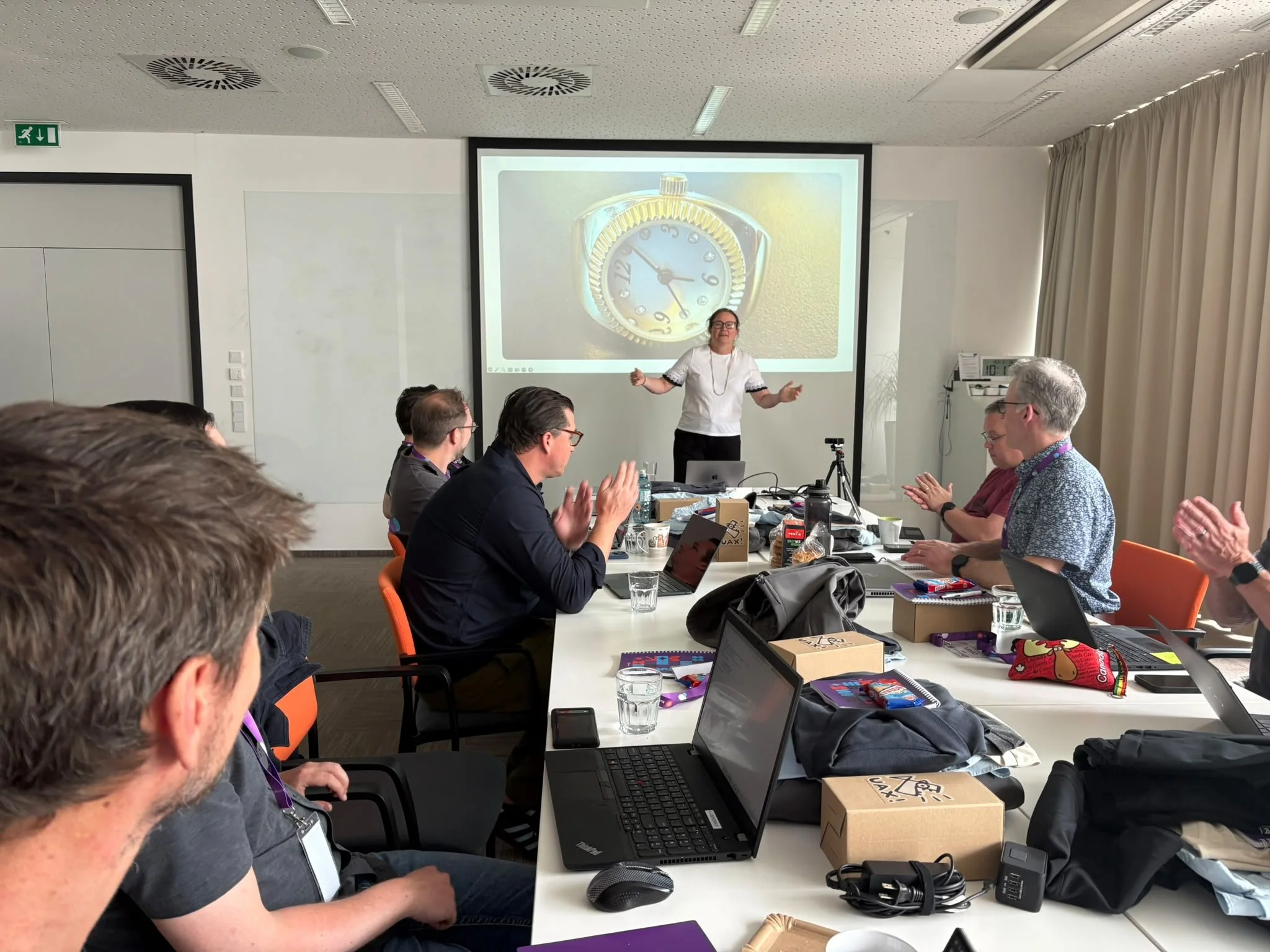
What stood out to me was the maturity of the conversation. The discussion went far beyond adding a few AI features to an existing product experience. The focus has moved towards context, orchestration, governance and the role of the platform in helping people move from insight to action.
That matters, because many of the biggest opportunities for AI in digital experience are hidden in the handovers between tools, teams and decisions. A marketer sees a signal in analytics, turns it into a hypothesis, discusses it with colleagues, asks a developer for help, waits for implementation, reviews the result and then starts measuring again. Each step creates friction.
The direction shared in Brno points towards a product experience where more of that friction can be reduced. Marketers, editors and developers still need to make the important decisions, while the platform can help them work with better context, clearer recommendations and more direct execution paths.
Another interesting part was the way roadmap thinking itself is evolving. In a market that changes this quickly, long-term certainty becomes harder to maintain. A product organisation needs to stay focused on outcomes while creating more room for experimentation, feedback and faster learning loops.
For me, that was one of the most valuable messages of the week. The future of digital experience platforms is moving beyond managing pages and content items. The platform is increasingly expected to understand the work people are trying to do, support better decisions and help teams execute with less friction.
Making content performance more actionable
Another highlight was the Galaxy Brain Experiences workshop with Martina Škantárová. Together with Roel Kuik and Michael Eustace, I worked on a concept around Content Performance Management.
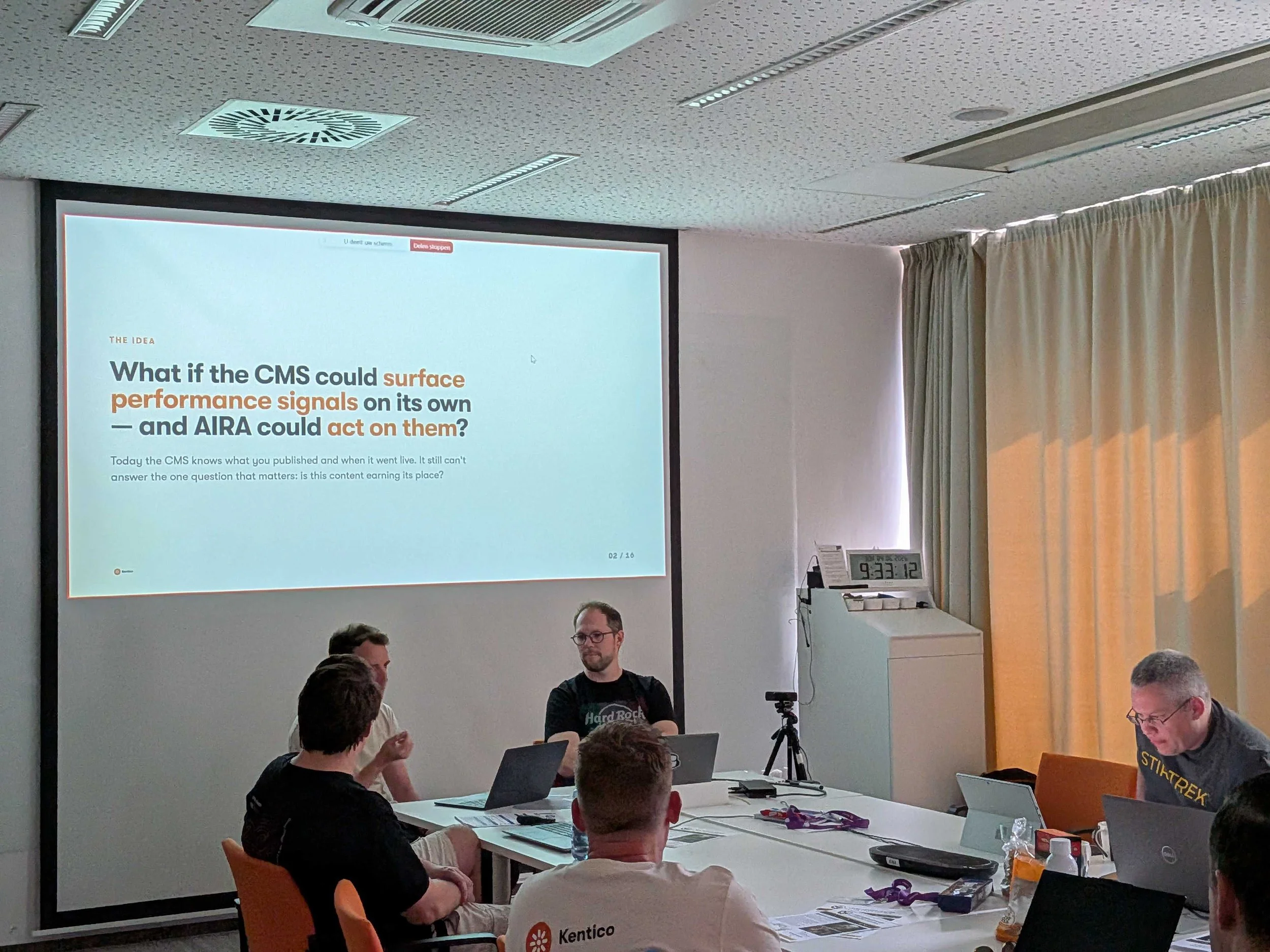
The workshop gave us a chance to explore a familiar challenge from different perspectives. Marketing teams often have access to plenty of data, spread across analytics tools, campaign dashboards, forms, CRM systems and customer activity. The harder part is turning those scattered signals into useful decisions inside the content workflow.
That became the starting point of our discussion. We talked about the gap between data and action, the role of AI in helping teams interpret signals, and the importance of keeping people in control when recommendations become more automated.
What made the exercise valuable was the mix of perspectives in the team. Roel naturally looked at the topic from a marketer’s point of view, Michael brought a strong product and solution perspective, and I mostly approached it from architecture, feasibility and implementation. Martina helped us keep the discussion focused, challenged us as the concept evolved and guided the process like a product manager.
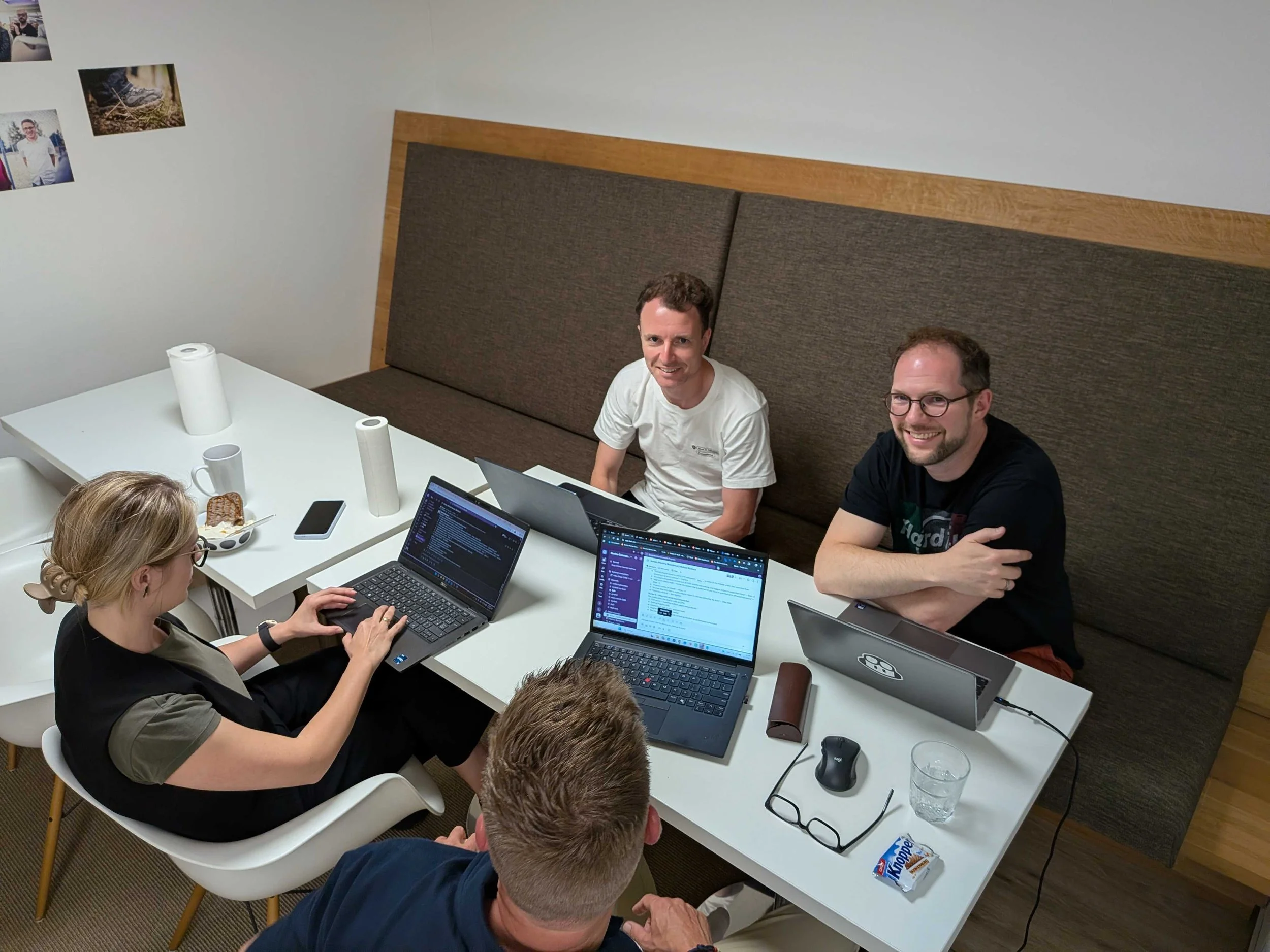
AI played an interesting role in the process. We used Claude and several AI-assisted workflows to research the problem, structure our thinking and turn loose ideas into a story we could present. The team still made the key decisions. AI mainly helped us move faster, compare options and sharpen the narrative.
One of our main conclusions was that content performance should become more actionable. Marketers should not have to collect signals from several tools, interpret them manually and then translate everything back into content, campaign or optimisation tasks. A stronger connection between performance insights, content decisions and follow-up actions could make content optimisation more continuous and much easier to scale.
We also discussed the importance of trust and governance. AI can help surface signals and suggest next steps, while teams need clear explanations, review moments and the ability to decide what gets applied. That human-in-the-loop principle felt essential, especially when AI starts influencing content, campaigns and customer journeys.
The most interesting part of the workshop was seeing how quickly the conversation evolved. A broad theme became a concrete point of view, then a structured concept, and finally a short presentation. It was a useful example of how AI can support collaborative thinking without taking ownership of the thinking itself.
Specifications matter more than prompts
Several sessions throughout the week focused on AI adoption in real project scenarios. Two of the most practical examples came from fellow Kentico MVPs Liam Goldfinch and Andy Thompson.
Liam Goldfinch shared experiences from the AI-supported rebuild of the IDHL website in Xperience by Kentico. The case involved a migration from Sanity to Xperience by Kentico under serious time pressure.
AI was used across several phases of the project, including content modelling, project planning, ticket preparation, content type generation, widget development, CMS upgrades and visual testing. Figma designs and a sitemap formed the basis for an AI-generated content model. AI also helped prepare specifications and Jira tickets for content types, widgets, components and templates.
The acceleration in structured, repetitive work was significant. The session included examples where preparing dozens of content types could move from many hours of manual work to minutes of AI-assisted preparation, followed by human review.
Widget development showed a similar pattern. Simple widgets that might normally take several hours could be prepared much faster, allowing developers to focus more on review, refinement and testing.
The real lesson was discipline. Complex fields, selectors, dependencies, relationships between content types and UX details still required experienced people. Strong input, good examples and clear reference projects had a major impact on the quality of the output. AI accelerated the process, while architecture, modelling expertise and review remained essential.
Andy Thompson’s session approached the topic from another angle: AI-driven website migration and spec-driven development.
The complexity of the original Luminary site made the case especially interesting. It included multiple generations of front-end technology, different hosting and deployment setups, Netlify forms, Zapier, Campaign Monitor, Algolia indexing, around 70 content types, 192 components, hundreds of blog posts and URLs, and multiple React apps in one codebase.
A traditional rebuild would have required significant time and resources. Andy structured the work around the Xperience by Kentico: Universal Migration Tool, a custom .NET migration application and a spec-driven process. He used GitHub Spec Kit and a structured workflow to define rules, user stories, task lists, dependencies and verification steps.
The AI agents worked inside a carefully prepared workspace with context, boundaries and controlled access to source code. That structure mattered. The value came from giving agents a clear process, a strong specification and repeatable validation steps.
Both sessions pointed to the same conclusion. The biggest gains come from combining human judgement with structured context, strong specifications, clear review loops and repeatable tooling. In practice, the quality of AI-supported work depends less on a clever prompt and more on the quality of the surrounding system.
Adoption is a team challenge
Another valuable part of the week was hearing how Kentico is approaching AI adoption internally. Alexandros Koukovistas, AI Enablement Lead at Kentico, shared a practical view on that journey, including the shift from individual experimentation towards more structured adoption across teams.
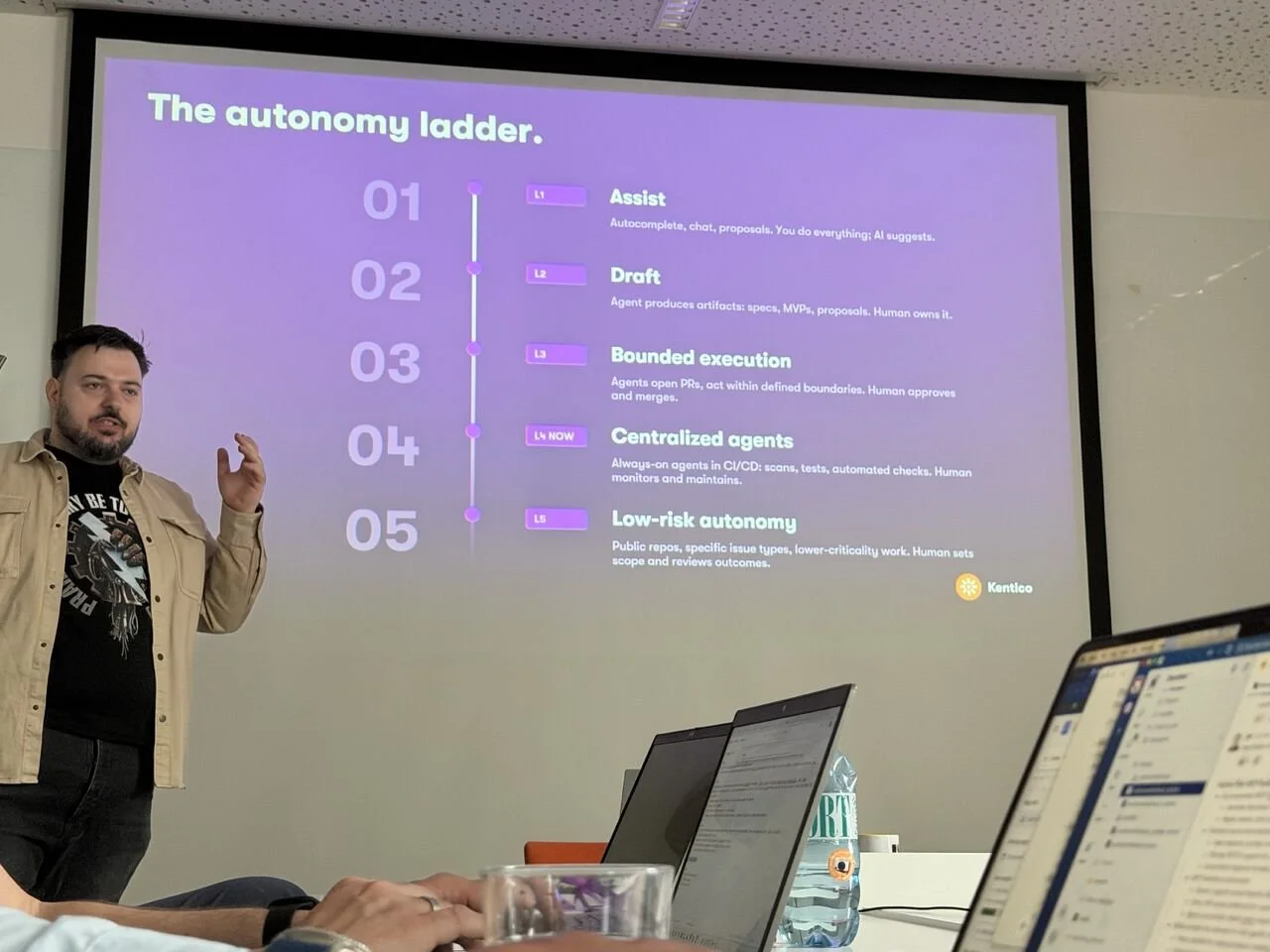
The detailed numbers and internal approach are not mine to share, yet the broader lesson is highly relevant: access to tools is only the starting point.
Teams need to learn where AI creates value, where risk increases, how output should be verified and how knowledge can be shared. Many valuable AI applications are practical and almost boring: better documentation, clearer internal instructions, support in review loops, repetitive task reduction and more consistent workflows.
That resonated strongly with the agency discussions during the summit. Many teams are experimenting with AI. The real challenge is moving from individual experimentation to repeatable organisational capability.
A motivated expert can become more productive with AI quite quickly. Creating that same effect across a team, across roles and across projects is much harder. It requires shared practices, trusted examples, training at the right moment and enough structure to avoid chaos.
This is where the next phase of AI adoption will be decided. The advantage will go to teams that can turn learning into a reliable way of working.
The advantage is in the learning loop
One of the strongest conclusions I took away from the Kentico MVP Summit 2026 is that competitive advantages are becoming increasingly short-lived.
New tools and workflows spread fast. What feels advanced today can become common practice surprisingly quickly. The ability to learn, adapt and operationalise new ways of working is becoming more important than any single tool or feature.
The teams that stay ahead will understand where AI creates value, where human expertise remains essential and how both can be combined into better outcomes for clients, users and teams.
That is what makes this moment so interesting for everyone working in the CMS space. Digital experience is entering a new phase, but the deeper shift is organisational. The people and teams who keep learning, experimenting and sharing what works will help shape where it goes next.