
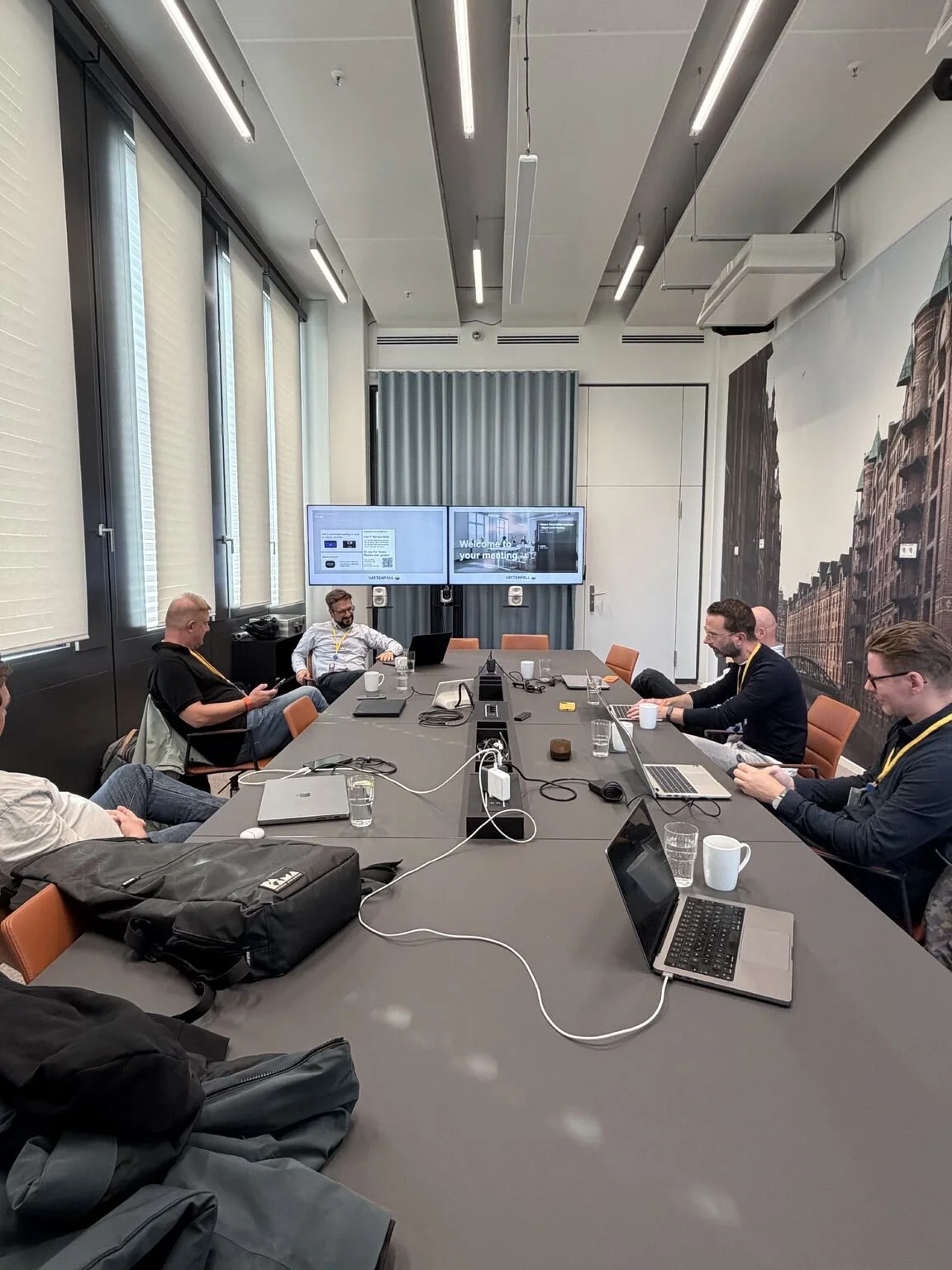
Digital leadership group meeting at Vattenfall in Hamburg
Everyone is asking whether AI actually delivers.
I met with two leadership groups in Hamburg over the past two weeks, and nobody really has the answer to who owns what happens after.
We met for Boye & Company’s Digital Leadership group at Vattenfall, followed by our Employee Experience group at HafenCity Hamburg GmbH.
Very different rooms. Definitely more overlap than I expected.
Here are a few of my thoughts:
1. Making AI work turned out to be the easy part.
Several people described real gains. Not pilots, but work that made teams more efficient and helped them do better business. But when someone asked who owned the people side when work was absorbed (or taken away, depending on how you want to word it), none of us could name a function or role.
Efficiency finds an owner. Displaced people usually don’t.
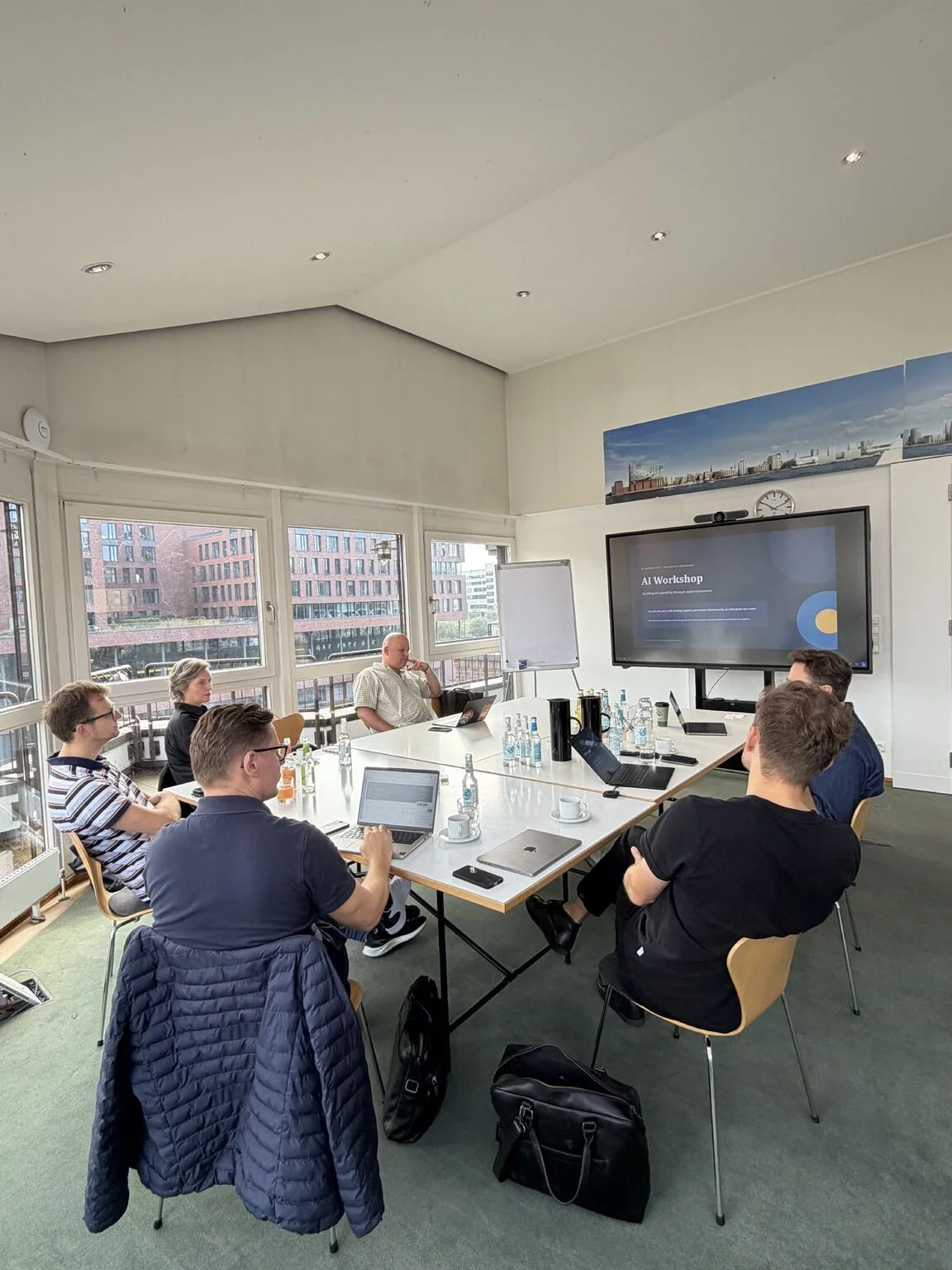
Employee Experience group at HafenCity Hamburg GmbH
2. Bin the strategy. Run a workshop.
A 40-page consultancy strategy rarely gets implemented. Bring together the people who are genuinely interested, work out what AI could and should do, then write the strategy. Write it last, with the people who have to run it.
3. Your shadow AI experts already exist.
IT owns the technical side. But your colleagues across the company are already solving real problems with private LLM accounts. That raises security questions, but it also tells you whom to involve. Find your experts and figure out what they need before you buy your tools.
4. What happens when you build the thing that does your own job?
“Awesome, I don’t have to do this anymore” is quickly followed by, “Okay, so what do I actually do now?”
We plan for adoption. We're not planning for what the job becomes afterward.
5. Execution is up. Thinking is down.
AI keeps improving execution while doing more of the thinking. If it absorbs the entry-level work, who’s running the company in ten years? Protect the thinking, or there’s nobody left to do it.
6. Nobody’s data is ready, and everybody knows it.
The knowledge AI needs is often out of date, split across systems, or sitting in a PDF nobody has opened in years.
AI can’t read what you never wrote down.

Brian Tomlinson in Hamburg for Boye & Co peer group meetings
It seems to me that we have policies, pilots, ambassadors, guidelines, and AI driver’s licenses.
What we don’t have is a plan for what the heck happens after it all works. (A bigger discussion I know.)
That’s why these groups matter. You don’t get the unfiltered version from a report. (At least that's what Janus Boye always tells me 😉)
Huge thanks to Thomas Dugaro and Tobias Wegner for hosting us, and to Christian Thanninger, Thorben Rump, Ralf Böttger-Wiedebach, Volker Graubaum, Heike Lorenz, Alejandro, Frederic Vollmer, and Jan-Eike Rosenthal for the thoughts, expertise, and honesty.
Which of these can you relate to the most right now?