
This is a past event.
Join us for CMS Connect 27
CMS Connect 26 conference program
Let’s make digital experiences better
The conference is tailored for digital leaders and features 2 packed days with a carefully curated mixture of talks, workshops, activities and world class facilitators, thought-provokers, speakers and session leads.
Throughout the two days, we enjoy the venue and the La-Plateau part of Montréal, good meals and quality conversations in a relaxed atmosphere optimized for learning and networking.
You can the slides available for sharing below each session below
Program
Tuesday, August 4
7:30 - 9:00: Montréal Bagel Quest
Start the conference the Montréal way. Meet outside Montréal CoWork and join our guide Chris Bryce from Dotfusion as we walk to Fairmount Bagel (baking since 1919), then on to St-Viateur (the 1957 challenger), before settling Montréal's greatest culinary rivalry for ourselves.
Read more: Fairmount or St-Viateur?
9:00 - 9:30: Breakfast and registration
Join us early, get the conversation started, make some new friends and enjoy some freshly brewed coffee and tea
9:30 - 9:45: Welcome & Opening
- Our host Janus Boye, Boye & Co
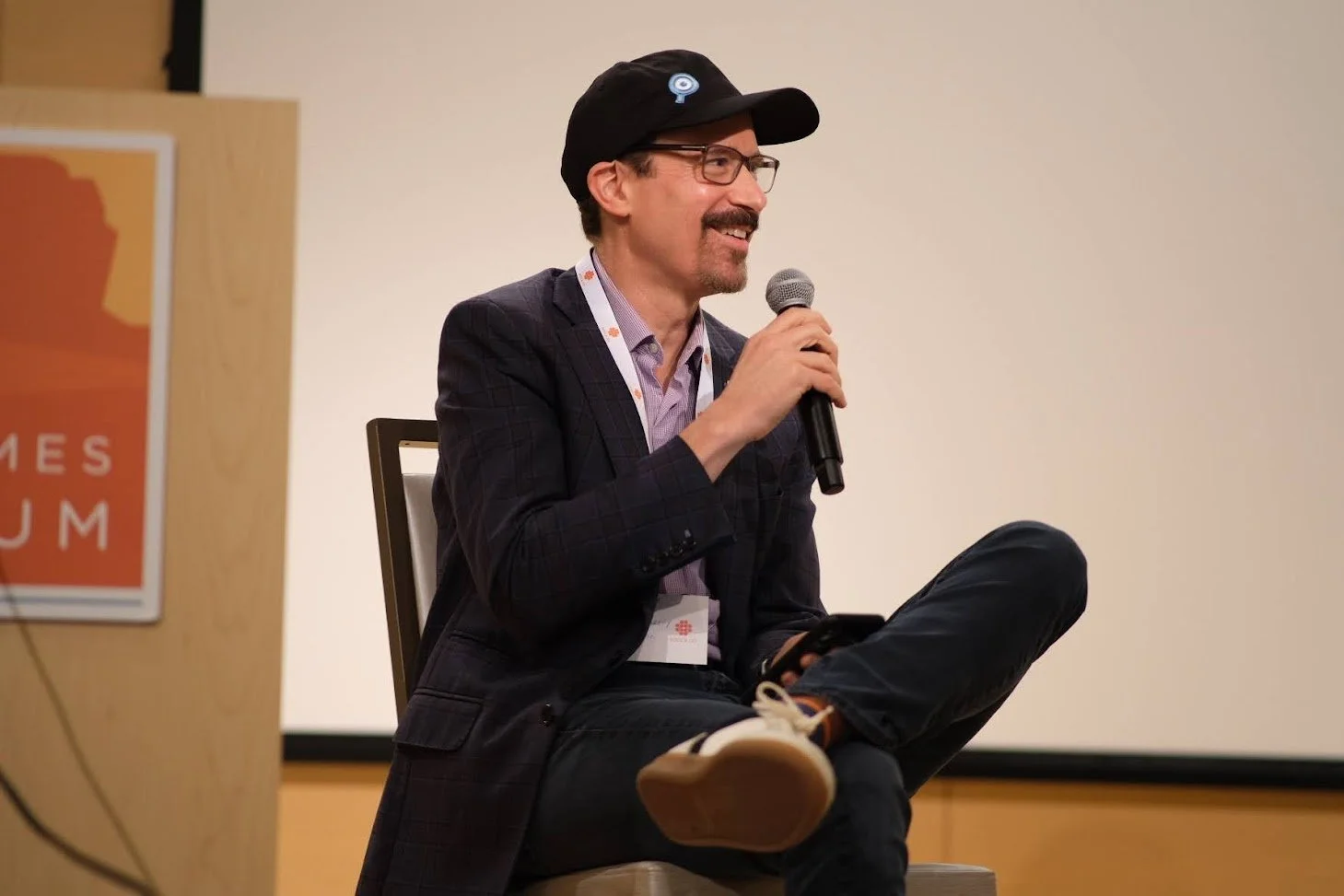
The Agentic Era: content, context, and the next digital stack
9:45 - 10:15
by Matt Garrepy (US)
Chief Critic
at CMS Critic
The future of digital experience is starting to feel a little like science fiction. AI agents can already search, compare, decide, recommend, and increasingly act on behalf of users. But beneath the hype, a much bigger shift is underway: the transformation of content, platforms, and digital operations for an agentic world.
In this opening keynote, analyst Matt Garrepy shares new research and market observations on the next phase of digital experience: the move from page-centric systems to context-aware, agent-ready ecosystems. As AI assistants become participants in customer journeys, organisations face a new challenge: building content and platforms designed not just for humans to browse, but for intelligent systems to interpret, evaluate, and act on.
The session explores how content management and digital experience architectures are evolving, why composable and automation-focused systems continue to gain ground, and what happens when context becomes more important than pages. Matt will also examine how organisations can rebuild their content engines for a world where AI agents influence discovery, transactions, support, and decision-making.
You will learn:
What the rise of agentic AI means for content, discovery, and customer relationships
How the web content management stack is evolving
Why context-rich content becomes a competitive advantage
How to think about content built for AI agents, not just human audiences
What organisations need to rethink now in workflows, governance, and digital operations
Part analyst briefing, part glimpse into a near-future that increasingly feels sci-fi made real, this keynote connects emerging technology shifts with the practical decisions organisations need to make today.

Content infrastructure debt is compounding faster than ever
10:15 - 10:40
by Carrie Hane (US)
Author and strategic advisor
“AI won’t save your bad content. It will just expose it.”
Content infrastructure sits between the interface and engineering layers of the digital experience ecosystem. It determines how content is structured, stored, managed, and governed, yet it has been neglected for decades.
The result is disconnected content, inconsistent metadata, unclear ownership, and governance designed for publishing rather than reuse, automation, and AI. As organizations pursue personalization and omnichannel experiences, this debt is becoming harder and more expensive to ignore.
This session explores where content infrastructure debt comes from, how to recognize its organizational and technical costs, and how AI might help us work our way out rather than compound the problem.
Continue the conversation:
Content infrastructure debt is compounding faster than ever and AI is making it impossible to ignore

AI in a 13-year-old CMS
10:40 - 11:00
by Andrei Kalamkarov (CA)
Manager, Web Evolution & Front-End Development at Concordia University
What does AI adoption look like when you're working with the opposite of a clean slate?
Our web platform at Concordia University has been evolving since 2013. It serves millions of users each year, supports thousands of pages, and is maintained by a small team working within years of accumulated content, governance, and technical decisions. It runs on Adobe Experience Manager, but the lessons extend well beyond AEM to any mature CMS.
Over the past few years, we've introduced AI not only into our code, but also into how we capture knowledge, review work before it ships, and help more people contribute with confidence.
This session is a candid practitioner's account of what AI adoption actually looks like in production. I'll share what worked, what didn't, and the lessons we learned along the way. You'll leave with practical ideas for introducing AI into an established CMS without losing sight of governance, quality, or the realities of running a mature platform.
11.00 - 11:30 Coffee & networking

Who Signed Off On That?
11:30 - 11:50
by Alka Tandan (CA)
Service Design & Customer Intelligence Leader Founder of Reframe & Refine
Let us take a practical look at what happens when your CMS's "publish" button is no longer pressed by a human, and how publishing authority needs to change with it.
Every CMS has a publish button. For most of its history, a human pressed it. That's no longer guaranteed.
The publish button isn't disappearing. It's moving.
AI agents are already generating and publishing content with little or no human involvement. Some platforms market this openly as "autonomous." Others are introducing confidence thresholds and approval gates to keep people involved. Increasingly, both approaches exist within the same organization.
The question isn't whether AI can publish. It's where publishing authority lives when it does.
You'll leave with practical approaches for deciding when human review should be required, making AI-assisted publishing traceable, and establishing clear ownership when AI becomes part of the workflow..
Because when something goes wrong, someone still needs to answer: Who signed off on that?

AI agents and LLM harnesses can dramatically increase the leverage of each person. But their performance depends on more than the models behind them. Without structured, accessible and trustworthy organisational knowledge, even the most capable agents will struggle.
This session explores how to organise what your organisation knows so that people and AI can work with it effectively. Sebastien will share practical examples of what helps agents succeed, where knowledge systems break down, and how teams can prepare their content and processes for this new way of working.
You will leave with a practical framework for assessing your organisation’s AI readiness and clear steps for making its knowledge more useful to both people and agents.
Continue the conversation:
There’s no "AI" in team!

Built on Words
12.10 - 12.30
by Dayana Kibilds (CA)
AVP, Marketing & Community
at SimpsonScarborough
Content systems, governance, workflows, and AI all shape how content performs. But underneath it all is the thing that determines whether content actually works: language.
In this session, Dayana Kibilds explores how overly complex language quietly creates friction in digital experiences through confusion, cognitive overload, inconsistent content, and barriers to action.
Using before-and-after examples from real-world communications, she’ll show how simple, intentional language improves usability, accessibility, and trust.
12:30 - 13.30 Lunch
1:30 - 2.30 Roundtables
Come join 2 x 25 minutes of informal roundtable discussions to get answers on your specific questions or help others by sharing your expert knowledge.
Each table has no more than 10 attendees and is assigned a specific topic and moderator.
First come first served: you don’t get to see who’s at the table until you get there.
After the initial 25 minutes are up, you get to pick another table for the next 25 minutes of discussion.
Tables:
AEO, GEO and SEO with Matt McQueeny
AI Agents: Never cut & paste again! Agentic content workflows with Chris Bryce
Content operations with Carrie Hane
Digital governance in the age of AI with Joyce Peralta
How content is evolving to drive next best actions for human and machine audiences with Chuck Gahun
The new agency model with Robert Jacobi
Why management gets design wrong, and how to change it with Peter Dahlstrøm Andersen
2:30 - 3:00 Coffee & networking

Where governed content breaks down: Closing the gap between stack and storefront
3:00 - 3:30
by Michael Thompson (US)
Creative and Incentive Solutions Engineer
at Sesimi
Every company has a place where the “right” version lives. The CMS, PIM, and DAM hold the approved words, current prices, and on-brand images. Yet that content does not always survive the journey to what customers actually see.
The national campaign gets checked. The local flyer does not. Regional teams recreate content by hand, often introducing outdated information and off-brand experiences because the governed system stops at the campaign door.
The challenge is not simply creating the right content. It is deciding what to control centrally, what to adapt locally, and how to maintain accountability across the last mile.
Drawing on cases from Toyota Australia, Volkswagen of America, Volvo Australia, American Express, Quest Apartment Hotels, and Bakers Delight, this session examines where governed content breaks down and what happens next.
You will leave with a practical framework for deciding what to lock down, what to leave local, where consistency creates value, and where excessive control gets in the way.

Before the chatbot works: Turning fragmented content into reliable answers
3:30 - 4:00
by Evelyne Bessette (CA)
Senior Manager, Marketing Communications
at TELUS
When customers and partners cannot find answers, opportunities are lost. Yet an AI chatbot is only as reliable as the content, collaboration and decisions behind it.
Faced with fragmented content across 22 products and a growing number of “Contact Us” requests, Evelyne Bessette and her team set out to create a better customer journey. Their AI chatbot is scheduled to launch in September, offering immediate answers around the clock while allowing colleagues to focus on more complex enquiries.
With the launch approaching, Evelyne will share what it has taken to prepare the content, align stakeholders and introduce intelligent automation across the organisation. She will also examine how the team is preparing to measure success, learn from real users and improve the chatbot after launch.
You will leave with practical lessons for preparing fragmented content for AI, building cross-functional support and deciding how to assess whether a chatbot genuinely improves the customer experience.
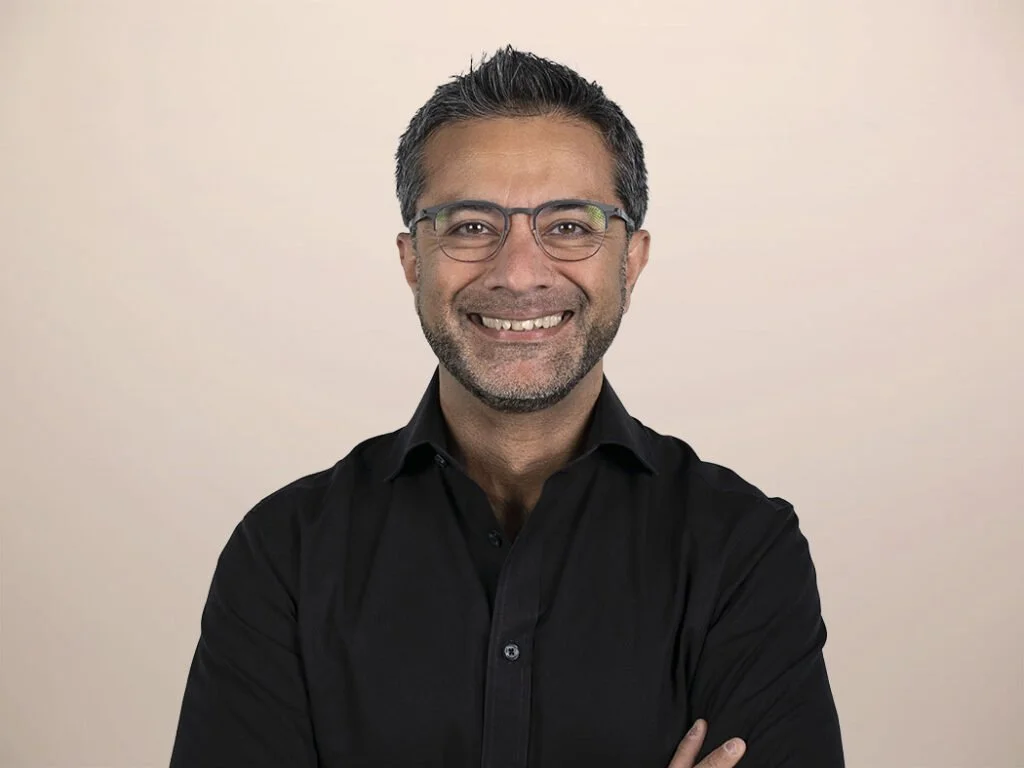
Martech's Evolution as Machines Become Creators and Consumers
4:00 - 4:30
by Chuck Gahun (US)
Principal Analyst - Digital Business & Strategy
at Forrester
The features and capabilities of content management technology (CMSes, DAMs, and CRMs) are evolving with agentic AI to take marketing organizations to the next level. However, most marketing organizations lag in adoption because humans and machines have fundamentally different needs from published content.
This session explores what AI agent personas need from content and how the martech stack is evolving into systems of action to deliver contextualized content to humans and agents.
You will learn:
The demands of the AI agent persona on content supply chains
The evolution of martech from systems of record to systems of action
Practical guidance and takeaways for today's marketer
Continue the conversation:
If machines are becoming part of your audience, how should that change the way you manage content?
4:30 - 5:00 Coffee & networking
5:00 - 6:00 CMS Summer Idol 2026

Help crown the next “2026 Summer CMS Idol”! In this fast-paced, entertaining competition, contestants will have 6 minutes to showcase their system and try to win your vote.
If you like short demos, pithy commentary, and expert analyses, then look no further. This is the session for you. You'll hear thoughts from an expert panel of judges, but it's up to you to decide the winner.
Host: Matt Garrepy, CMS Critic
Confirmed contestants:
6:30 - 10:00 Social event
Join us for an informal networking dinner. Everyone is welcome!
We’ll also announce the CMS Idol winner and even do a CMS Experts Quiz!
Venue: Azalea Restaurant, 4306 R. Saint-Denis (2 minutes walk)
Wednesday, August 5
7:00 Morning Run
We meet in front of Montreal CoWork for a fun and memorable minute up Mont Royal. We’ll run the charming route through the park and make it to the amazing viewpoint.
9:00 - 9:30 Breakfast and networking
Join us early, get the conversation started, reflect on what you’ve already learned and enjoy some freshly brewed coffee and tea.
9:30 - 9:45: Morning welcome
A brief opening by
- Our host Janus Boye, Boye & Co
- Three things my radio won’t shut up about by Tom Cranstoun (download slides)

Beyond GEO: Preparing Your Digital Experience for Agents That Act
9:45- 10:05
by Nazanin Ramezani (US)
VP of Product at Optimizely
Over 50% of online traffic is already AI agents. The industry response has been a flood of GEO guides, but they optimize for the wrong problem. GEO assumes agents discover your content and stop there. That era is already ending.
WebMCP signals a new model: agents that don't just surface answers but take action on your behalf, inside the platforms you already run. The question is no longer how to be found by AI. It's whether your digital experience is built for agents that act.
This session separates what we actually know from what we're still figuring out, and explores what agent-readiness looks like beyond the generic checklist.

The Power of Opt-in AI: Building Digital Resilience in the Hype Era
10:05- 10:25
by Meagen Voss (US)
Partnership and Community Manager
at Torchbox
With some CEOs of large AI companies claiming AI can solve just about anything, you might feel like you’re a fool for not integrating AI right away. This talk will show you why resisting that pressure can be a good thing and how taking a steady and thoughtful approach to AI adoption can help your product or organization stand out.
At the Wagtail CMS project, we recognized the transformative potential of AI tools but also that not all organizations want to adopt AI at the same rate. With a range of considerations in play, particularly environmental impact and, more recently, cost, we felt that AI in Wagtail needed to be a choice rather than an inevitability.
In this short case study, I’ll walk through why we developed guiding principles for opt-in AI adoption in Wagtail CMS. I’ll show you how we used those principles to create a more resilient way to incorporate AI into a CMS that empowers users and gives them more control over their AI journeys. I’ll demonstrate how this approach builds loyalty and goodwill from users who are tired of the hype cycle and who are seeking practical solutions.

What changes, what endures: lessons from three decades of open source CMS
10:25 - 10.45
by Olivier Dobberkau (DE)
President of the
TYPO3 Association
Every new wave of technology arrives with the promise that everything is about to change. Having built websites since 1998, Olivier Dobberkau has seen enough of these shifts to recognise what genuinely changes, what merely gets renamed, and what continues to matter.
As President of the TYPO3 Association since 2014, following many active years in its community, Olivier has helped guide one of the world’s longest-running open source CMS projects through more than a decade of change.
He will share his observations on the forces reshaping the CMS world today: search becoming answer engines, AI agents joining humans as website visitors, open source economics being reconsidered, and regulation quietly redefining what it means to be a maintainer.
Olivier will also address a change that technology conversations often overlook: governance and generational transition inside a long-running open source community.
This is his personal and candid view of the changes he has helped TYPO3 navigate, and those still to come. You will leave with a sharper way to distinguish lasting shifts from passing excitement, along with practical questions to bring back to your own platform, organisation, or community.
10:45 - 11:15 Coffee & networking

The Resource Race Is Over: Why Your Infrastructure Is the New Marketing Bottleneck
11:15 - 11:40
by Cuneyt Uysal (US)
Vice President at Dataweavers
This session is operations literacy for marketing leaders in the AI era.
Boards and leadership are pushing hard to adopt AI, and marketing teams are answering with AI-assisted content, code, and campaigns at unprecedented volume. With effectively unlimited developers and unlimited authors, the resource race is over, so why hasn't publishing actually gotten faster? Because the constraint has shifted to your infrastructure and operations. Marketers don't spin up environments, approve code, or manage deployment pipelines, but every campaign depends on them.
We'll unpack how governance shapes what AI can actually do for your team, the real trade-offs between speed and security as AI tools enter your CMS, and how data sovereignty and residency requirements - from Canada to every global market you operate in - affect the trajectory toward 1:1 personalization. You'll leave knowing where your real bottleneck lives and what to do about it.

Winning Twice: Content for Agents and Humans
11:40 - 12:05
by Nika Karliuchenko (CA)
Partner Enablement Architect. at Contentful
At CMS Kickoff 26 in January, Nika argued that AI search is still search, and that content now has two audiences: humans and machines. Six months later, she returns to test that thesis against what actually happened: the same researchers have re-run the same studies, and the numbers moved fast.
This is the sequel. Nika will show which January slides survived unchanged, which numbers nearly doubled, and what's genuinely new, including why the conversation has shifted from whether AI can read your content to whether it can use your website. Expect verified data over vendor claims, a Monday-morning checklist, and at least one thing that shipped the week before the conference.

Where Do We Go From Here? The Future of Packaged CMS in the Age of AI
12:05 - 12:30
by Deane Barker (US)
Director of Strategic Engagement at Staffbase
Content management was born to be a general solution to specific problems -- we built CMSs so we could stop building bespoke databases for everything. But with the rise of AI and vibe-coding, is disposable code the ultimate generalization?
What does the future of the packaged CMS look like when software -- good or bad -- can be materialized on demand?
What does the future look like for the CMS market and people who work in it?
Read more about this session in brief post by Janus Boye:
What happens when a new generation of technology alienates the people who solved the last generation’s problems?
12:30 - 13:30 Lunch

When everything becomes agentic: The business case for expertise
13:30 - 14:00
by Justin Cook (CA)
Partner
at 9thCO
A great deal has changed in a year. AI now excels at repeatable, well-defined tasks, from producing documentation and boilerplate code to accelerating research and prototyping.
Almost every part of digital work is now being described as agentic, including requirements, architecture, content production and search.
Yet the easier it becomes to produce something that looks convincing, the harder it becomes to know whether it is sound. Work that appears complete may conceal weak assumptions, poor decisions and significant technical or business risk.
Drawing on client and prospect examples from his agency work at 9thCO, Justin Cook will examine the widening gap between apparent progress and reliable outcomes. Where can agents genuinely increase speed and capability? Where does experienced judgement remain essential? And what happens when organisations automate work they do not understand well enough to evaluate?
Justin will make the business case for using AI to augment expertise rather than replace it. You will leave with a sharper way to assess agentic initiatives, recognise hidden risks and decide where human judgement creates the greatest value.
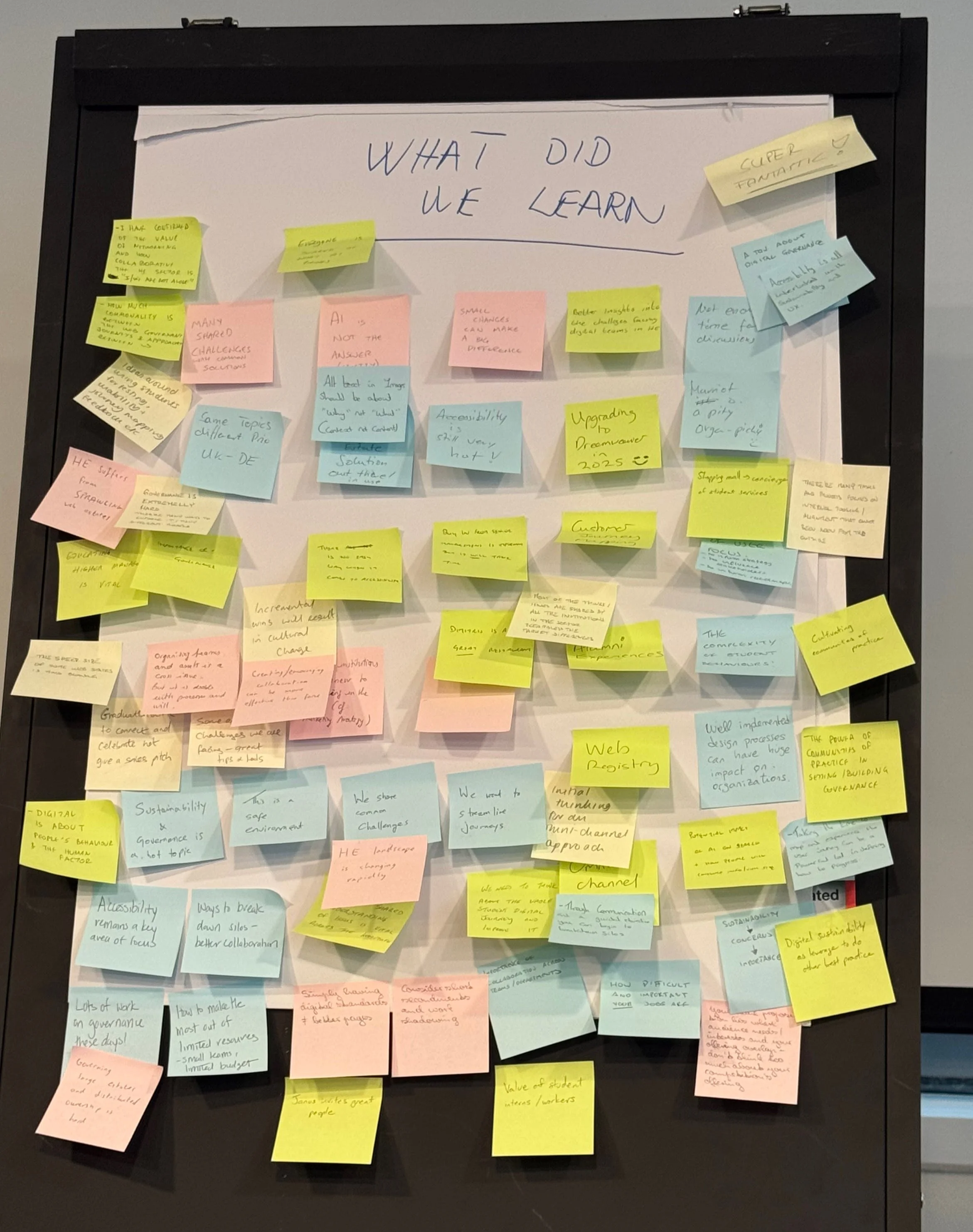
What’s ahead of us?
2:00 - 2:45
Led by Janus Boye (DK)
Conference chair
A brief interactive wrap-up of the two days. Join us for key lessons learned, big questions for 2026, perhaps a few answers and what happens next.
2.45 - 3:00 Goodbyes and see you next year!
Thanks for joining us. Continue the conversation over a cup of coffee or tea before leaving Montreal