
By Anja Saabye
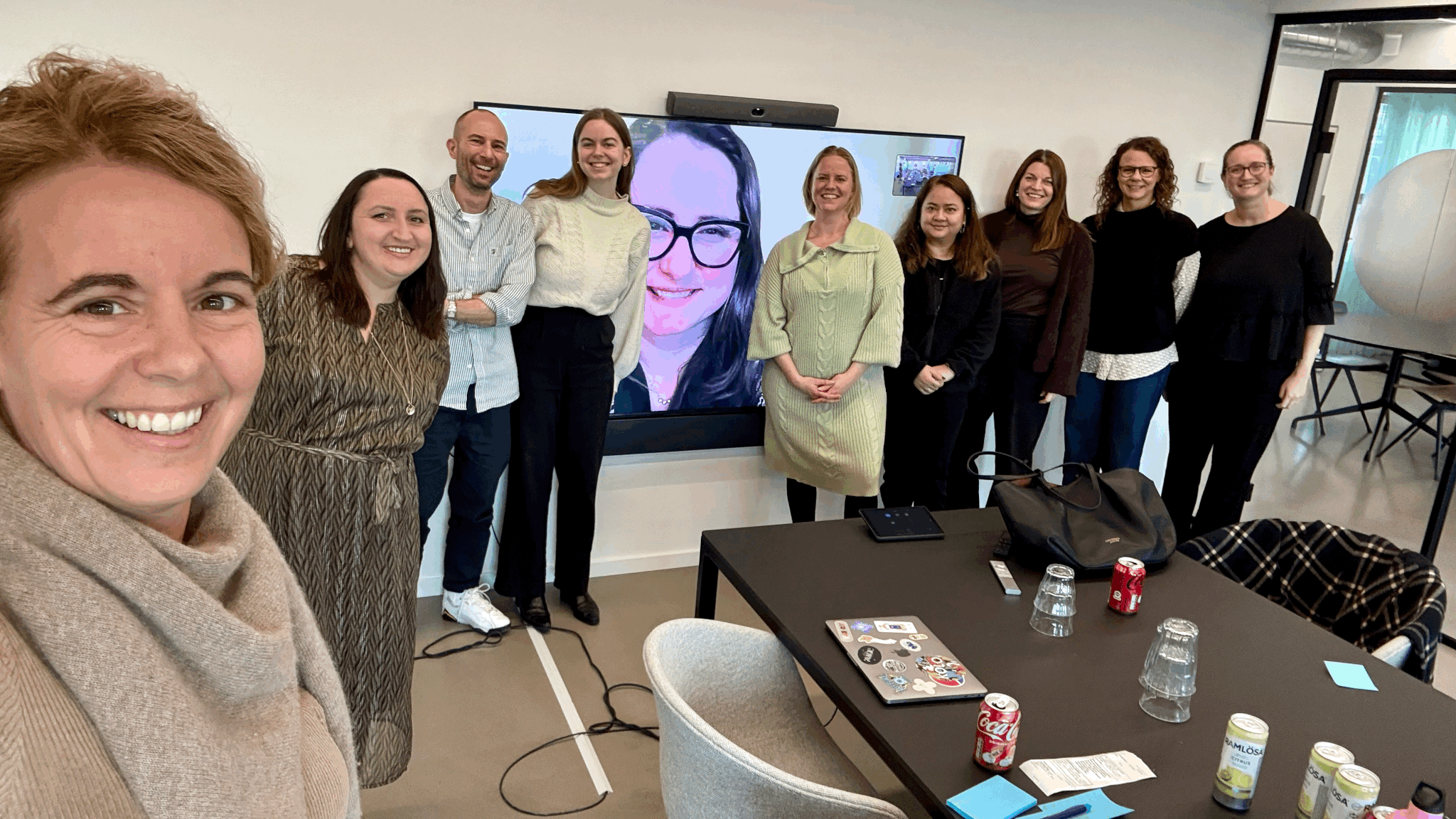
Today I had the pleasure of facilitating our UX Research peer group when we met at Manyone in Aarhus. Days like this remind me why I love working with researchers. When you bring experienced practitioners into the same room, curiosity rises fast. This time, the theme added even more energy: AI and the future of our craft.
The conversation quickly moved beyond theory. We shared hands-on experiences with different AI tools, compared what works and what does not, and openly discussed where we feel confident and where we feel cautious. Together, we created a foresight prompt using Manyone’s AI radar tool and explored how AI can stretch our thinking.
It became one of those sessions where ideas build on each other and the room feels alive.
Trust, expectations and hallucinations
A big part of the discussion centred on expectations. What do we actually expect from AI in UX research? How much can we trust it? And where do we need to slow down?
Having vast amounts of knowledge just a prompt away feels powerful. At the same time, several of us have experienced hallucinations when generating insights or extracting customer quotes from AI summaries and transcriptions. The output can sound convincing and well written, yet still be inaccurate or even fabricated.
That sparked a thoughtful and honest exchange. AI can accelerate synthesis and help us see patterns faster, but critical thinking remains essential. As researchers, our judgement is still our strongest asset.
From analysis to foresight
Kristoffer Aarsleff from Many gave us an inspiring deep dive on how to use AI not only to analyse the present but to explore possible futures. Instead of treating AI as an answer machine, he framed it as a thinking partner for foresight and idea generation.
By prompting AI to imagine alternative scenarios, emerging behaviours and future shifts, we were able to expand the conversation beyond our current projects. The tool did not replace our expertise. It helped us stretch it.
From insight to journey in 30 minutes
Grace de Athayde from Pfizer shared practical examples of working with AI in customer journey management. Her session was concrete, fast paced and grounded in real cases.
One highlight was seeing how a first draft of a customer journey could be created in under 30 minutes. That changes the dynamic in workshops and stakeholder conversations. Instead of starting from a blank page, we can start from something tangible, critique it, improve it and layer in the human nuance that makes it meaningful.
AI created momentum. The team created quality.
Innovation still needs humans
Throughout the day, one insight kept resurfacing. AI is sparkling. Its ability to summarise, generate, cluster and reframe is impressive.
At the same time, humans are still best at connecting the dots in ways that are meaningful and truly innovative. Context, empathy, ethics and interpretation remain human strengths. When we combine those with AI, the result is stronger than either alone.
Taking UX research to the next level
If there was one shared conclusion, it was this: AI will take UX research to the next level.
It will not remove the need for researchers. It will challenge us to sharpen our thinking, refine our methods and articulate our value even more clearly. Used wisely, AI can free up time from repetitive tasks and create space for deeper insight and stronger strategic impact.
The feedback from the day was overwhelmingly positive. There is appetite for more inspiration, more knowledge sharing and more sparring across organisations. Solving the “yellow shoe-lace” exercise together was a great reminder of how powerful this community is when we think collectively.
A big thank you to everyone who joined for your openness, reflections and energy.
Today was energising. The implications, however, go far beyond a single day.