

Chris Justice is a Portugal based technology leader and long time part of our extended community
Over the past months, I’ve changed how I work.
I stopped listening to produced music. I stopped trying to schedule creativity. I let focus loops run until they end on their own, and I follow a problem for as long as it continues to pull at me.
Sometimes that’s half an hour. Sometimes it’s three hours I can’t fully account for.
The result has been a different relationship with time. Hours blur. What remains are artefacts: shipped features, redesigned systems, problems that had been stuck for months finally giving way.
This feels like a form of hypercreativity that wasn’t previously possible. Not because I work harder, but because the tools now move at roughly the same speed as my thinking.
AI plays a role in this shift. Not because it is especially intelligent, but because it is fast enough to keep up with how I iterate. I can test ideas, discard approaches, and refine decisions without breaking focus. The loop stays intact.
What has changed recently is that AI is no longer just a tool at the edge of the work. It now sits inside the thinking loop. When it disappears or resets, it feels less like losing software and more like losing momentum mid-thought.
That’s what I didn’t anticipate.
Transient intelligence
After working with the same assistant for a while, something subtle happens. The tool begins to feel tuned. It mirrors your vocabulary. It understands how you want decisions summarised. It recognises the shape of the problems you are working on without needing a full reset each time.
Then a model update arrives. A context window resets. A product decision changes.
Suddenly the assistant no longer knows where you are. You are back to restating assumptions, re-establishing constraints, rebuilding momentum. The cost is not catastrophic, but it is real. The flow you had been operating in disappears.
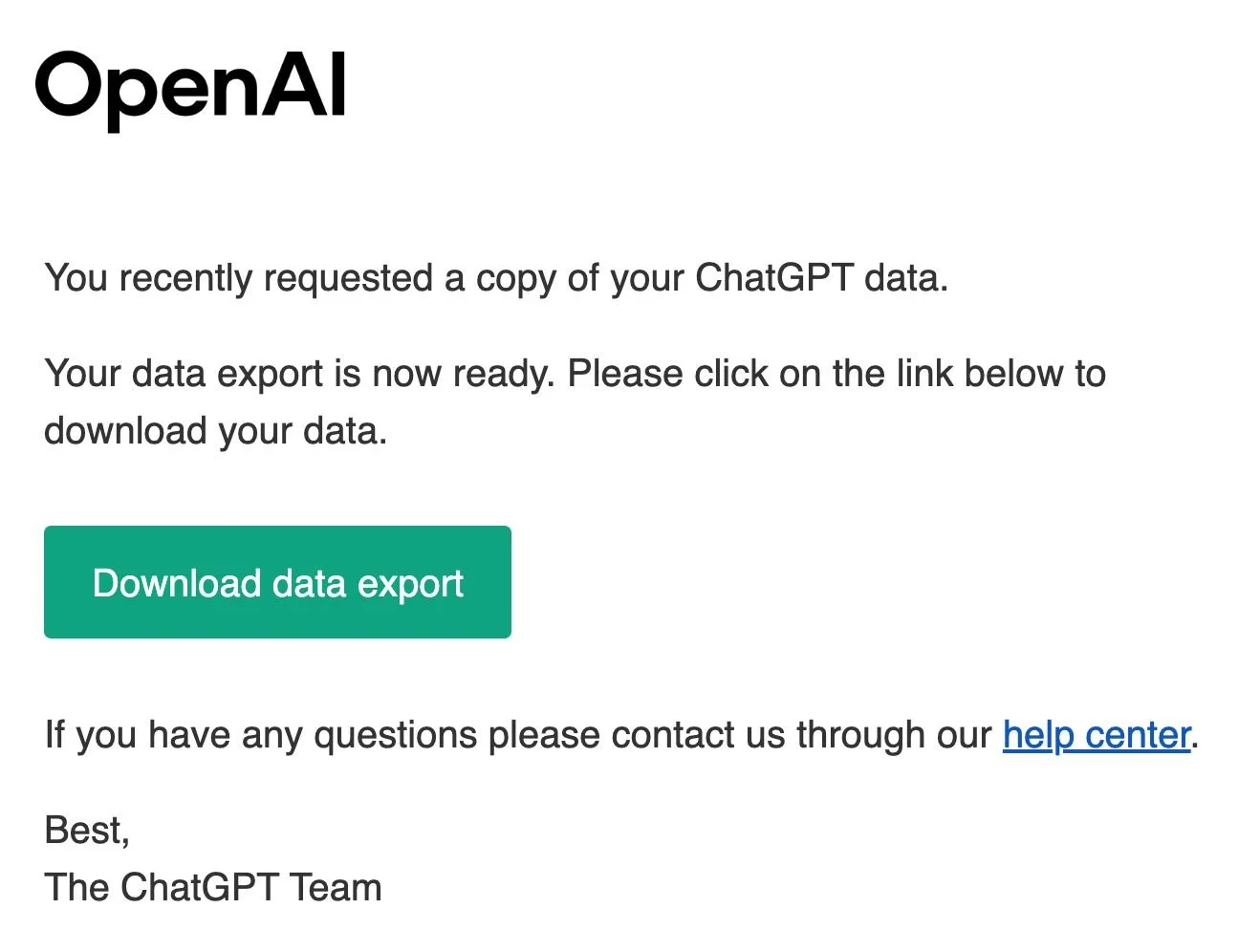
We are used to backing up files, repositories, and email.
We have not yet learned to back up our working context.
Owning the context
The conclusion I’ve come to is simple: the assistant is temporary. The context should not be.
If the system you are building with can forget you, then your process has to assume that it will. That has changed how I treat my own work sessions.
Every meaningful session now produces something I own: a short summary, a decision log, a checklist, or a rough specification. If the outcome only exists inside a chat thread, it is already on its way to being lost.
The same is true for prompts. The ones that matter are treated like source code. They are saved, versioned, annotated, and reused. They represent accumulated thinking, not disposable inputs.
I also maintain a small but growing “bootstrap pack”. It contains current projects, constraints, definitions, writing preferences, and a handful of principles I want any new assistant to respect. It exists precisely because I assume discontinuity. Any new model should be able to be brought up to speed without starting from zero.
Designing for forgetting
AI is helping me ship faster because it finally keeps pace with how I think. But the feeling of an assistant that “knows you” is always provisional.
Models change. Context limits shift. Products evolve. The tuning you built up through months of use can vanish overnight.
There’s another layer to this too. For all its strengths and near-magic capabilities, ChatGPT is still, by most measures, an immature enterprise tool.
Can workspaces be migrated cleanly? What happens when a company is acquired and you’re forced into a different workspace? What happens when access is revoked, policies change, or tools are consolidated?
If your workflow depends on an assistant that lives inside a product boundary you don’t control, discontinuity is not a possibility. It’s an assumption.
Treating context as something you own, rather than something the tool holds for you, changes the equation. The assistant becomes replaceable. Your system does not.
If you want a simple place to start:
Write a one-page description of your current working context
Keep a lightweight decision log for active projects
Save and reuse the few prompts you rely on most
End meaningful sessions with a short summary you can carry forward
Context is not guaranteed to persist.
So back it up.