By Janus Boye
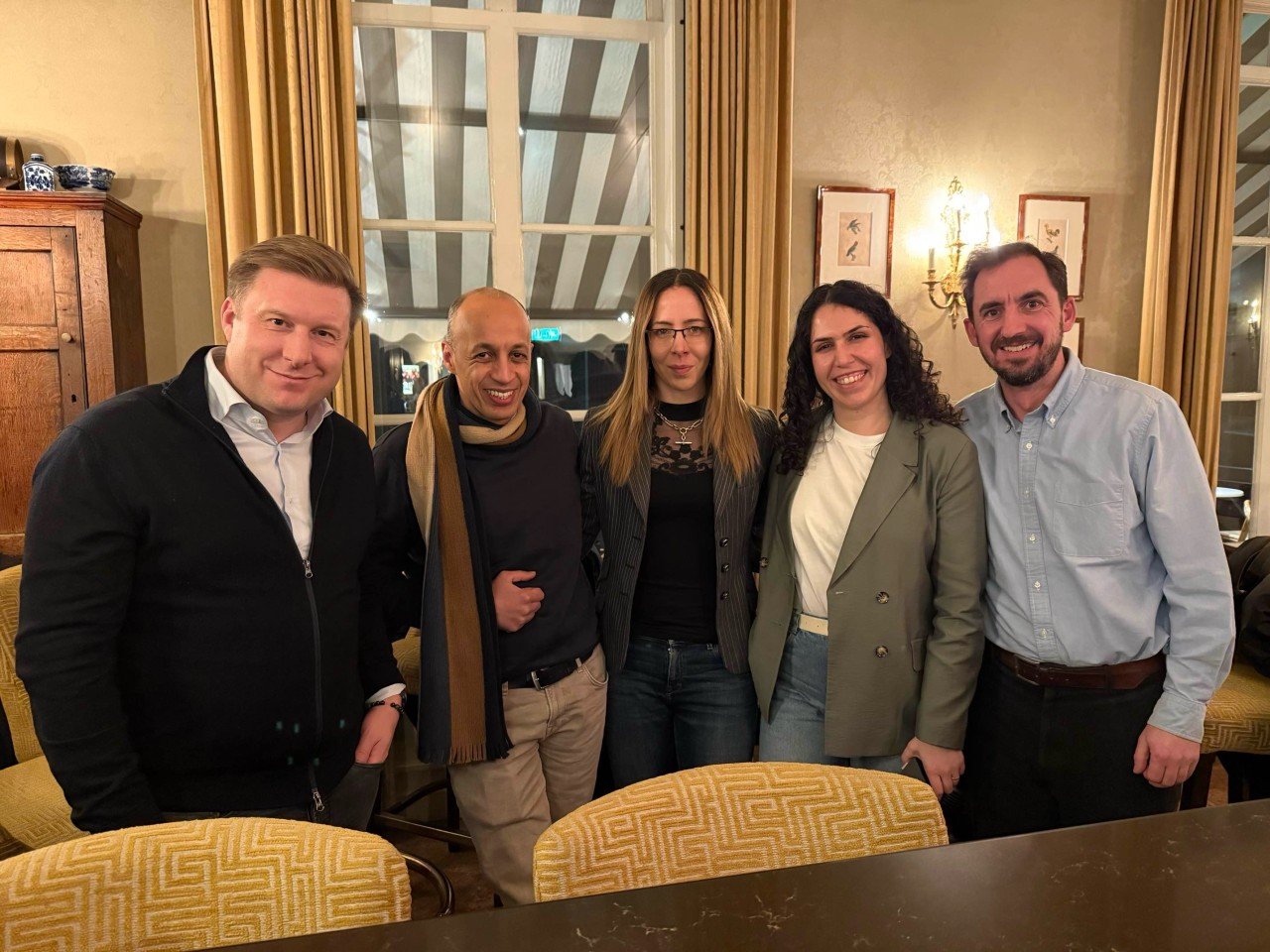
From the informal get-together after our recent Benelux CMS Experts meeting held at the Karel V in Utrecht. From left: Rutger Plak (Crossphase), Sltan Semlali (Sitecore), Una Verhoeven (Altudo), Deniz Ergun (Bloomreach) and Janus Boye
“These kinds of events are what spark ideas.”
Una Verhoeven, EVP Technology & Innovation at Altudo, wrote that to me after a peer group session in Utrecht yesterday. It followed a very good afternoon spent with peers talking openly about the new buyers journey, compliance, digital content, and, naturally, AI.
Over the past weeks, similar conversations have been taking place as our peer groups have been meeting across Europe and North America. Different settings, different disciplines, yet a striking degree of overlap in what people are wrestling with.
A few examples.
Helsinki: understanding what digital content needs to become
With our Finnish digital leaders, the conversation unfolded spanning both public and private organisations. Much of the discussion focused on what digital content needs to become by 2026, and on how expectations are already beginning to shift.
AI featured prominently, but not as a promise of efficiency. Instead, it came up as a force that raises the bar. Content is expected to be more relevant, more consistent, and better governed, often under greater scrutiny and with less tolerance for ambiguity. Several participants noted that while tools are improving quickly, organisational structures, decision rights, and content ownership are not keeping pace.
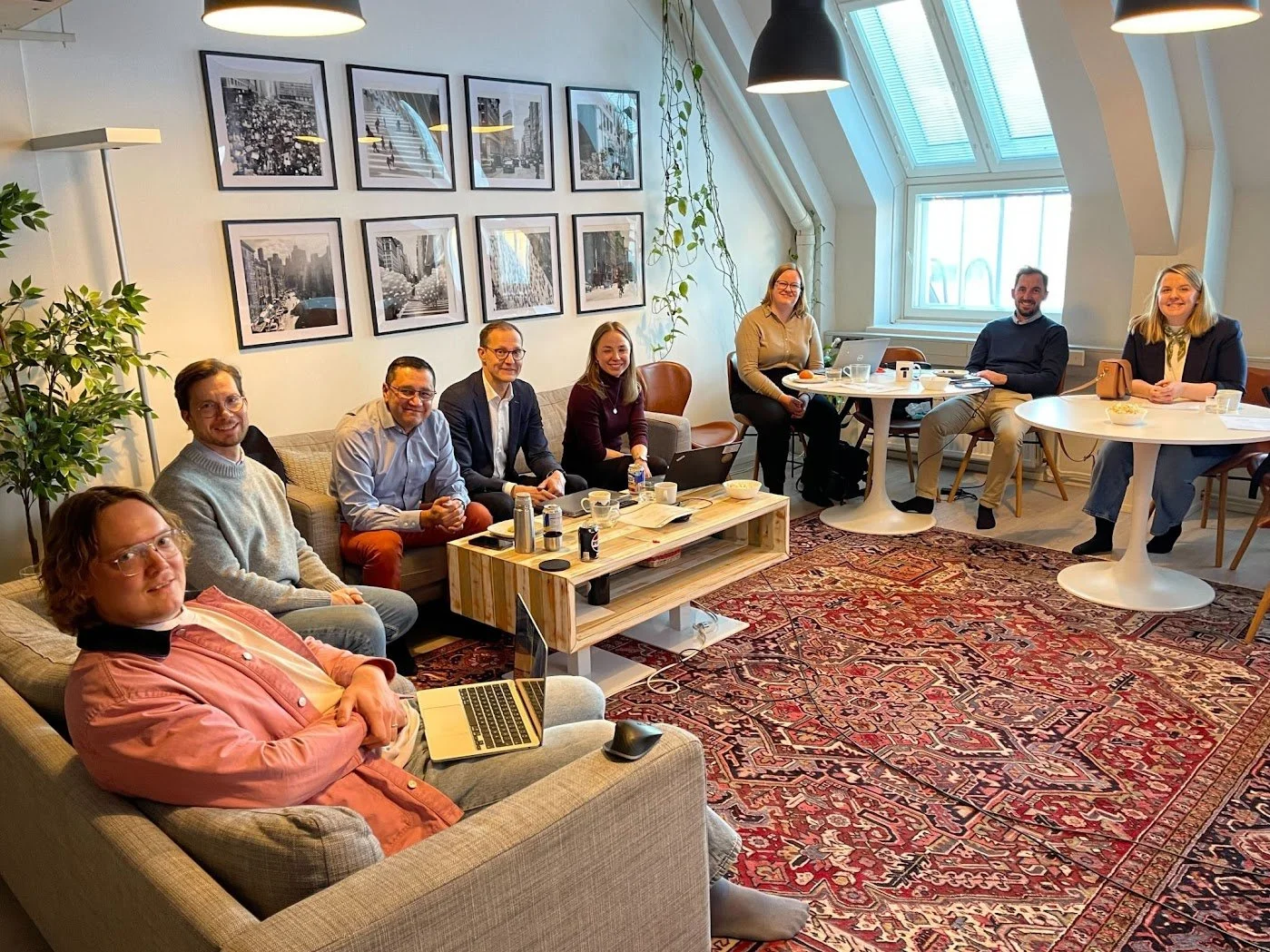
Thanks to Markus Backman at CHAOS for hosting us. What you can’t see here is that it was snowy and -15 degrees Celsius outside. Still, a few of the members biked back and forth to the meeting.
The discussion kept circling back to readiness. How decisions are made. Who carries responsibility when things go wrong. And whether current ways of working are robust enough for the expectations that are quietly forming.
Düsseldorf: evaluating AI in practice
The CMS Experts Group session hosted by TYPO3 took a deliberately practical and evaluative stance. The conversation focused on the very real challenges teams are facing right now, including the emerging GEO discipline, or perhaps more accurately, the next level of SEO. Alongside this, the group grappled with the persistent adoption gap that many organisations are experiencing.
The discussion kept returning to what all of this means in practice for content management and the teams working with it. Live demonstrations, lightning talks, and a healthy debate grounded the day in reality. In short, talking about AI is easy; understanding its implications for content models, workflows, data ownership, and governance is much harder.
As Andreas Kölle from ACTUM reflected afterwards:
“There's something special about being in a room with people who genuinely get excited about the same challenges you're trying to solve.”
Several shared takeaways stood out. Structured data and clear ownership remain essential. Responsibility does not disappear as systems become more capable; if anything, it becomes more visible. And innovation only becomes meaningful when peers are willing to evaluate tools honestly, including where they fall short.
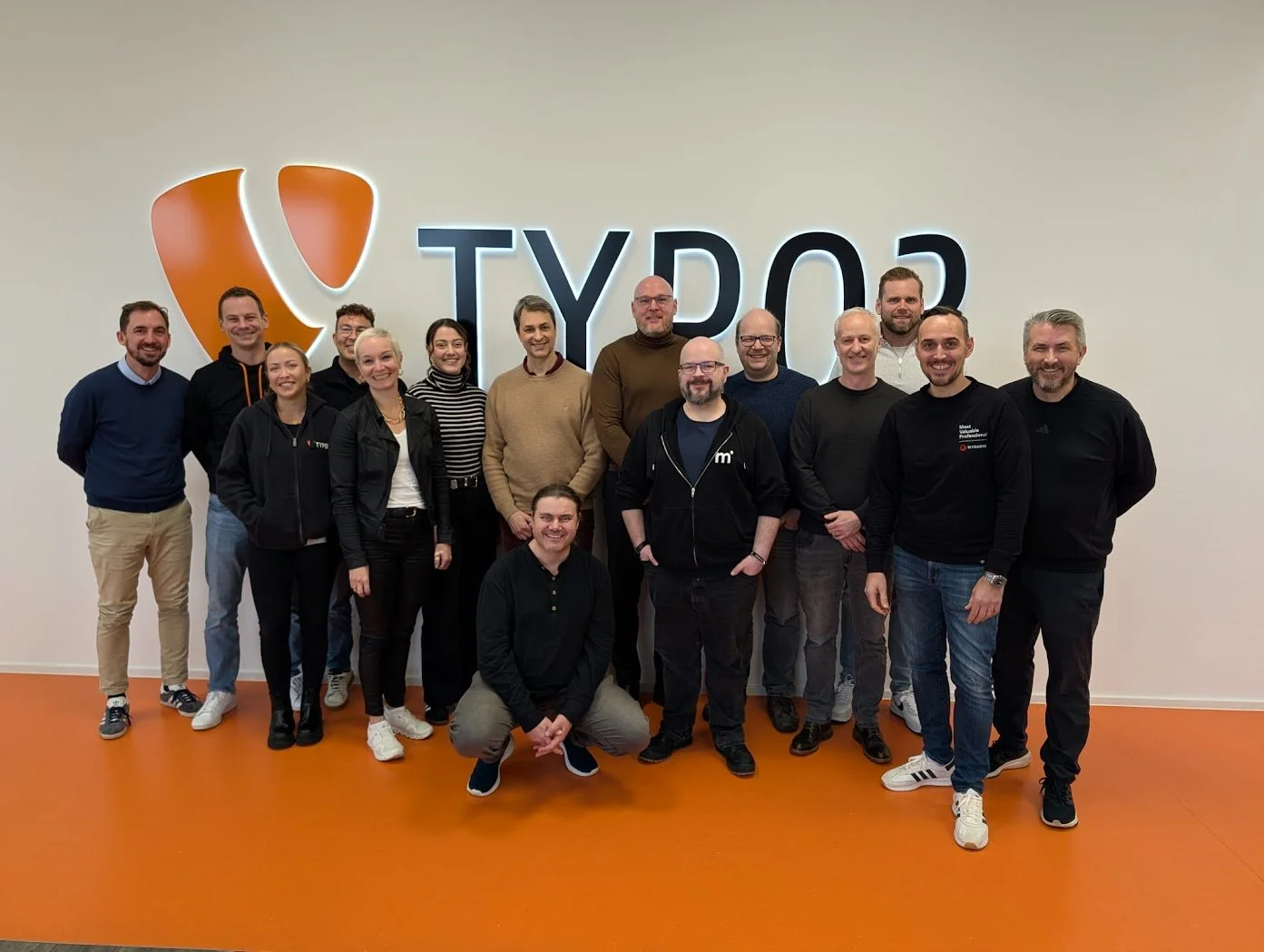
Thanks to everyone who joined us at TYPO3 HQ in Düsseldorf.
Copenhagen: agency in difficult times
At the headquarters of NKT, our Copenhagen design leadership peer group met for an intense day of conversation, moderated by Thorsten Jonas. The tone here was more personal, shaped by what several participants described as unusually difficult and challenging times. Much of the value came from sharing struggles openly and offering mutual support.
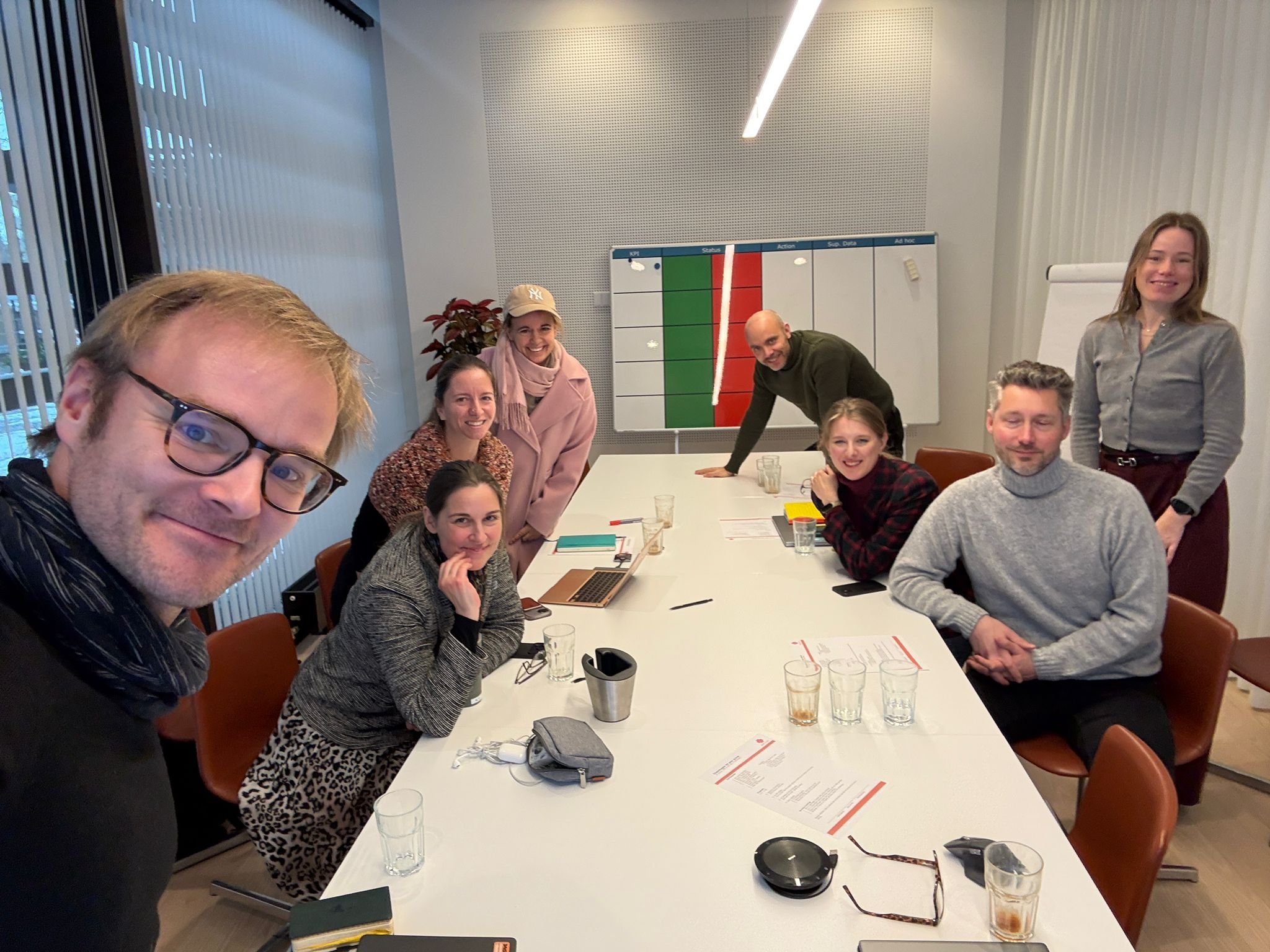
A selfie by Thorsten Jonas from the Copenhagen design leaders meeting held a few weeks ago
AI was again a central topic, but framed less as a tool and more as a force shaping both work and worldview. Participants reflected on how AI influences not just systems and processes, but also expectations of speed, certainty, and scale. A recurring theme was agency. The need to actively shape how these technologies are used, rather than accepting them “as is”.
The session reinforced how important shared, trusted spaces are right now. Not only for exchanging experiences and support, but for collectively making sense of what is happening, and what it means for the roles people hold.
Something has moved
Different cities, different professional lenses. Yet the same unease keeps surfacing. Some anxiety, some hype, but even more a shared sense that the baseline is shifting. Teams are increasingly expected to deliver more clarity, more consistency, and better judgement, often with fewer resources and less room for error.
What stands out is not just what is being discussed, but where. These conversations are happening in smaller peer settings, away from stages and announcements, where people are willing to admit uncertainty and challenge assumptions without posturing. That, I suspect, is where some of the most useful work is happening right now.
The conversation continues
If reading and being a part of an online call is not enough, you’re very welcome to join us more actively. Our community is built around learning together, comparing notes, and exploring how theory meets practice across roles, industries and regions.
You can also:
join our free, regular member conference calls
find a peer group that matches your role and challenges
attend our unique conferences, designed for deep discussion rather than surface-level inspiration
read this related piece on HBR: AI Doesn’t Reduce Work—It Intensifies It
However you choose to engage, we’re glad you’re here and part of the journey.