
By Joel Varty
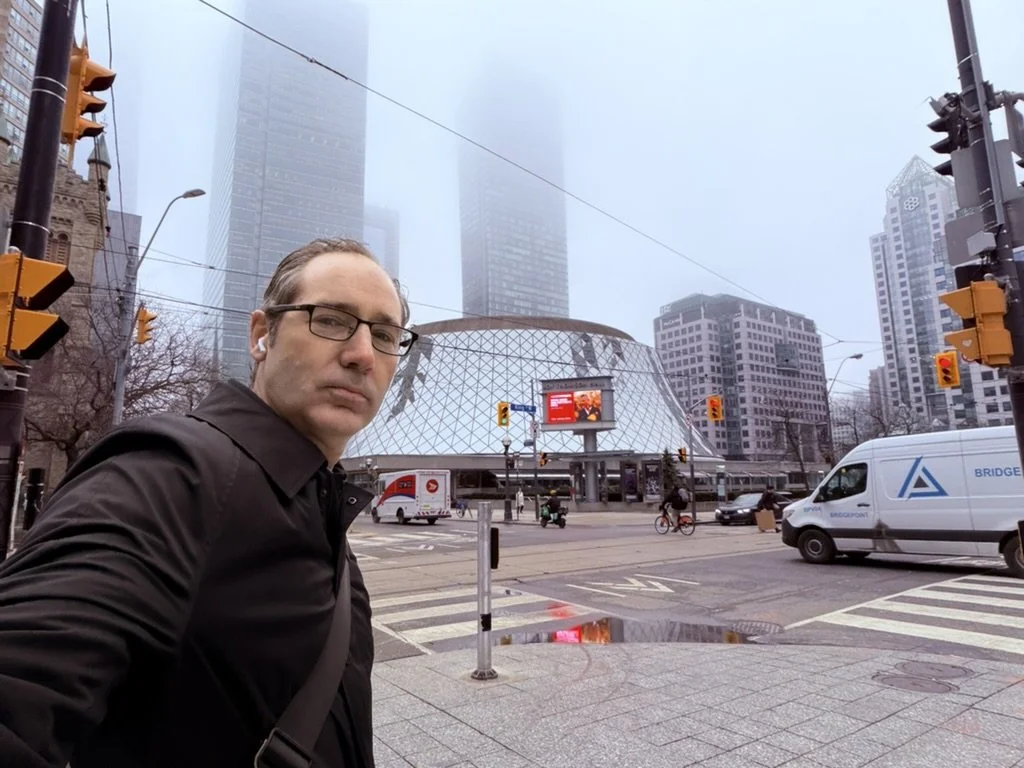
Foggy downtown Toronto on a brisk March morning
Wednesday's CMS Experts / Digital Leaders meeting in Toronto was one of those afternoons that reminds you why showing up in person still matters. It was also a great excuse to get out of the home office for the day.
I grabbed coffee at the excellent Jimmy's, walked through a foggy downtown, and even spotted a former office space that Agility CMS once occupied. Sometimes you need to be out in the world to think clearly about the world.
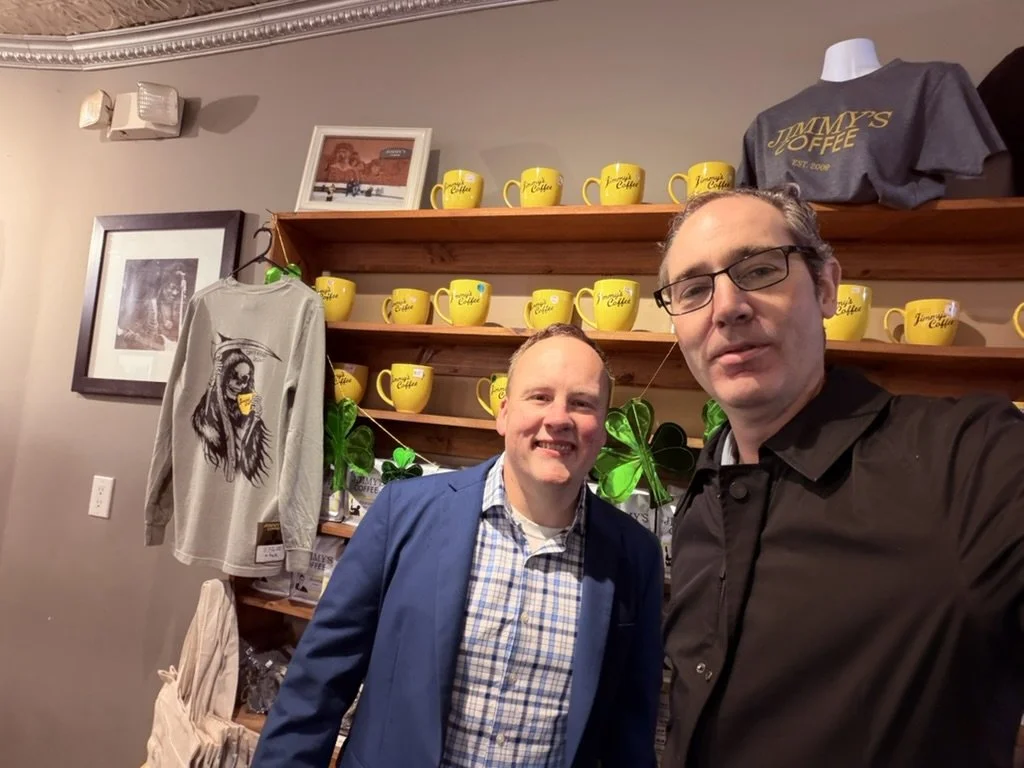
Coffee at Jimmy's with Matt McQueeny
Hosted by Andrew Baker and Ben Switzer at Havas, with about 15 of us around the table, the conversation covered ground that I think every digital leader needs to be paying attention to right now.
It was also great to connect with the Havas team in person, given their work with Scene, a long-time Agility CMS customer. Those cross-pollination moments between vendors, agencies, and practitioners are exactly what makes this group valuable.
The State of Digital Content: Sean Stanleigh, The Globe and Mail
Sean Stanleigh, who heads up Globe Content Studio at The Globe and Mail, gave what I'd call the standout talk of the afternoon. His session on the state of digital content was excellent, and I walked away having learned more than I expected about how Canada's national newspaper is evolving.
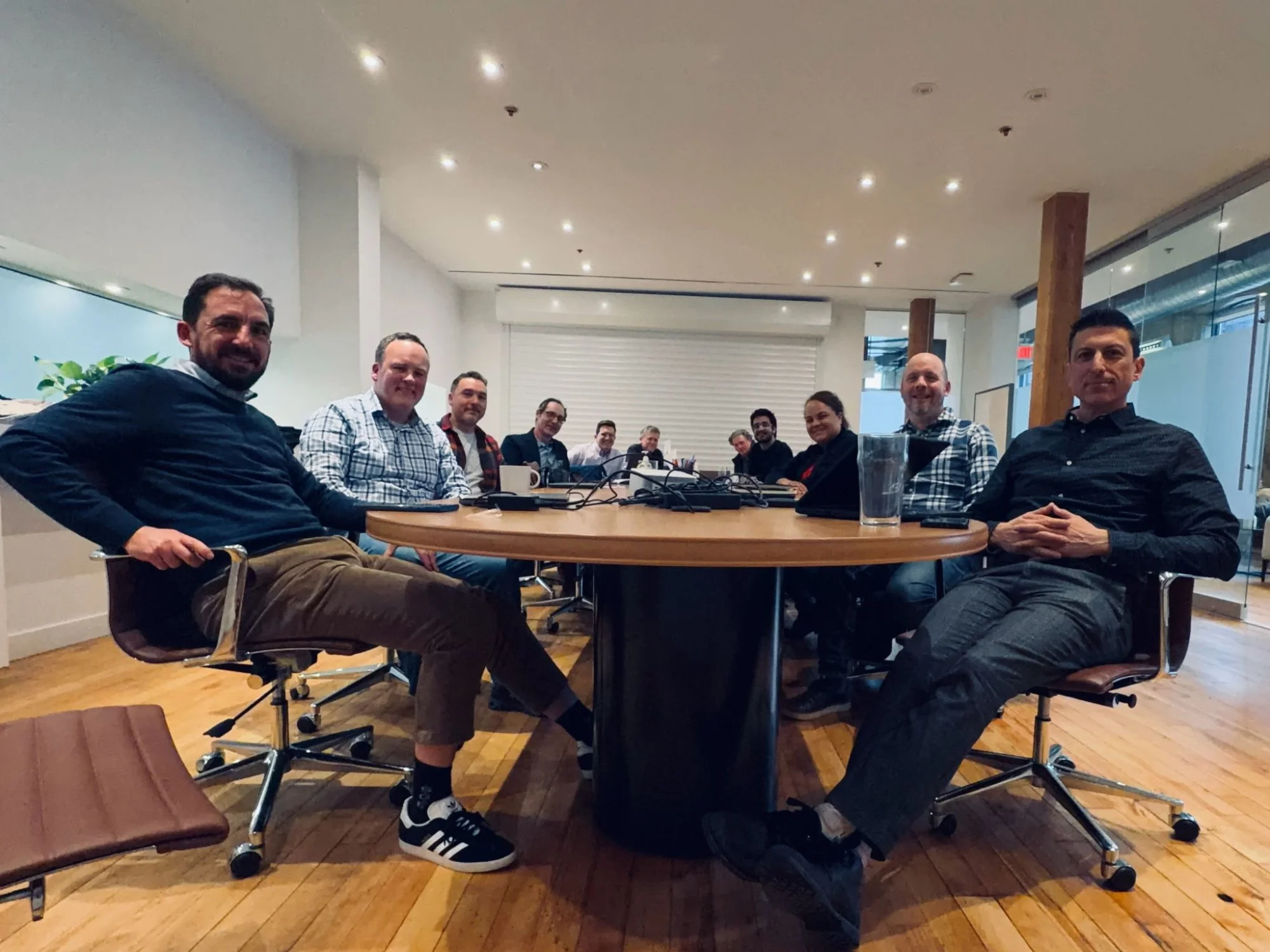
The CMS Experts / Digital Leaders group at Havas in Toronto
The emphasis on storytelling really resonated with me, and not just as a content strategy talking point. Storytelling is how we connect. It's what holds our attention beyond that inital three second. It's how we make sense of the world and relate to each other. That's true whether you're a journalist, a marketer, or someone trying to explain a product to a potential customer. When Sean talked about storytelling at the Globe, he wasn't describing a tactic. He was describing the thing that makes content worth consuming in the first place.
It reminded me of Deane Barker's talk at CMS Connect 25 in Montréal, where Deane explored different storytelling techniques and made the case for bringing forward the importance of stories into the world of technology. Sean brought that same energy, but from the perspective of someone who lives at the intersection of editorial integrity and commercial content. In a world where AI can generate infinite content, the ability to tell a story that actually lands with a human being is becoming more and more valuable.
What I found particularly fascinating was the Globe's revenue model evolution. They've shifted heavily toward a subscriber-first approach, similar to what the New York Times has done. The Globe is, in many ways, more of a B2C company now than it used to be. But sponsored content and advertising are obviously still a huge part of what they do.
The broader point about integrity and the importance of media right now also landed for me. At a time when trust in institutions is eroding and AI is generating content at an unprecedented scale, the role of credible, human-driven journalism matters more than ever. The Globe is leaning into that from a core values and purpose-driven perspective.
AEO, GEO, and the Quiet Traffic Shift
Matthew McQueeny from US-based iMedia kicked off an important conversation around AEO (Answer Engine Optimization) and GEO (Generative Engine Optimization). If you haven't been tracking these terms, they describe the practice of optimizing your content so that AI platforms like ChatGPT, Google AI Overviews, Claude, Perplexity (and, and, and...) surface it as the answer, not just a link in a list. THey might even provide a link to your content (perish the thought!).
Matt's take was practical: this is a really interesting and topical discussion to be having with clients and stakeholders right now, because a new reality is hitting home. Organizations are seeing their website traffic fall significantly as AI answers replace clicks. Coming back from that kind of loss feels urgent for a lot of teams.
There is a nuance that often gets lost in the panic though. Many organizations are now seeing better quality traffic. The visitors who do arrive are more qualified, more intentional, and in some cases are leading to more conversions, or better conversions. Volume is down, but value may be up. That's a story worth telling internally, especially to leadership teams who are watching their analytics dashboards with growing concern.
Google's Patent: When the Platform Becomes the Page
Justin Cook from local digital agency 9thCO brought up a recently granted Google patent (US12536233B1) that describes a system for scoring landing pages and, if they don't meet a quality threshold, replacing them entirely with AI-generated pages personalized to the individual user.
Google is patenting the ability to look at your website, decide it's not good enough, and substitute their own AI-generated version. The replacement page would be assembled from your content, the user's search history, and Google's own models. Your brand, filtered through Google's lens.
I think what we're seeing is Google pushing its AI imperatives beyond search and right into websites themselves. The intermediation isn't just happening on the results page anymore. It's reaching into the site experience. And if your landing page becomes optional in Google's eyes, the question of who owns the customer experience stops being philosophical and becomes operational.
Digital Sovereignty: Trust, Confusion, and a Shifting World
The group also spent time on digital sovereignty, a topic that carries a lot of confusion right now. The parallel to AI is striking: just as organizations struggled (and still struggle) to define what AI means for their operations, they're now trying to figure out what digital sovereignty means in practice. Can we trust the platforms we've built on? Can we trust the institutions that regulate them?
The geopolitical landscape has shifted massively, especially from the EU point of view, and the old assumptions about where your data lives, who controls it, and whose laws govern it are being re-examined in real time.
What I Took Away
Thanks to Janus Boye and the entire CMS Experts / Digital Leaders group for another sharp afternoon. If you're not part of the Boye & Co community yet and this kind of conversation appeals to you, it's worth looking into becoming a member.
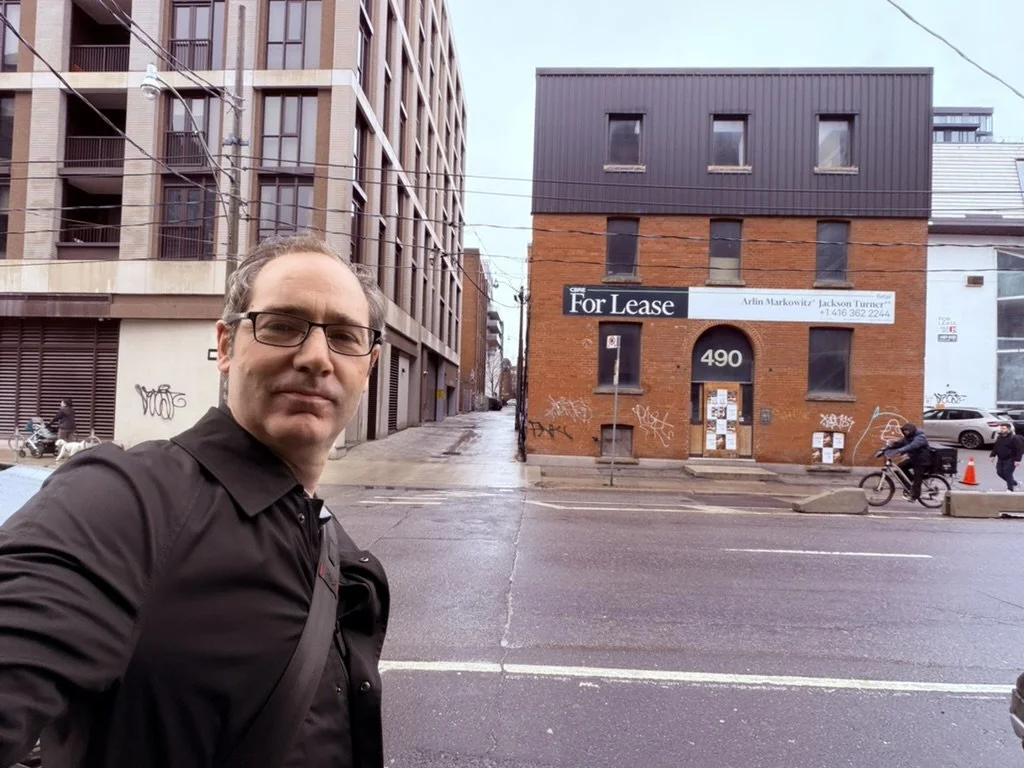
Former Agility CMS office at 490 Adelaide
The day also included an informal lunch at Gusto (the mushroom pizza did not disappoint) and a walk past 490 Adelaide, a former Agility CMS office. A nice reminder that this industry (and my career) has layers of history, even in the physical spaces we've occupied.
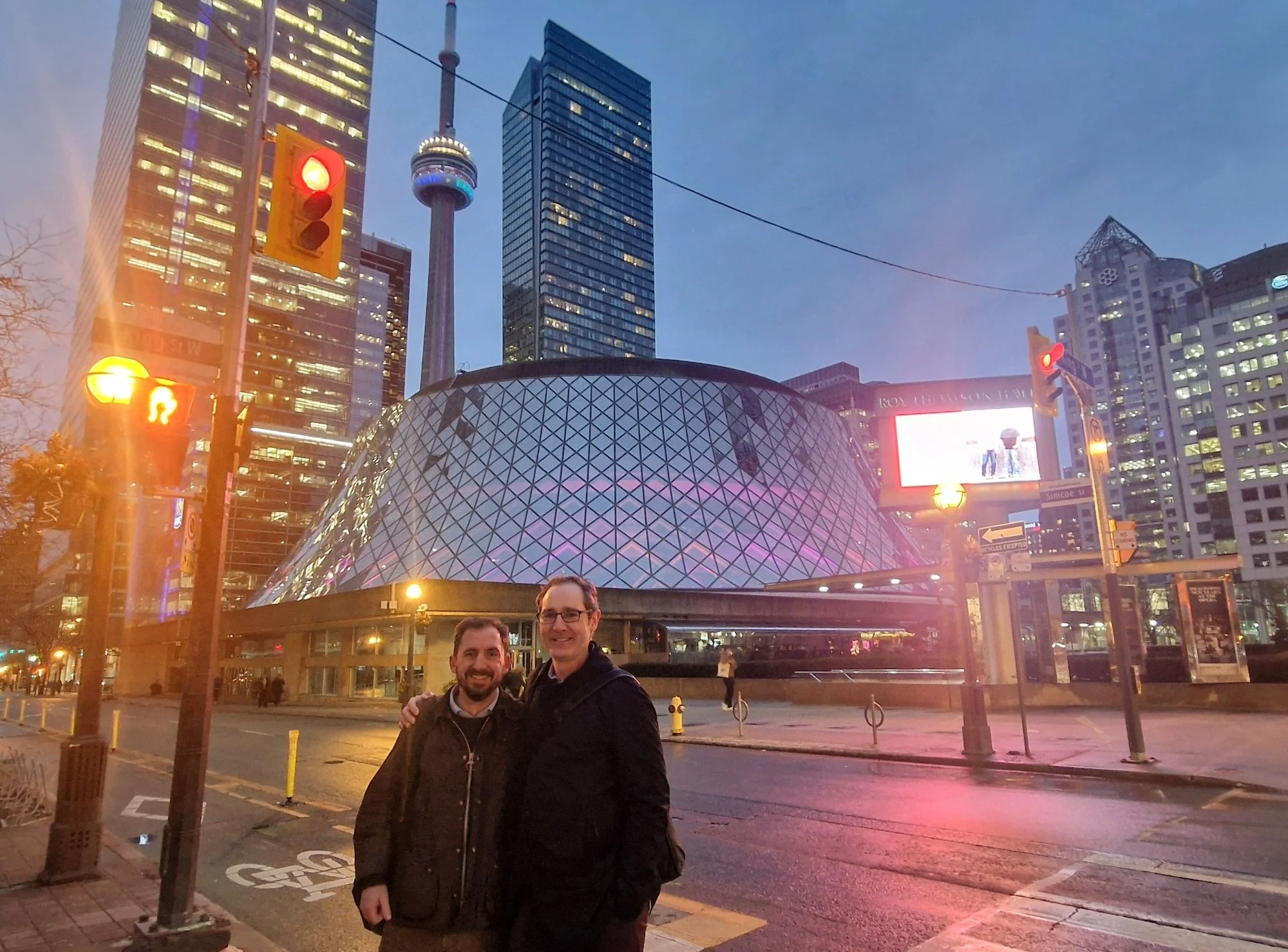
From the walk back to Union Station with Janus after the group meeting
Learn more
Joel Varty is CTO at Agility CMS and has been building content management solutions for over 20 years.
The next Canadian meetings are Q2 in Ottawa, Vancouver, Toronto, and Montréal, with CMS Connect 26 in Montréal on August 4-5.