AI is already changing how work gets done. That's not the headline anymore.
The real story is something quieter — how uneven that change looks across organizations. In some companies, AI is already woven into daily workflows. In others, people experiment quietly on the side — almost like a guilty habit. The gap between those two realities is widening fast. And it's creating a new kind of organizational tension that most leaders haven't named yet.
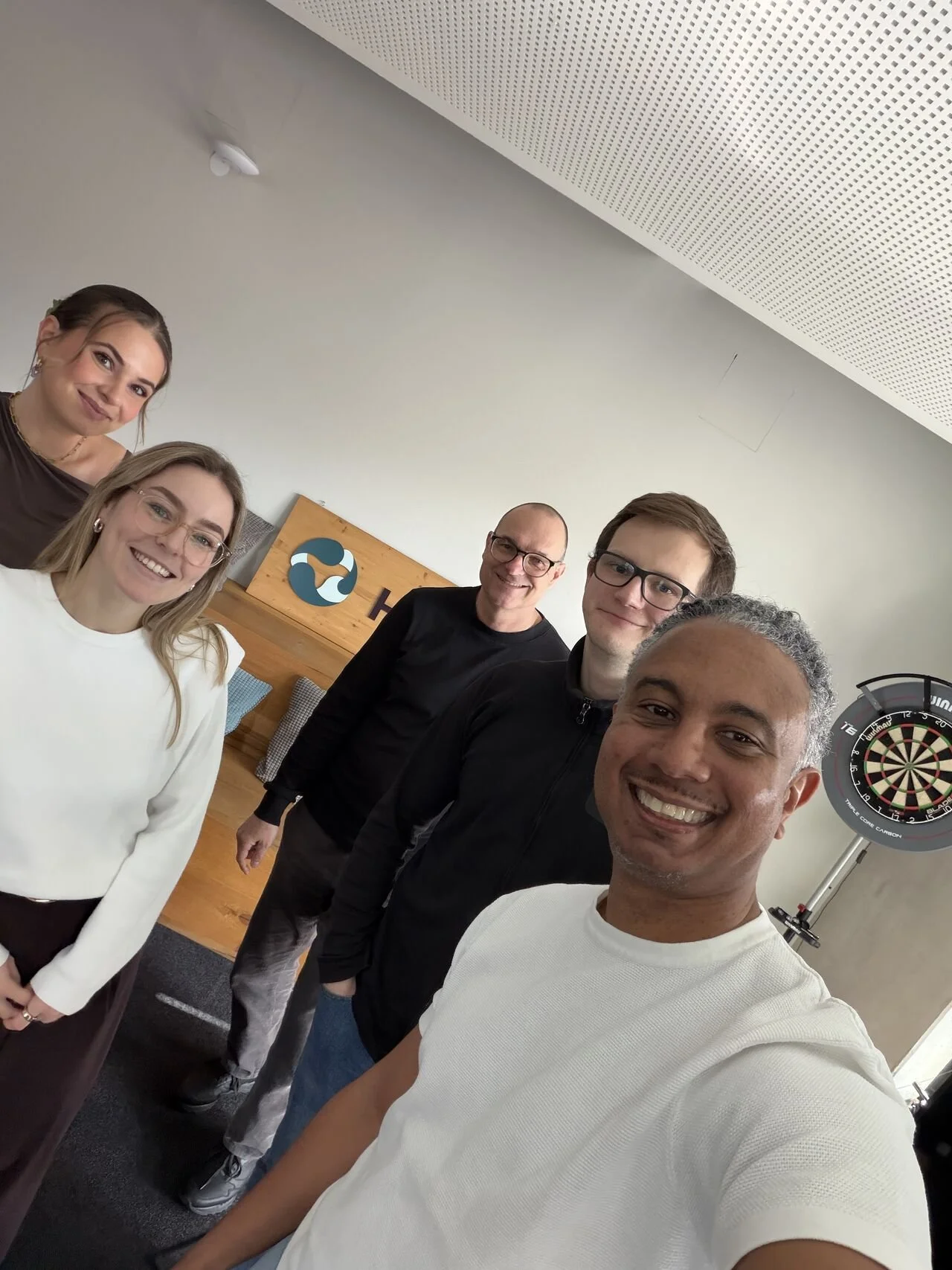
I was reminded of this during a recent session with our Hamburg employee experience group, hosted by Haiilo. The conversation was heavily human — but AI threaded through almost every topic.
There's a lot of change at our door right now. The better question isn't what's changing. It's whether organizations are actively shaping that change — or just managing people through it.
Here's what stuck with me.
Change fatigue is real, and it is layered
Change fatigue came up early. And it's more layered than most people realize.
There's the speed of AI adoption. There's the broader uncertainty — the news cycle, the economy, the "what's next" anxiety that never quite goes away. Someone described it as "running just to stay in place." That landed hard.
But here's the thing: fatigue rarely comes from the change itself. It shows up when people don't understand the why and the why now. Jennifer Pfeifer put it simply — two sentences that could fix a lot of what's broken in organizational communication right now.
Most organizations focus their messaging on what is changing. They explain the new tool. The new process. The restructure. What they skip is why it matters and how it connects to something the employee actually cares about. That's the gap. And it's where fatigue festers.
Trust and communication are non-negotiable
Trust and communication go hand in hand. And both are fragile.
When transparency is handled well, it creates safety. People lean in. They raise their hand. They take ownership. When it's missing? They disengage quietly. They still show up. But the sense of belonging starts to erode.
Here's what I noticed in the conversation: the language is shifting. People aren't asking "how can I contribute?" anymore. They're asking "is this even the right place for me?" That's a fundamentally different question. And it signals something deeper than engagement scores can capture.
People need to feel like they belong somewhere — not like they're being managed through a process.
That's a line worth sitting with.
AI at work — tools, training, and the gaps in between
There's no shortage of AI tools. Copilot, Claude, Perplexity, NotebookLM, Gemini, Consensus — it was actually refreshing to hear people using so many alternatives to ChatGPT. (Yes, we talked about AI as well. We're experts, not savages.)
But the real issue isn't the tools themselves. It's consistency of adoption.
Some people are actively experimenting. Others are barely touching them. The result is uneven outcomes across teams — and organizations keep treating it as a training problem.
It's not a training problem. It's a use case problem.
If the goal is similar outcomes across the organization, you need to define the use cases before you design the training. Otherwise, you build a generic workshop, people nod politely, and then go back to whatever they were doing before.
Additional resources shared with the group:
Timo app — AI-assisted productivity at its best
It also raises a more practical question that came up in the room: what do people actually use AI for in their daily work? And how visible is that usage across the organization? Most leaders I talk to don't have a clear answer.
Neurodiversity at work — a huge opportunity hiding in plain sight
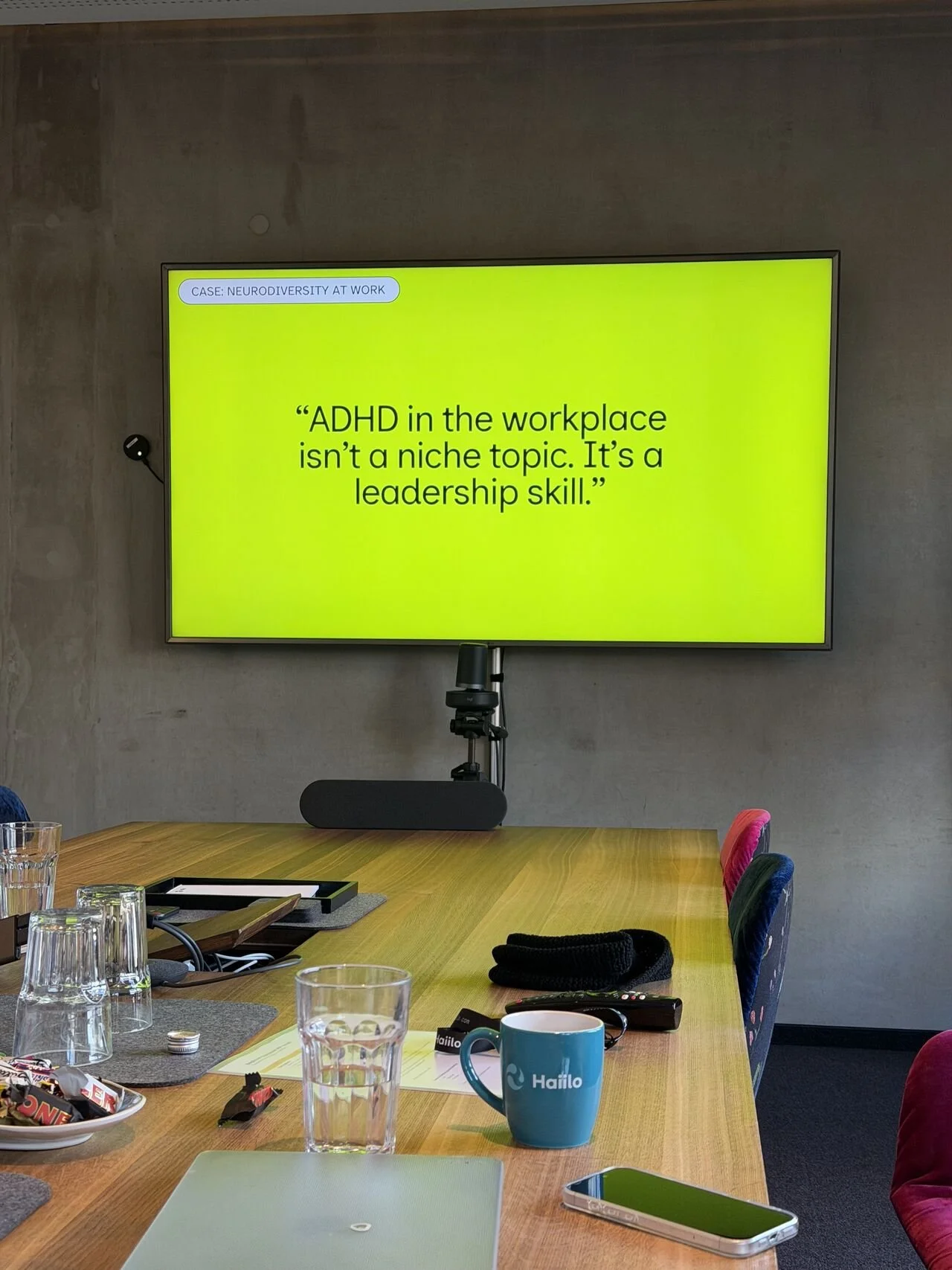
This was the session that shifted the energy in the room.
Antonia Fedder, who works closely with organizations on neurodiversity and inclusion, joined us and shared some eye-opening data. In a company of 1,000 people, somewhere between 150 and 200 colleagues may be neurodivergent. That's 15–20% of your workforce.
I don't know about you, but that number stopped me cold.
Most don't disclose it. Not because they don't want to — but because the environment doesn't feel safe enough. That gap between potential and reality is enormous.
And the data backs this up. SAP, Deutsche Telekom, and Walmart came up as organizations where small, structural adjustments — not expensive overhauls — led to measurable outcomes. Reduced turnover. Higher productivity. Better team dynamics. The opportunity isn't abstract. It's already sitting inside most organizations, waiting for the conditions to surface.
For anyone who wants to go deeper, a few resources shared after the session are worth your time. Victoria Honeybourne's Neurodiversity is a practical starting point. The ADHD Foundation offers a useful overview of how different cognitive profiles show up at work. And for a research-led perspective, the McKinsey Health Institute's work on neurodiversity begins to quantify both the challenge and the opportunity.
Burnout is often misalignment in disguise
Burnout gets framed as overload. Too much work. Too many meetings. Slack messages that never stop.
But in practice? It's frequently misalignment.
When what you do doesn't connect to why you do it, everything becomes draining. Even small tasks feel heavy. When the purpose is clear, the same pressure is experienced differently. Not easier — but far more sustainable.
The distinction matters. Focusing only on reducing workload misses the deeper issue. Reconnecting people to the "why" changes how work feels — even when the volume doesn't change.
The conversation continues
What stood out in this conversation is how similar the underlying challenges are across organizations. Different industries. Different sizes. Varying stages of AI adoption. But the same patterns kept surfacing: change fatigue, trust gaps, uneven tool adoption, untapped neurodiversity potential.
We're navigating a shift where technology, organizational structures, and human experience are all moving at different speeds. That tension is real. But it also creates space to be more deliberate about how change gets shaped — and how people are brought along with it.
A few of the books and resources shared afterward point in the same direction. Edward Bernays' Propaganda. Eric Hoffer's The True Believer. Robert Cialdini's Influence. Different eras, different angles — but the common thread is the same: how people respond to change, persuasion, and uncertainty. Whether you're leading through an AI transformation or a restructure, the human dynamics don't change. People need to understand the why. They need to trust the messenger. And they need to feel like they're part of the story, not watching it happen to them.
These are conversations we continue to explore in our Boye & Company peer groups and gatherings. If you're navigating similar challenges — and chances are, you are — the table is always open.