
By Janus Boye
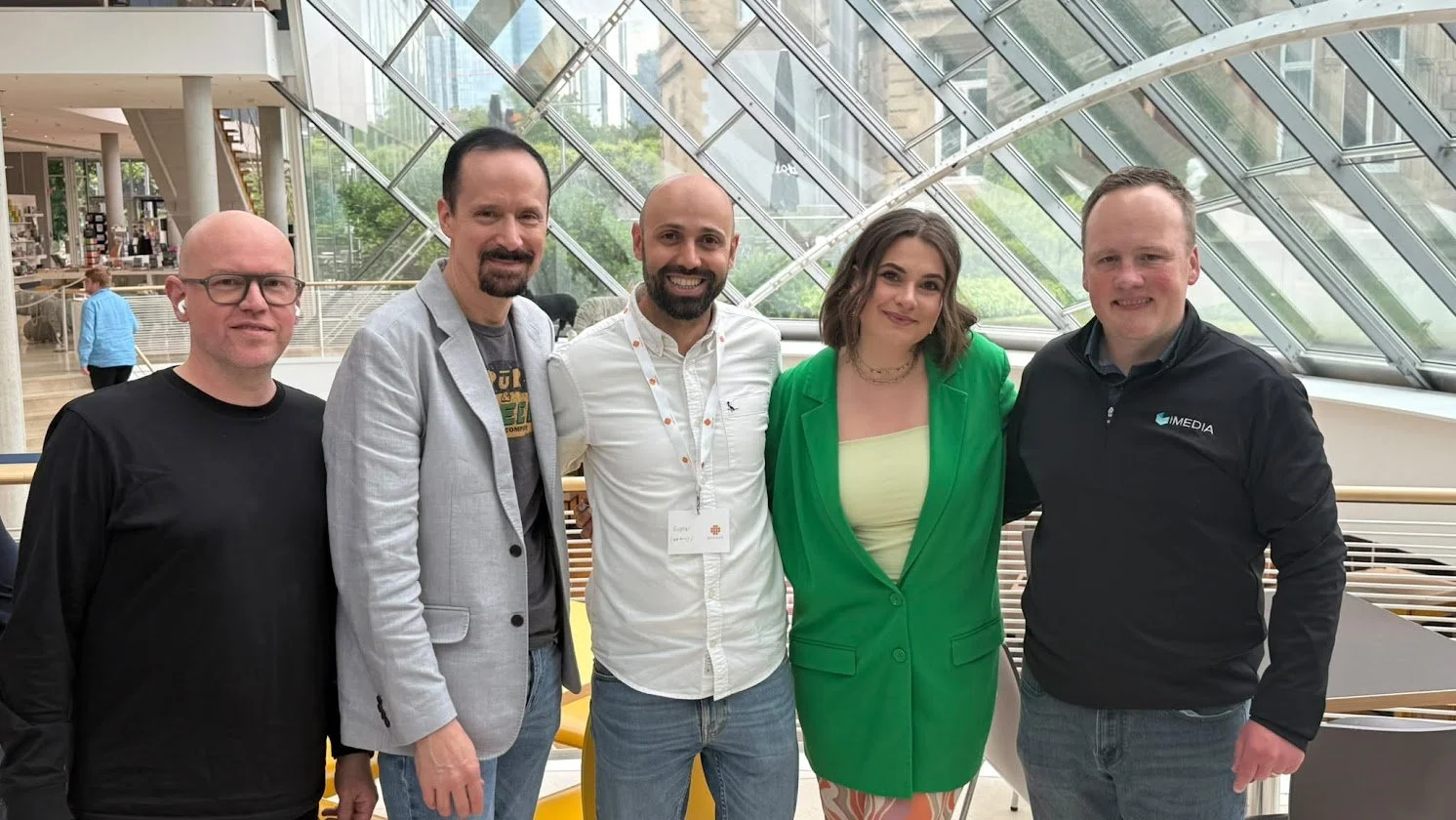
A very happy Webiny founder and CEO Sven Al Hamad; surrounded by CMS Idol 26 host and judges Markus Schork, Matt Garrepy, Antonia Fedder and Matt McQueeny
Organisations know more than they publish.
Brand guidelines exist. Product knowledge exists. Audience insights exist. Editorial standards exist. Yet when AI generates content, much of that knowledge often remains out of reach.
The challenge is rarely a lack of information. More often, organisations struggle to make their knowledge available where it can be used.
That challenge surfaced repeatedly at CMS Summit 26, held in May at Frankfurt's Museum für Kommunikation. Around 100 digital leaders gathered for two days to discuss content management, digital experience, and AI.
One of the highlights was the European CMS Idol competition, where CMS vendors demonstrate their platforms live before an audience of peers and practitioners.
Representing Webiny, founder and CEO Sven Al Hamad demonstrated an approach to AI-assisted content creation focused on bringing organisational knowledge, context, and expertise into the content creation process. The presentation received the most votes from participants and won this year's competition.
Why Webiny stood out
Webiny is an open-source, composable CMS and digital experience platform and the live demo focused on a question many organisations are now facing: how to connect AI-generated content to the knowledge they already possess.
In just six minutes, Sven Al Hamad presented an approach to AI-assisted content creation built around choice, context, and organisational knowledge.
Which model should be used? Which audience is being addressed? Which sources should inform the result? How does the content reflect an organisation's own expertise?
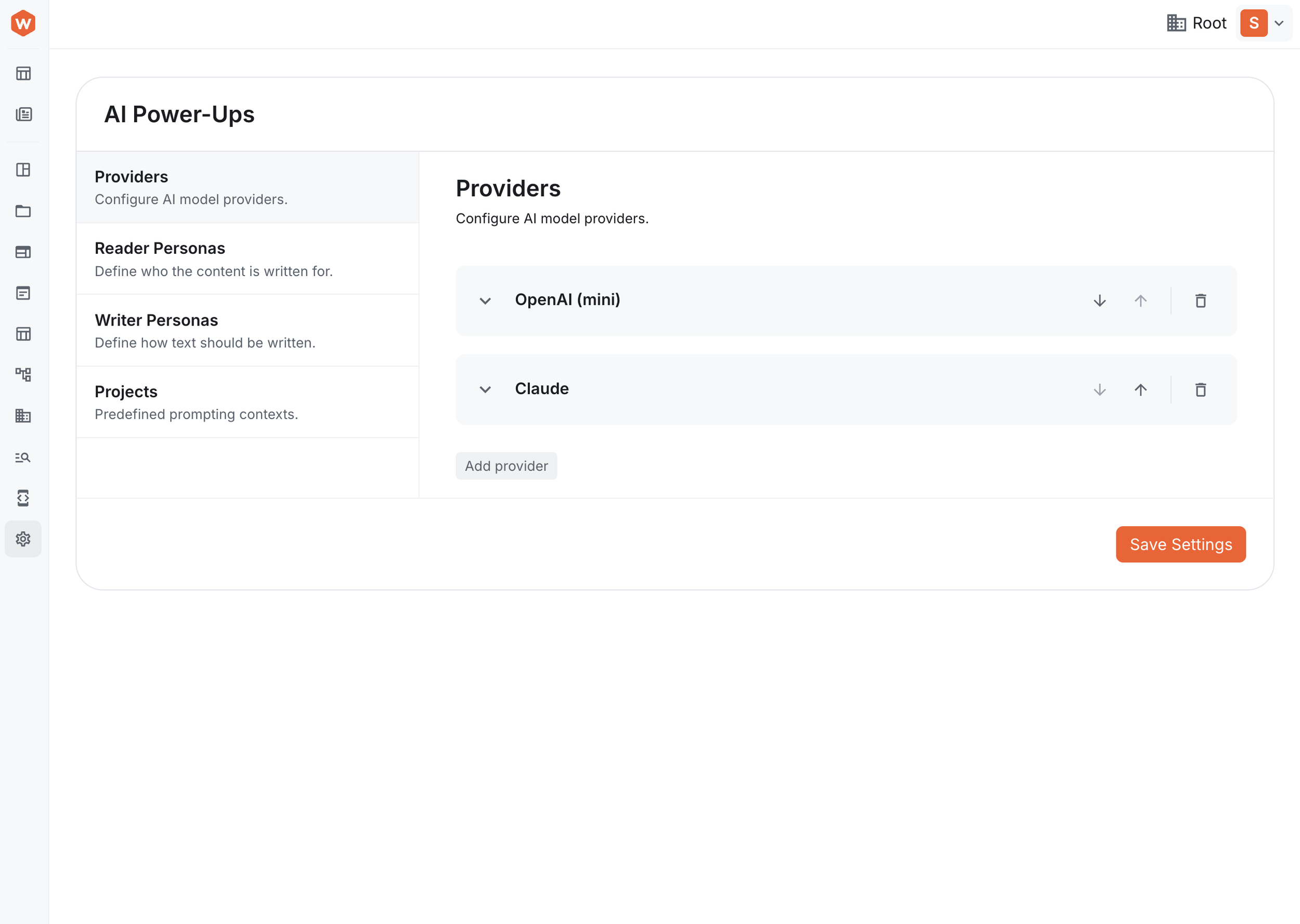
Webiny showed how you can pick and configure your AI model provider
What the winning demo showed
Rather than treating AI as a single feature, Sven Al Hamad demonstrated a framework built around a series of choices.
Users could select which language model to use, define audience personas, establish writer personas that reflected their brand voice, and provide source material through uploaded documents and other reference content.
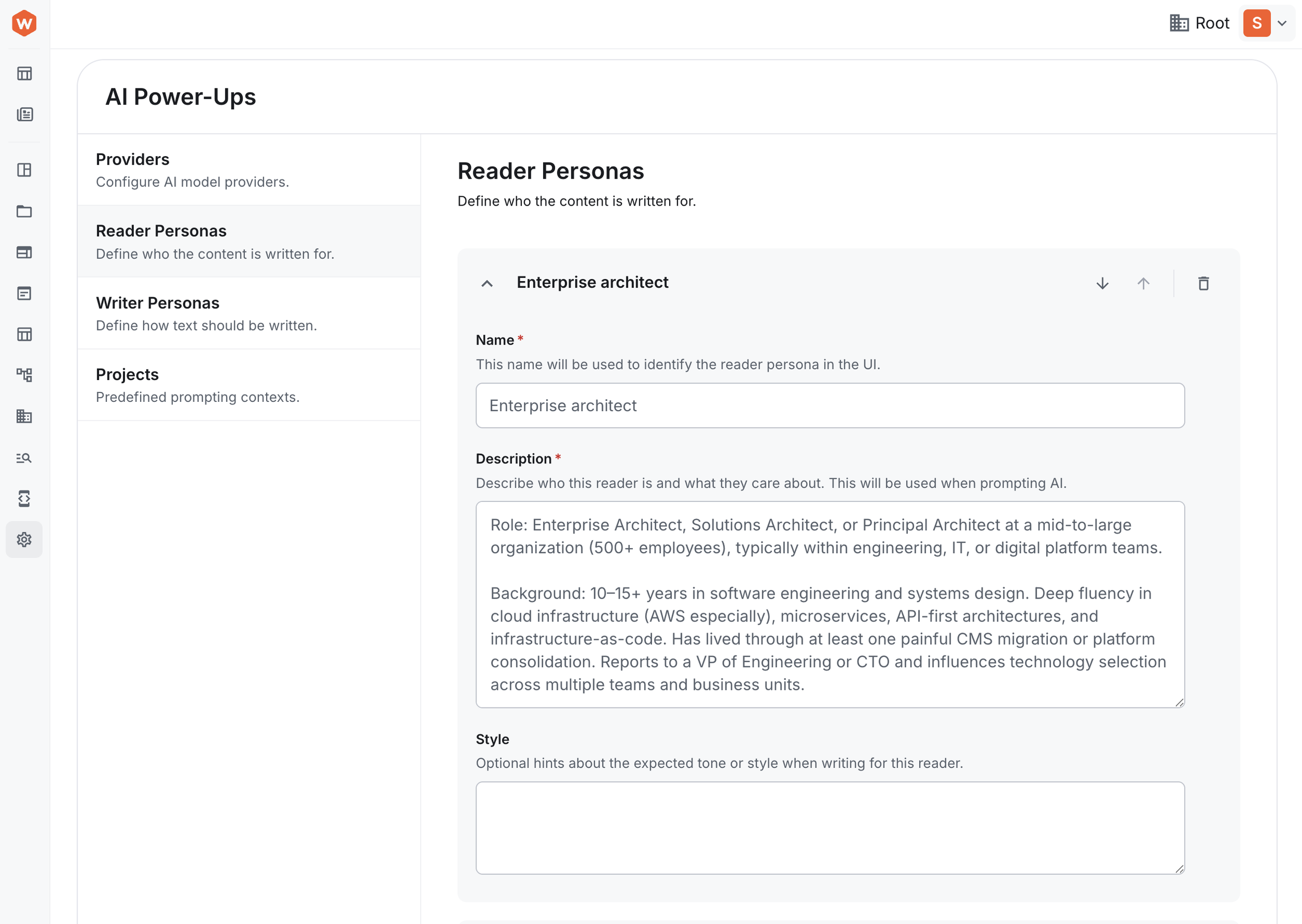
A sample enterprise architect reader persona as configured inside Webiny
Working within Webiny's visual website builder, the system then generated complete pages using both standard and custom components. Component descriptions themselves became part of the context available to the AI.
The demonstration showed how AI can work with organisational knowledge rather than operating independently of it.
Many organisations already possess the information needed to create effective digital experiences. The challenge is connecting that information to the systems producing content.
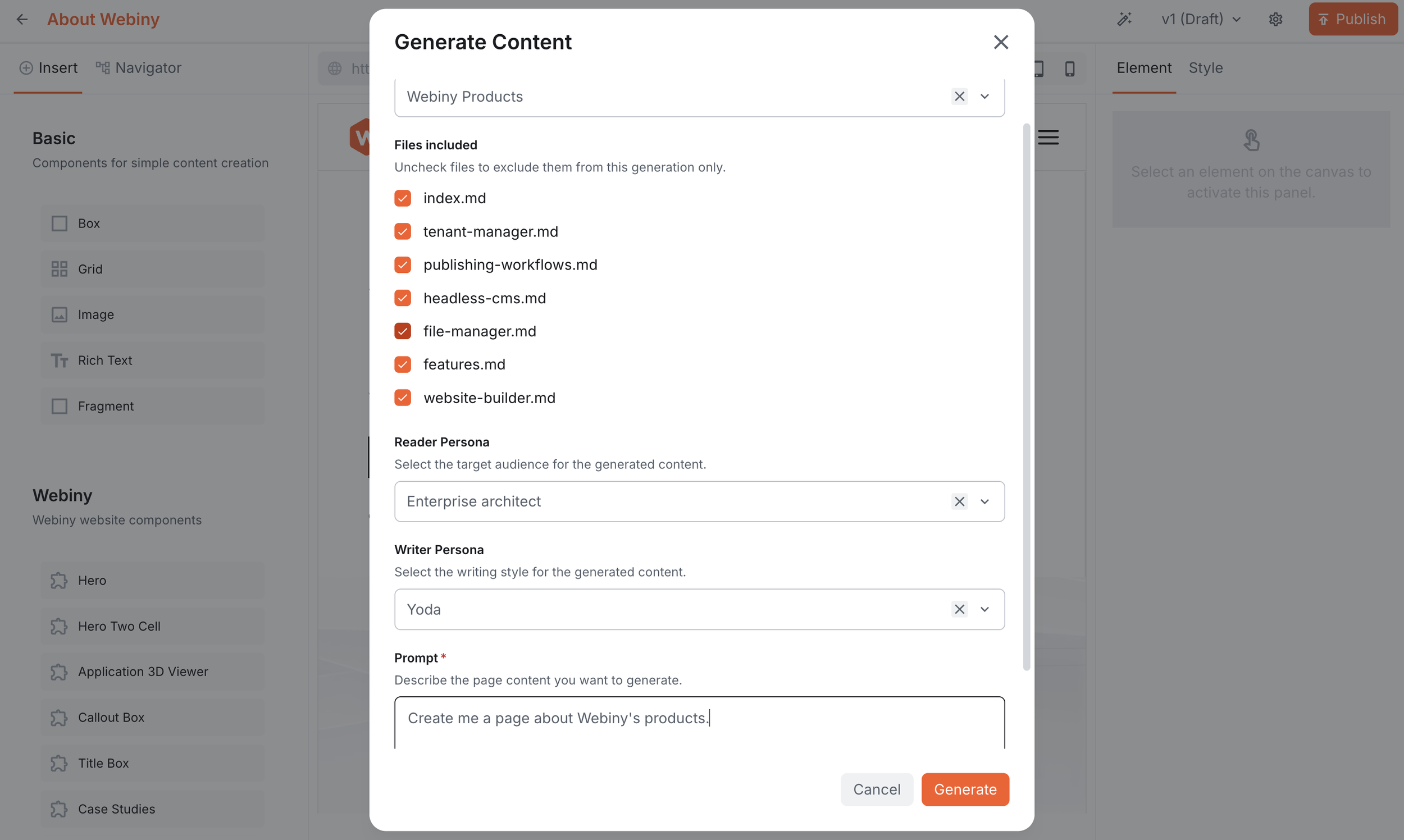
Building on AI skills to generate content inside Webiny
For a longer view of the feature, you can lean back and enjoy this 12-minute video:, where Sven walks through the full workflow inside the Webiny Website Builder.
A snapshot of the CMS industry
This year's European CMS Idol featured demonstrations from CKEditor, Griddo, Neos, TYPO3, and Webiny.
Unlike many industry awards, the winner was determined by the participants themselves. After the presentations, attendees voted for the demonstration they found most compelling, selecting Webiny as this year's winner.
Antonia Fedder, Markus Schork, and Matthew McQueeny served as judges, providing questions, observations, and perspective throughout the competition.
The format has long served as a useful snapshot of where the CMS industry is heading. Vendors have limited time to demonstrate how their platforms address real-world challenges, making CMS Idol a useful way to observe which ideas are gaining traction across the market.
This year, AI was visible throughout the competition. Equally visible was a growing focus on context, flexibility, and the relationship between AI systems and organisational knowledge.
Looking beyond the demo
CMS Idol winners are often remembered for a particular feature or demonstration. The more enduring value of the competition is that it reveals the questions the industry is beginning to take seriously.
This year's winning entry pointed towards a challenge many organisations are already encountering. The knowledge required to create useful content often already exists. The harder task is making it available where it can be used.
Organisations know more than they publish. As AI becomes part of everyday content operations, helping that knowledge travel may prove just as important as the technology itself.
Learn more about live demos — and see them again soon
Think about how important the driving experience is when you buy a car. Would you buy one based purely on slides? Or, at a similar price point, would you buy a house just from a slick deck prepared by a realtor? Of course not.
Yet organisations routinely commit millions to enterprise software without ever really trying it.
That is why live demos matter. They cut through positioning and promise. They show what actually works, what breaks, and what it feels like to use a system when the pressure is on.
As our CMS Experts community leader Matthew McQueeny put it:
“Software presentations without live demos are akin to concerts without the band playing the songs.”
CMS Idol exists to keep that discipline alive. For more than a decade, we’ve made live demos a central part of our conferences, not as theatre, but as a way to ground conversations in reality.
You can experience them again at these upcoming 2026 conferences:
CMS Connect 26 in August in Montreal
Open Source CMS 26 in October in Utrecht
Boye Aarhus 26 in November in Aarhus
If you want to explore the role of live demos further, these posts are a good place to start:
Pieter Brinkman was a decade with Sitecore and also enjoys live demos. He wrote this post after the Boye Aarhus 23 conference: The power of live demos at events. At Sitecore they have guided click-through demos that guide you through the product. Pieter is now at Sanity.
Michael Carter, my personal demo mentor 25 years ago, generously shared what 94 quarters worth of demos taught him
And finally, Mathias Bolt Lesniak from TYPO3 wrote a constructive post after watching CMS Idol 26 in Florida in January: An AI prompt is not a product demo in 2026.