By Janus Boye
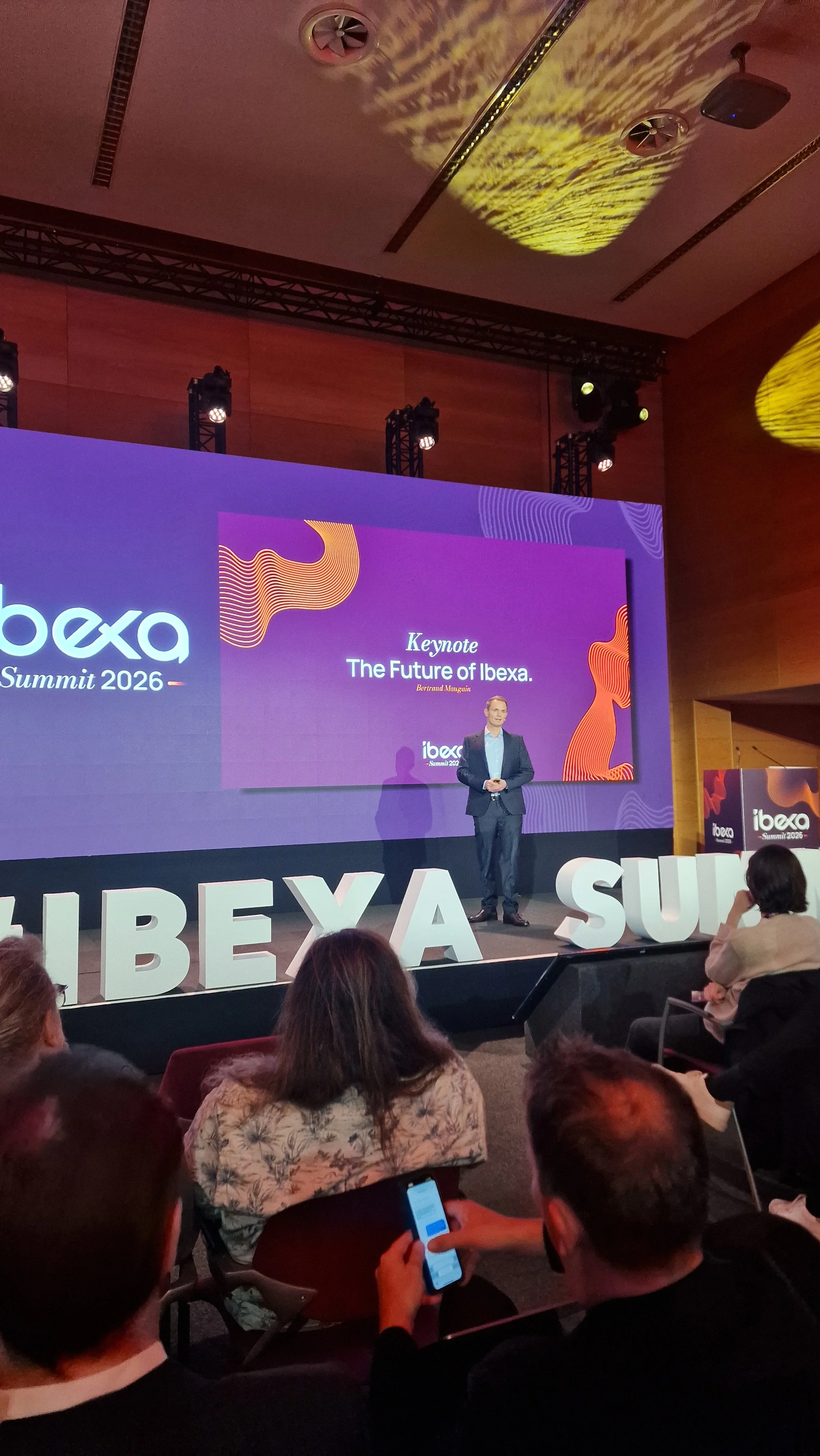
CEO Bertrand Maugain on stage for the opening keynote
The Ibexa Summit has become a useful annual marker for the year ahead. It helps track product announcements, but it also reveals how Ibexa itself is evolving in response to a market that has grown more complex, more fragmented, and increasingly sceptical of big promises. Ibexa is one of the established European vendors attempting to shape a coherent alternative to the large marketing clouds, and the Summit offers a useful lens on how that ambition is developing.
This year’s Summit felt less like a celebration and more like a moment of reassessment. The headline, From Composition to Orchestration, signaled a move beyond the language of assembling components towards a story about coherence, continuity, and value over time. That shift matters, particularly in a European context where regulation, trust, and long-term client relationships tend to shape technology decisions more strongly than raw feature velocity.
This year marked the formal articulation of Ibexa as a unified group bringing together five brands under one strategic umbrella. While attendance numbers were comparable to previous years, the room in Lisbon itself was smaller and the setup more compact. Around 280 participants made the trip, largely partners with a smaller number of customers. Rather than reading that as a weakness, it felt like the right setting for a more honest conversation about direction and priorities.
Ibexa’s strategic consolidation
The core message from Ibexa’s leadership was that the environment has changed. AI has met reality, trust has become fragile, and enterprise stacks have grown so fragmented that they now actively block the value organisations hope AI will deliver. Total cost of ownership is rising, while clarity is diminishing.
Against that backdrop, Ibexa framed its next phase as a strategic refocus. Not abandoning composability, but repositioning it as a foundation rather than the end goal. The ambition is to reduce fragmentation, simplify activation, and create a platform that supports continuity across the marketing lifecycle.
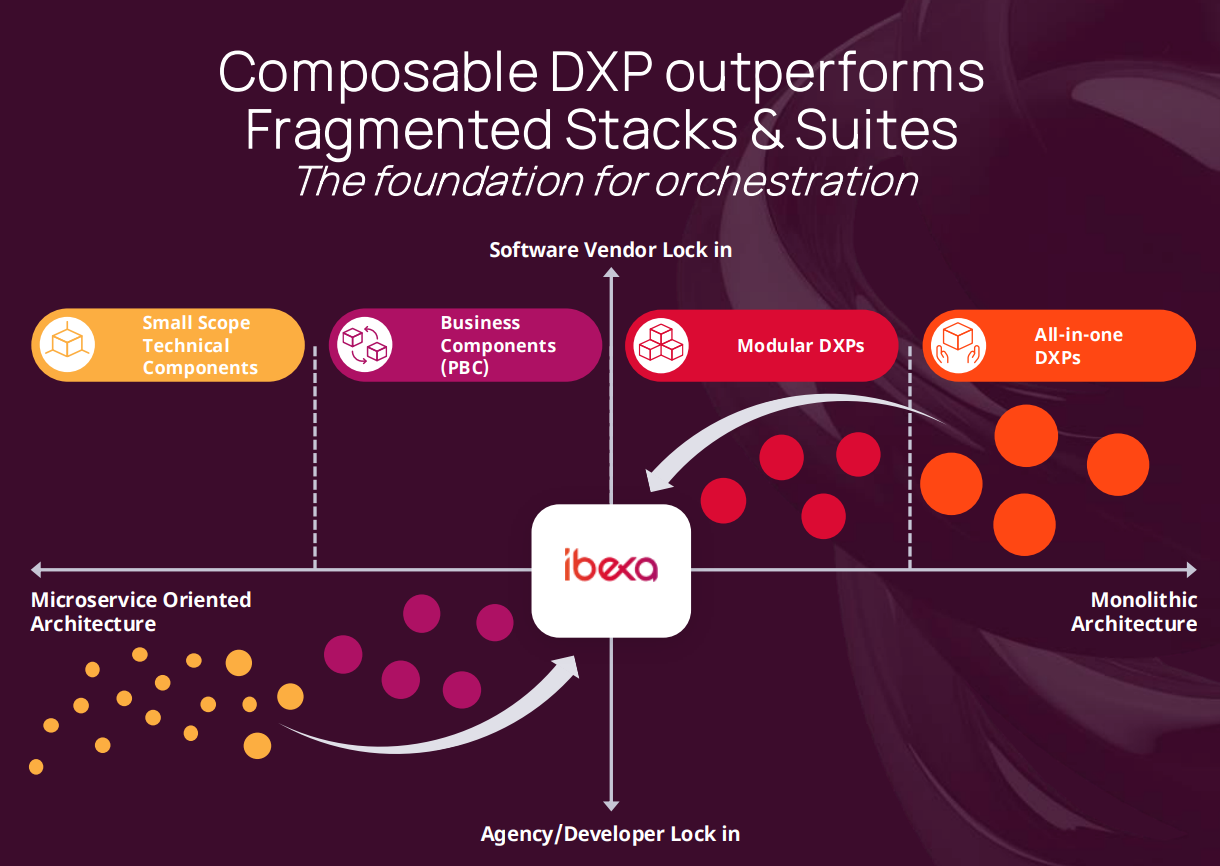
The key updated positioning of Ibexa as an answer to the competitive landscape
There was a noticeable emphasis on alignment across the senior leadership team. That alignment is not only narrative. The reorganisation announced at the Summit, bringing leadership from the previously distinct companies into a unified, multi-level structure, suggests that consolidation is now operational as well as strategic. Part of that consolidation is a clearer articulation of the stack itself, intended to improve readability for partners and clients alike.
The narrative around orchestration, trust, and ecosystem was consistent, even if the practical implications are still unfolding. It felt less like a finished answer and more like a shared direction of travel. That said, elements of this strategy are already operational, with integrations and UI initiatives running in production.
In previous years, QNTM featured more prominently as the private equity owner behind the portfolio. In Lisbon, that framing had receded into the background. Ibexa stood on its own as the brand and the strategic actor, which suggests a degree of consolidation and confidence in how the story is now being told.
Orchestration as the new platform logic
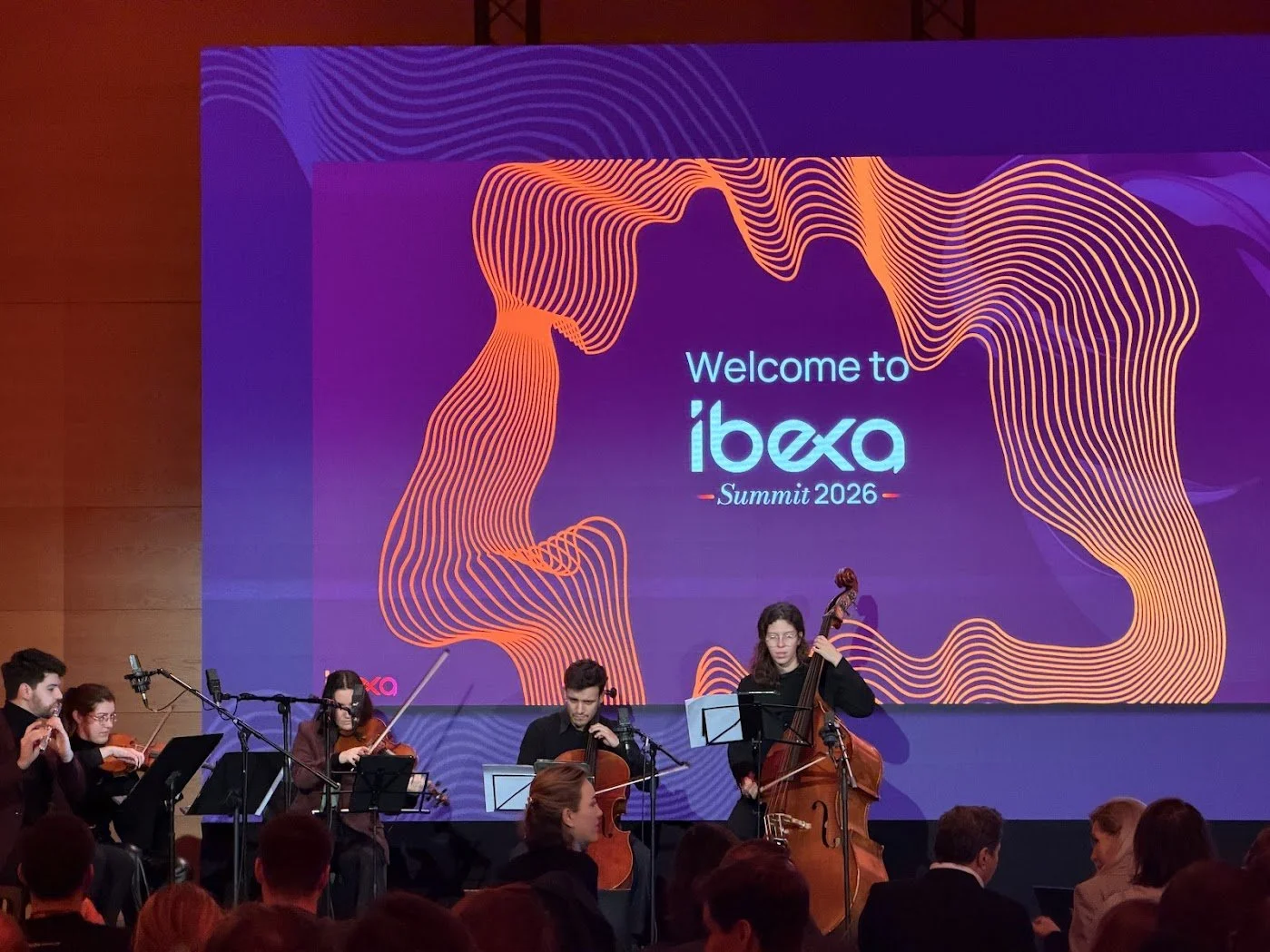
Besides the speakers, Ibexa had also arranged for a string quartet.on stage
Orchestration was not only the headline theme of the 2026 Ibexa Summit, it was made literal, with a string quartet on stage. The metaphor was deliberate. Orchestration suggests coordination, timing, and intent across many moving parts, not excellence in any single component. As an image, it works. As a platform promise, it is more demanding.
Like many industry terms, orchestration risks becoming slippery through overuse. It can mean anything from workflow automation to AI-driven decisioning, depending on who is using it. What made Ibexa’s use of the term interesting was the attempt to ground it in a concrete problem: stacks that have become so fragmented that they undermine trust, inflate cost, and make AI harder to operationalise.
Customer examples on Day 1 reinforced this cross-product ambition, showcasing combinations such as Ibexa with Raptor or Qualifio in live client contexts.
Fragmented stacks may offer theoretical flexibility, but in practice they slow teams down, increase dependency on specialist skills, and push total cost of ownership in the wrong direction. In that context, orchestration is positioned as an attempt to restore coherence, not add another layer of complexity.
The wider analyst community is framing the same challenge in similar terms. Matt Garrepy of CMS Critic puts it this way:
"Complexity and fragmentation are rampant. As AI continues to reshape everything, platforms that provide a control point for cohesion will be the winners. This is where orchestration can prove its value, providing a center of gravity to 'conduct' the expanding concerns of data, content transformation, and the agent ecosystem. Clarity and observability are key, but the trick is ensuring humans are the ultimate conductors."
Whether platforms can truly become that control point for cohesion remains an open question, but the direction of travel is becoming clearer across the market.
Orchestration and the human layer
If orchestration is the structural response to fragmentation, it is also a statement about responsibility. In Ibexa’s framing, orchestration shifts the role of marketers from operators of individual tools to coordinators of journeys, signals, and experiences. Technology enables this shift, but it does not replace human judgement.
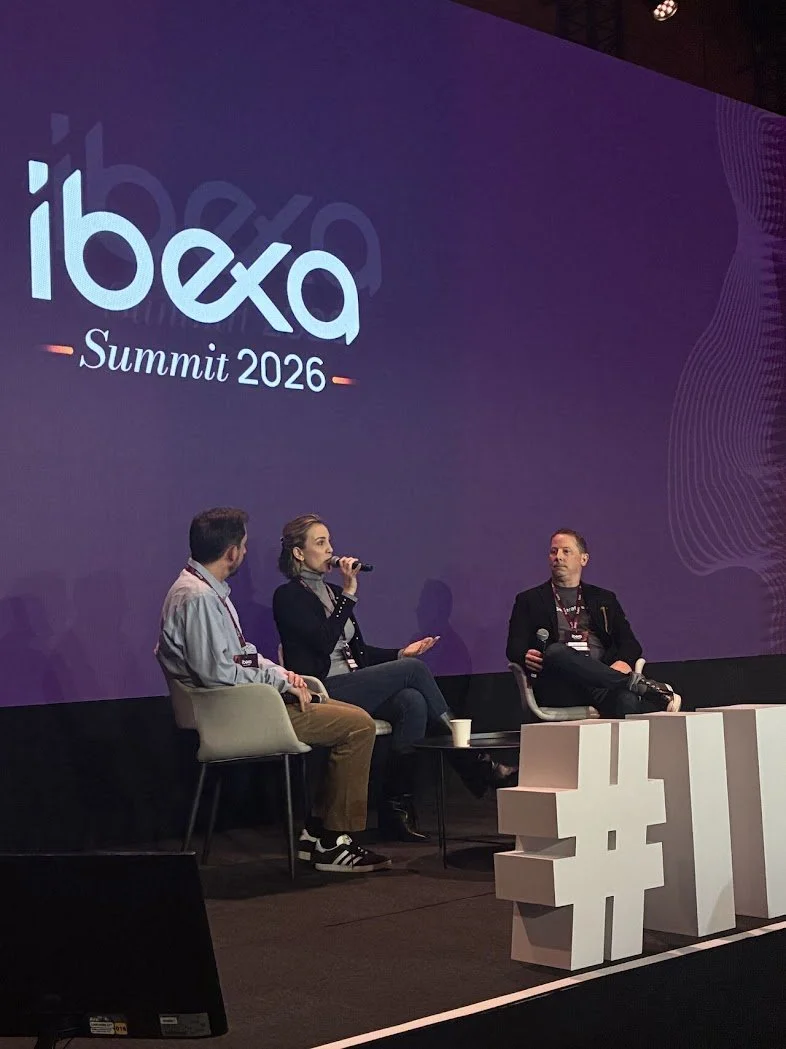
Isabel Giordano of Inforca and Brice Dunwoodie of CMSWire were the first guests in a conversation I hosted after the opening keynotes.
Trust remains a human responsibility. Platforms may amplify decisions, connect data, and automate execution, yet they do not remove accountability. The metaphor of the orchestra works here as well. Software can support timing and coordination, but someone still has to conduct.
This is also where the web re-enters the picture. Rather than being bypassed by channels and automation, it is positioned as the brand’s trust hub. A place where continuity, transparency, and accountability can be anchored.
There is a risk, however, that orchestration becomes another term professionals use comfortably while clients remain unconvinced. As Isabel Giordano, Business Development Manager at Inforca, reflected after the Summit:
“If your mum wouldn’t understand it, you’re probably overcomplicating it. We get caught up in the lingo because it’s our world. But our job is to explain what we do in a way that makes sense.”
Her point is a useful counterbalance. Orchestration may describe coordination at scale, but it only proves its value when it can be translated into outcomes that non-specialists understand.
The European Way
One of the more explicit themes was the idea of a European alternative to the large marketing clouds. This was framed as more than just digital sovereignty, but as a wider response. As Ibexa has pointed out in past years, regulation, data protection, and long-term service relationships shape expectations on this side of the Atlantic.
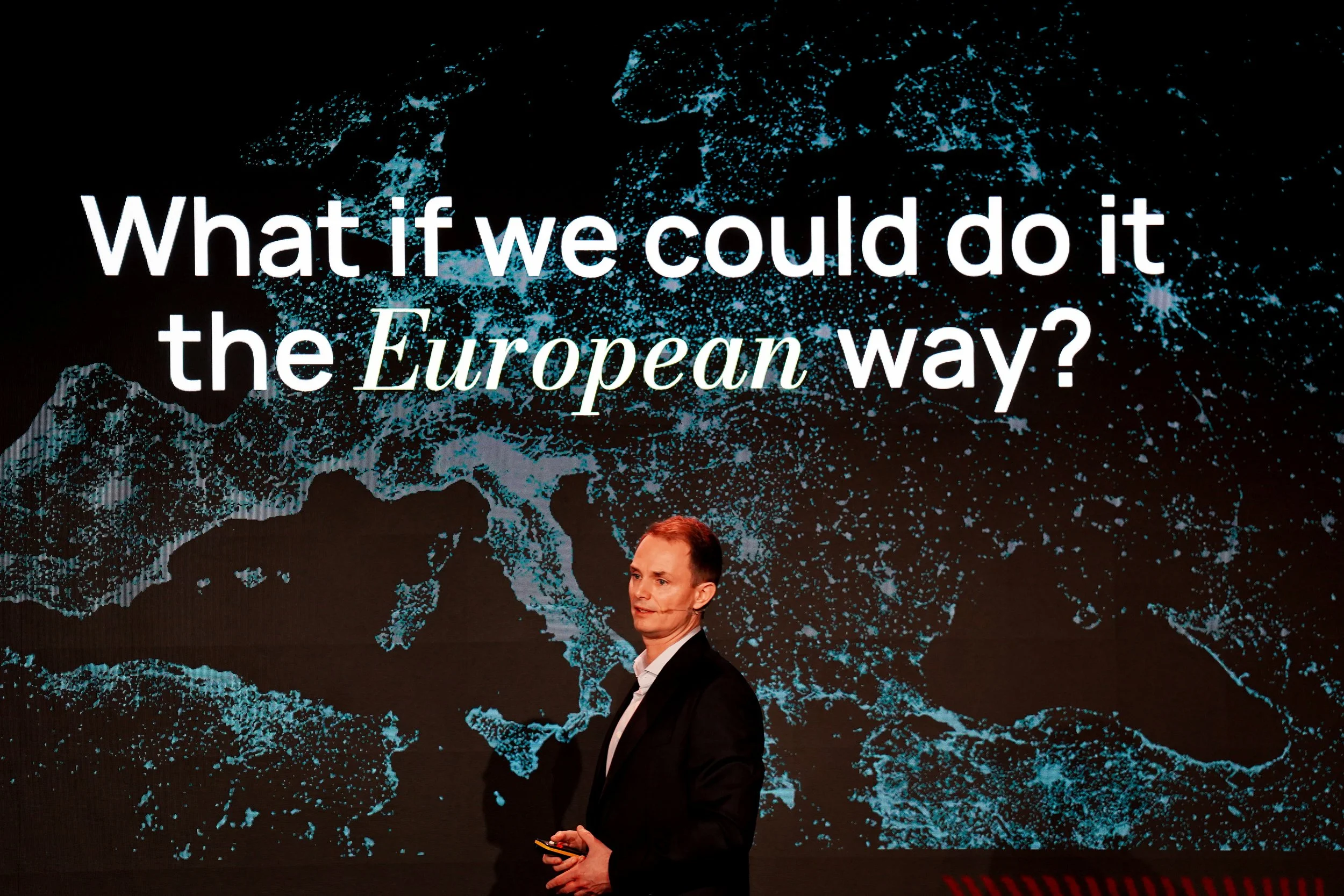
The Summit leaned into this positioning. Orchestration “the European way” emphasises control, transparency, and ecosystem collaboration rather than lock-in. Partners featured heavily, both in the programme and in the awards, reinforcing the message that this is intended to be an ecosystem play rather than a vertically integrated suite.
Klaus Petersen, Partner at Alpha Solutions, framed it this way:
“Ibexa presents real opportunity, but only if partners take an active role in shaping the ecosystem. Orchestration is about direction and choices. The potential is significant, and the next phase will test how well that ambition translates into execution.”
There were also hints of geographic rebalancing. Little was said about North America, while there was visible attention towards the Middle East and other emerging regions. Whether that reflects strategy or opportunity will become clearer over time.
Building on a capable CMS
The introduction of Cohesivo, a new CMS product with planned availability in summer 2026, brought this strategy down to a more concrete level. The stated goal is to unify the user experience across the platform, with a common UX and UI that reduces friction for editors and marketers alike.
The announcement itself was not without confusion. The move towards SaaS has significant implications for partners, and those implications were only partially explored on stage. Will they migrate old customers or will it be a dual strategy? Time will tell. At the same time, introducing a new CMS in the middle of an orchestration narrative underlines how central content remains, even when the conversation shifts towards journeys and activation.
In that sense, the CMS is positioned less as the star of the show and more as essential infrastructure. Capable, coherent, and dependable enough to support orchestration rather than compete with it.
And yes, this is building on the roots of eZ Publish, the original CMS in the Ibexa suite.
Alignment, ambition, and open questions
Stepping back, the Summit conveyed a sense of alignment and renewed ambition within Ibexa. The pieces of the story are increasingly coherent, even if they are not yet fully assembled. Orchestration provides a useful lens through which to interpret recent acquisitions, product decisions, and ecosystem moves.
At the same time, open questions remain. Commerce was not the primary focus of the headline narrative, consistent with recent Summits. The emphasis this year was clearly on orchestration and consolidation. Yet for many partners, e-commerce initiatives remain a significant driver of ongoing work.
There was also less discussion of AI agents than some might have expected. While elements are already operational, the broader implications of AI-enabled orchestration will depend on how effectively it integrates into existing client realities rather than remaining an architectural promise.
The practical impact of SaaS on partners will require careful management. Even if orchestration offers a compelling organising principle, it is also becoming a crowded space, with other vendors pursuing similar narratives.
Other vendors are moving in a similar direction. Sitecore’s recent emphasis on Sitecore AI points to the same conclusion: orchestration is increasingly what makes CMS platforms strategically relevant again in 2026, rather than content management in isolation. A similar pattern can be seen at Optimizely. Both vendors have European roots but are now firmly positioned as US companies, which makes Ibexa’s attempt to articulate a distinctly European alternative particularly noteworthy.
Looking back at earlier Summits helps put this year into context. The 2024 Ibexa partner conference focused on consolidation after acquisition, while Ibexa Summit 2025 leaned heavily into composability. 2026 feels like the moment where the limits of those phases are being acknowledged, and a new synthesis is being attempted.
Whether Ibexa can turn that synthesis into durable advantage will only become clear over time. For now, the Summit was less about declaring victory and more about articulating intent. In a market full of noise, that disciplined positioning may prove to be a strength.
The conversation continues
If reading and reflecting on a blog post is not enough, you are very welcome to engage more actively. The community around this work is built on learning together, comparing notes, and exploring how theory meets practice across roles, industries, and regions.
There are several ways to continue the conversation:
join our free, regular member conference calls
find a peer group that matches your role and the challenges you are working through
attend our conferences, designed for deep discussion rather than surface-level inspiration. You can meet Ibexa CEO Bertrand Maugain at the Boye Aarhus 26 conference in November, where he is among the speakers
read more Ibexa Summit coverage: CMSWire on Ibexa unifying martech brands into an orchestration platform
However you choose to engage, we are glad you are here and part of the journey.