
By Anja Saabye
Habits influence far more of our behaviour than we might think. For those working with digital products and services, this raises an important question: how do we design for behaviour people don’t consciously think about?
This topic surfaced repeatedly during our recent UX Research peer group meeting hosted by Rambøll in Aarhus.
As leader of the UX Research peer group, I always value these conversations where researchers and practitioners compare experiences and learn from each other.
One theme that stood out during the discussions was how to ensure that research gets prioritised — especially at a time when AI increasingly supports both researchers and UX designers.
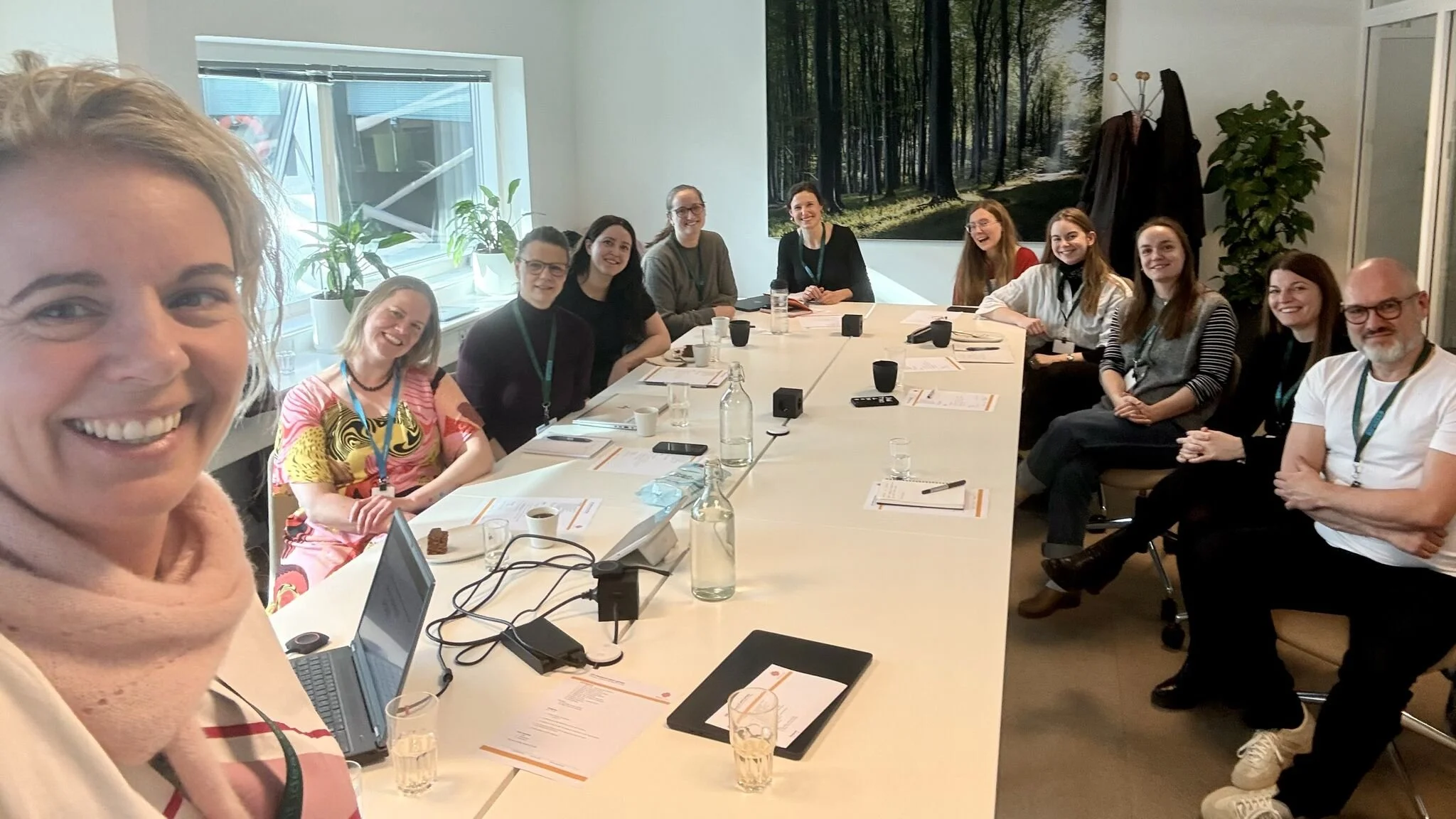
A group photo from the UX Rseearch peer group meeting held at Rambøll in Aarhus in March 2026
Some of the key takeaways from the discussion
Involve stakeholders at the right time and give them enough insight to spark curiosity
Demonstrate the value of research through evidence and results to avoid misunderstandings
Build advocates for UX research to strengthen evidence-based decision-making
Be a positive “spy”: understand both users and stakeholder needs
Create a shared language between researchers and stakeholders
Stay curious — always
The meeting also included a great talk from Nina Dyrberg on behavioural design.
Her presentation highlighted several practical perspectives on influencing behaviour through digital products and services. A key reminder was that users always interact with our products within a broader context, particularly in workplace environments.
Three ideas stood out:
Just in time: Avoid interrupting users unnecessarily
Workplace routines: Behaviour at work is strongly shaped by established processes and norms
Moments of change: Behaviour shifts most easily when people are already in a moment of transition
Behavioural design often focuses on small adjustments that make desired behaviour easier. When these adjustments work, the results can sometimes be both surprising and positive.
Behaviour change happens when three things align
Nina also highlighted a well-known behavioural model explaining when change becomes possible. Behaviour tends to shift when three factors come together:
Capability – Do people have the ability to do it?
Opportunity – Does the environment allow it?
Motivation – Do people actually want to do it?
When these three elements align, behaviour change becomes much more likely.
Finally, the discussion returned to something that is easy to overlook in busy organisations: staying connected to research itself.
If we want to continue building better products and services — and fully benefit from new technologies such as AI — it is important to remain connected to academic research and the broader research community. That connection helps ensure that our work remains grounded, informed, and evolving.
The conversation continues
Interested in connecting with peers and being a part of the conversation? Find a peer group near you or join one of our upcoming conferences.