
This is a past event.
Join us for UX Connect 27
UX Connect 26 Program
in Aarhus on June 9 - 10
The conference is tailored for everyone working with design and sustainability, from beginners to experts, and features 2 packed days with a carefully curated mixture of talks, workshops, activities and world class facilitators, thought-provokers, speakers and session leads.
Below you can find the current conference program - improvements will happen
Program
Monday, June 8
17.30 - 21:00 Social event at Aarhus Street Food
Everyone who is in town is invited to join us for an informal dinner
Tuesday, June 9
8:30 - 9:30: Breakfast and registration
9:30 - 9:45: Welcome & Opening
by our host Jens Hofman, Vertica and our moderator Janus Boye, Boye & Co
The big UX topics of 2026
9:45 - 10:15
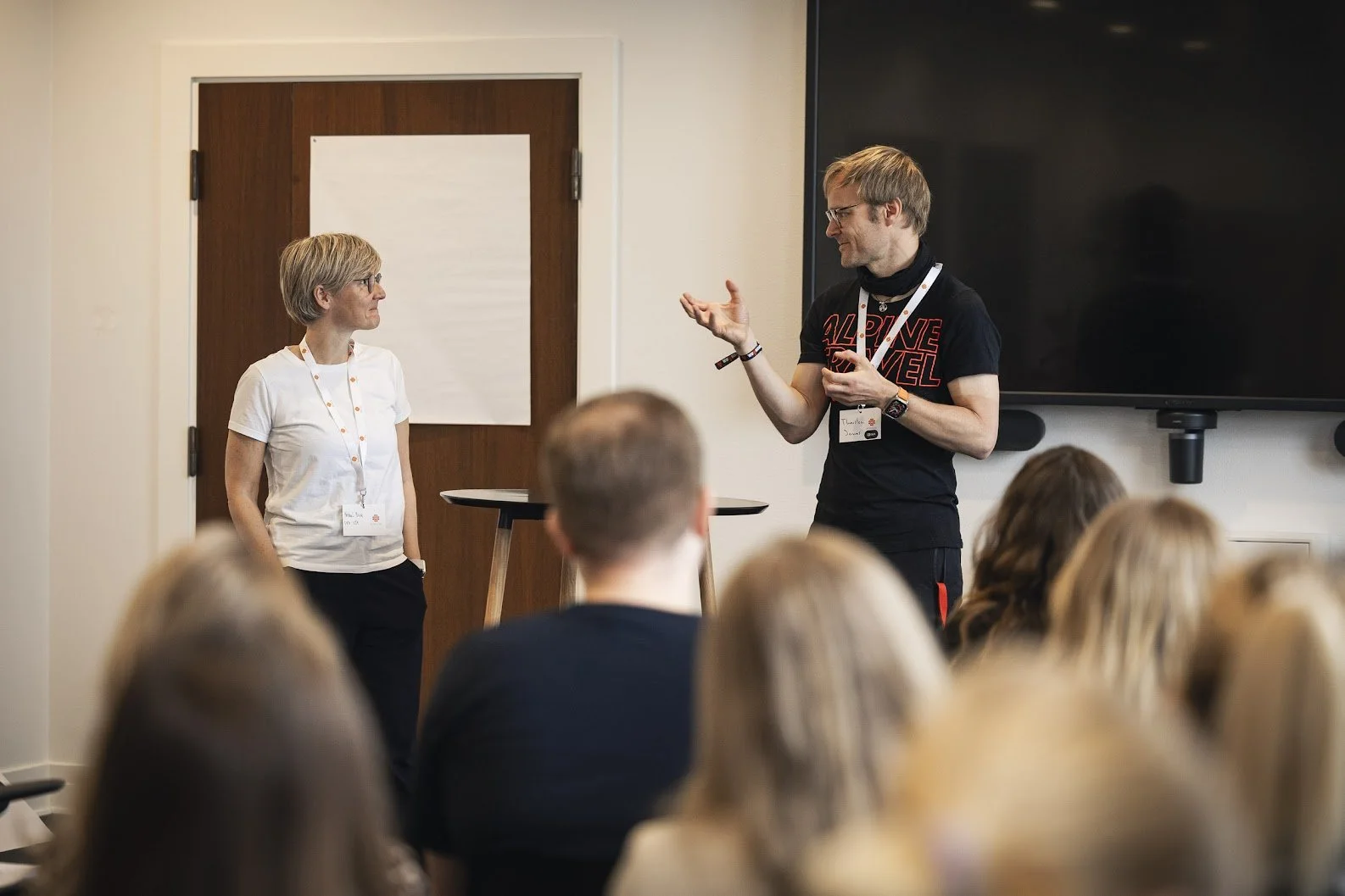
A moderated design leadership Q&A
featuring
Thorsten Jonas (DE)
Founder of The Sustainable UX Network
in conversation with
Kristina Larsen Brink (DK)
UX Specialist at VIA University College
A moderated design leadership Q&A
UX in 2026 is messy and important.
AI is now part of the product. Content, data, and design decisions shape behaviour across systems, not just screens. Expectations are rising, while pressure to move faster keeps increasing.
Designers are being pulled into new territory: balancing speed with responsibility, making sense of opaque AI systems, working with content as infrastructure, and navigating growing demands around trust, governance, and real-world impact.
In this opening conversation, Kristina Larsen from VIA University College sits down with Thorsten Jonas to explore the big UX topics shaping our work right now.
Thorsten, founder of the Sustainable UX Network, brings a perspective grounded in both design practice and sustainability. Together, they will cut through the noise and focus on what actually matters: where UX needs to step up, what teams are getting wrong, and how the role of UX is changing.
This session sets the stage for UX Connect 26: the tensions, trade-offs, and questions that make this moment both challenging and worth paying attention to.

When AI agrees too much: why empathy matters for imagining better futures
10:15 - 10:50
Alicia Shao (DK)
Senior Service Designer
at LEGO
When AI systems increasingly mirror and reinforce our existing beliefs, they risk narrowing how we see the world and what we imagine is possible. This creates a subtle but powerful constraint on design: futures begin to look like extensions of the present, rather than alternatives to it.
This session explores how empathy can counterbalance that tendency. Not as a soft skill, but as a critical capability for understanding perspectives beyond our own and making sense of complexity, contradiction, and change.
Through a short framing and shared reflection, we’ll explore how empathy helps us question dominant narratives, design for a broader range of experiences, and imagine more diverse and resilient futures in an AI-shaped world.
10.50 - 11:20 Coffee & networking

Confidence: 72%
11.20 - 11.55
Led by
Tey Bannerman (UK)
AI Strategy, Product & Design Leader
I built one of the most complex AI systems in the world. It bridges the digital and physical world, has five autonomous agents with distinct specialisms, a diagnostic engine, a real-time sensor network, and a parliamentary debating chamber where two AI systems with opposing philosophies argue about what to do when the data is ambiguous.
What surprised me though wasn't the technology. It was that every hard problem turned out to be a design problem. How often should a system interrupt your day? What does trust look like when a system is wrong in confident, articulate ways? What happens when you give humans a conversation and they start treating it as a relationship? What does a user actually do with "confidence: 72%"?
This talk draws real, tested answers to these questions from a system that's been running for months - answers that apply whether you're designing the future for financial services, for healthcare, for consumer products, or for anything where a user has to decide whether to trust what a machine is telling them.

What actually drives design decisions
11.55 - 12.30
Led by
Antonia Fedder (DE)
Designer for impact-driven brands
Design decisions are not neutral. They are shaped by bias, embedded in how problems are framed, what gets measured, which tools are used, and who gets a say.
When this bias goes unrecognised, teams repeat the same patterns: certain users are overlooked, weak assumptions pass as facts, and decisions feel hard to challenge. Even experienced designers can find themselves reinforcing outcomes they did not intend.
This session makes that bias visible. Through concrete examples, we will trace how it enters the process from early framing to final delivery, and why it persists even in teams with strong intent and good practice.
A simple lens will be introduced to map where bias shows up across three layers: what is visible, what is constrained, and what is assumed. This helps explain why some arguments fail to land, where decisions are already made before they are discussed, and where you still have room to act.
You will leave with:
a practical way to spot bias in your own projects
a set of questions to challenge how decisions are shaped
clear points of intervention to influence outcomes more effectively
The session combines a short, direct framing with facilitated discussion, inviting participants to compare how these dynamics play out across teams and to sharpen their own approach to navigating them.
12:30 - 13.30 Lunch
How will AI shape UX as a discipline going forward
13.30 - 14.30
workshop led by
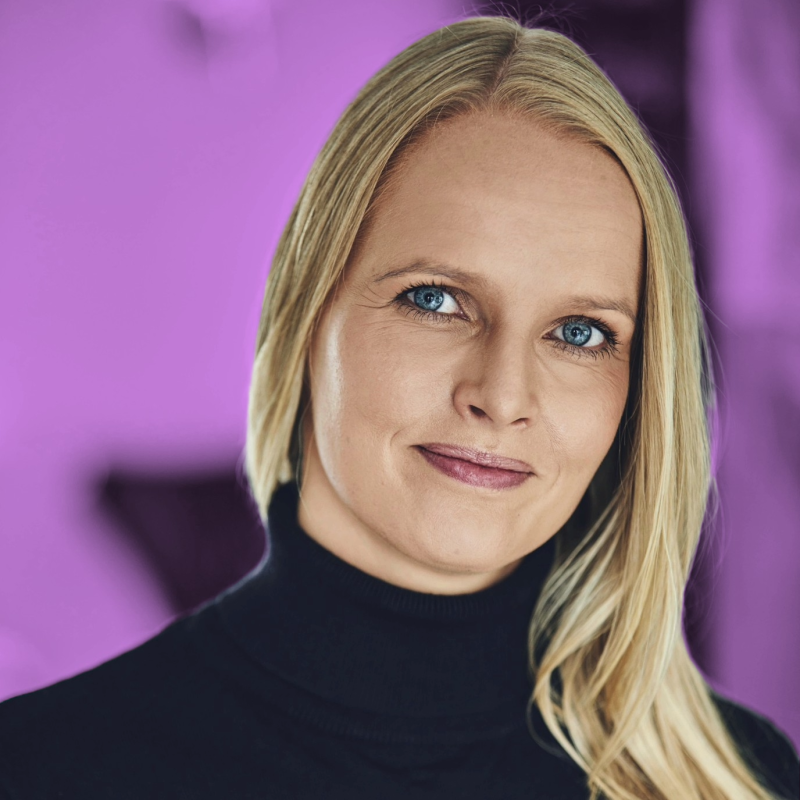
Janne Jul Jensen (DK)
CEO and Co-Founder
at Henosia
AI has already reshaped what it means to design digital products.
For decades, the industry has operated with a relatively clear division of roles. UX designers, front-end developers, back-end developers, and product owners have each contributed their expertise to shaping digital products.
As AI begins to take on more of the execution work in both design and development, it raises important questions. Where does this leave UX designers? How might our responsibilities evolve? What happens to the ways we collaborate, the processes we rely on, and the standards we use to ensure quality?
While AI is unlikely to replace the need for strong human judgment in defining problems and setting direction, it is increasingly capable when it comes to producing solutions once those decisions have been made. This makes critical thinking even more central to the role of UX. The ability to question, evaluate, and guide AI outputs becomes a key part of ensuring meaningful, responsible, and high-quality user experiences.
In this workshop, we will explore how AI can play a meaningful role in UX going forward. Rather than framing it as a threat, we will look at how it can extend our capabilities and reshape the discipline in practical ways.
14.30 - 15.00 Coffee & networking

Designing for Neurodiversity: Creating More Inclusive Products and Teams
15.00 - 15.45
Led by
Stephanie Weber (DE)
Head of UX Design
at Fielmann
Neurodivergent people—including those with ADHD, autism, dyslexia, and other cognitive differences—represent a significant part of our users and colleagues.
This interactive workshop explores what neurodiversity means, common barriers in digital products and workplaces, and practical approaches to creating more inclusive experiences.
Through real-world examples and collaborative exercises, participants will learn how inclusive design practices can improve usability, accessibility, innovation, and team collaboration for everyone.

Designing with immersion: making what matters stick
15.45 - 16.15
Led by
Louise Vang Jensen (DK)
CEO
at IS IT A BIRD
Many teams generate more insights, stories, and outputs than ever before. Yet something essential is often missing: real understanding, lasting memory, and meaningful action.
This session explores how immersion becomes a critical design capability when insight alone is not enough. Drawing on anthropological practice and hands-on work with organisations, Louise shows how storytelling, lived experience, and shared moments help people truly grasp what matters and act on it.
As AI accelerates the production of insight, immersion becomes the differentiator. What matters is not what we show, but what people truly experience and carry forward.
16.15 - 16.45 Lightning talks
Johanna Halfmann on big tech and AI
Peter Gregersen on An Old Grumpy Designer's Guide to AI
Thorsten Jonas on Sustainable UX Network and the True Cost of AI
16.45 - 17.00 Walk to Aarhus City Hall
17.00 - 18.00 A unique Aarhus design experience
Join us for a brief walk to see something special. We’ll get a guided tour of Aarhus City Hall, including a rare chance to experience Arne Jacobsen’s iconic design and some of the stories behind one of Aarhus’ most distinctive buildings
18.30 - 22:00 Social event
Everyone is invited to join us for an informal dinner at Il Locale on Guldsmedgade
Wednesday, June 10
6:30 Morning Run
We meet in front of Vertica for a relaxed 25 minute run
8:30 - 9:30 Breakfast and networking
9:30 - 9.45: Morning welcome - what did we learn yesterday? Plans for today
Working Without Certainty
9.45 - 10.30
Led by
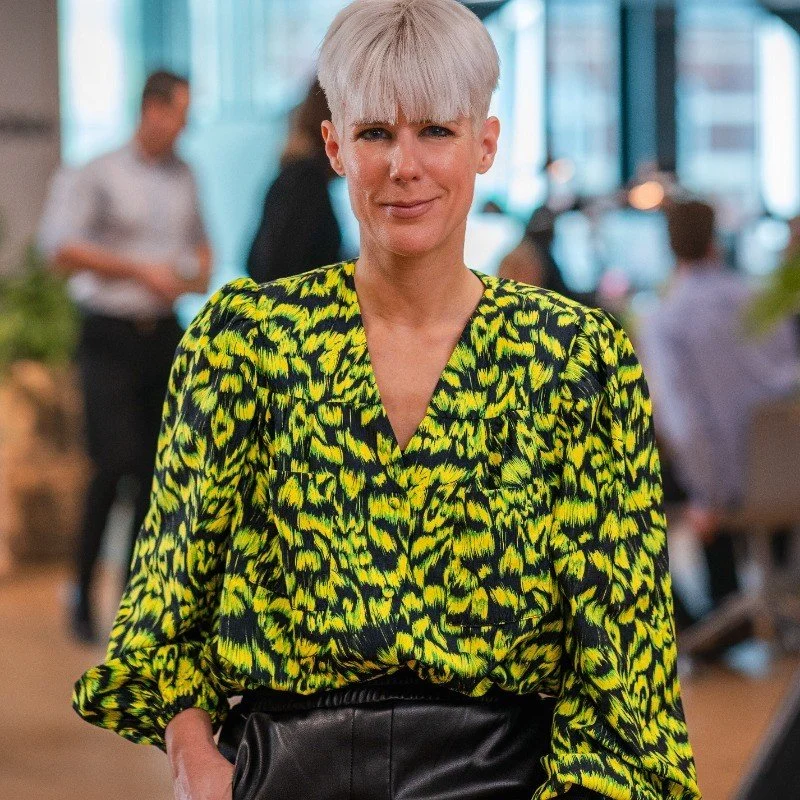
Chris Weier (DK)
Founder & CEO
at Nordic Connective
Let us talk about professional identity, responsibility, and judgment in uncertain times.
Many UX professionals are working in an environment where expectations shift faster than roles can adapt. AI, organisational pressure, and ongoing uncertainty make it harder to rely on established answers, familiar methods, or accepted best practices.
Rather than attempting to predict the future of UX, this session looks at what happens to professional roles when clarity disappears. When there are fewer clear answers, judgment, responsibility, and sense-making become central to the work.
The session begins with a short framing input, followed by facilitated reflection and conversation. Participants will be invited to explore their own experiences, compare perspectives with peers, and reflect on how they navigate uncertainty in their daily work.
The aim is not to provide answers, tools, or frameworks, but to create space for shared reflection. Participants should leave with a stronger sense of orientation and confidence in their professional judgment.
10.30 - 11.00 Coffee & networking

The gap between learning UX and doing UX
11.00 - 11.30
Led by
Anita Tran (DK)
UX designer
at Grundfos
UX education gives us principles, methods, and a clear sense of what “good” looks like. Then practice complicates everything.
This short talk reflects on the gap between how UX is taught and how it unfolds inside large organisations with complex products, legacy systems, and competing priorities. Where education offers clarity, real-world work often requires negotiation, compromise, and judgment in messy situations.
The aim is not to critique education, but to surface the realities we all encounter and rarely articulate: how decisions actually get made, where user-centred thinking gets challenged, and how experience reshapes our understanding of the craft.
Framed as a brief input to spark conversation, this session invites participants to share their own gaps, tensions, and lessons learned across different contexts and stages of their careers.

What does it take to make rainy days brighter? Design lessons learned from Dripdrop
11.30 - 12.00
Led by
Andreea Fernea (DK)
Design leader
at Dripdrop
How do you build a business around something as obviously useful as umbrellas? Spoiler alert: design plays a bigger role than most people think.
In this session, Andreea Fernea shares what it takes to design experiences that turn an everyday product into a brand people actively choose, remember, and recommend. Drawing on real examples from Dripdrop, she explores how design shapes perception, trust, and commercial success across the entire customer and partner experience.
This is not a story about adding polish. It is about using design to create clarity, differentiation, and emotional connection in a market where functionality alone is not enough. From brand and digital experience to service touchpoints and partnerships, the session looks at what happens when design becomes part of the business strategy rather than the finishing layer.
You will hear honest reflections on what worked, what did not, and what it takes to stand out without losing focus as a growing B2B company. Participants will leave with practical lessons on building experiences that feel distinctive, human, and commercially meaningful — even in categories most people overlook.
When you can’t see the interface: what blind users reveal about our design assumptions
12.00 - 12.30
Led by
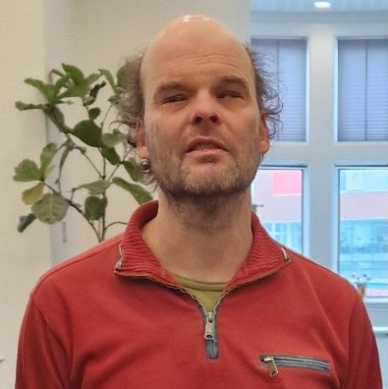
Claus Thøgersen (DK)
What happens to our design decisions when the interface is no longer visual?
In this session, a blind UX practitioner shares first-hand experiences of navigating digital products that were never truly designed for non-visual use. Through concrete examples, we’ll uncover how common design patterns, workflows, and assumptions break down when interaction depends on screen readers, structure, and semantics rather than sight.
A short framing talk will surface the gaps between intention and reality in accessible design. From there, the session shifts into small-group reflection: Where do our own products rely on invisible assumptions? What would actually need to change in how we design, test, and collaborate?
Expect an honest, practical conversation grounded in lived experience. The goal is not just awareness, but to leave with clearer signals of what to look for, question, and do differently in your own work.
12.30 - 13.30 Lunch

What it’s like to grow as a UX designer in the AI era
13.30 - 14.00
Led by
Giulia Ivan (DK)
UX designer
at VippsMobilePay
Designing today means working alongside tools that can generate flows, interfaces, and ideas in seconds. Solutions appear before we’ve fully understood the problem. This doesn’t just change how we work, but how we think, decide, and take responsibility as designers.
This closing session reflects on what it actually feels like to grow as a UX designer in this context. When speed increases, what happens to depth? When ideas are easy to generate, how do we stay critical? And when working on real products, where users, constraints, and consequences are tangible, what role does AI realistically play?
Grounded in hands-on experience from designing a gamified financial solution for young users, Giulia explores where AI supports the design process, where it falls short, and where human judgement becomes essential.
A closing conversation about judgement, responsibility, and the kind of designers we are becoming.

An interactive wrap up
14.00 - 14.45
Key lessons learned, big questions and what happens next