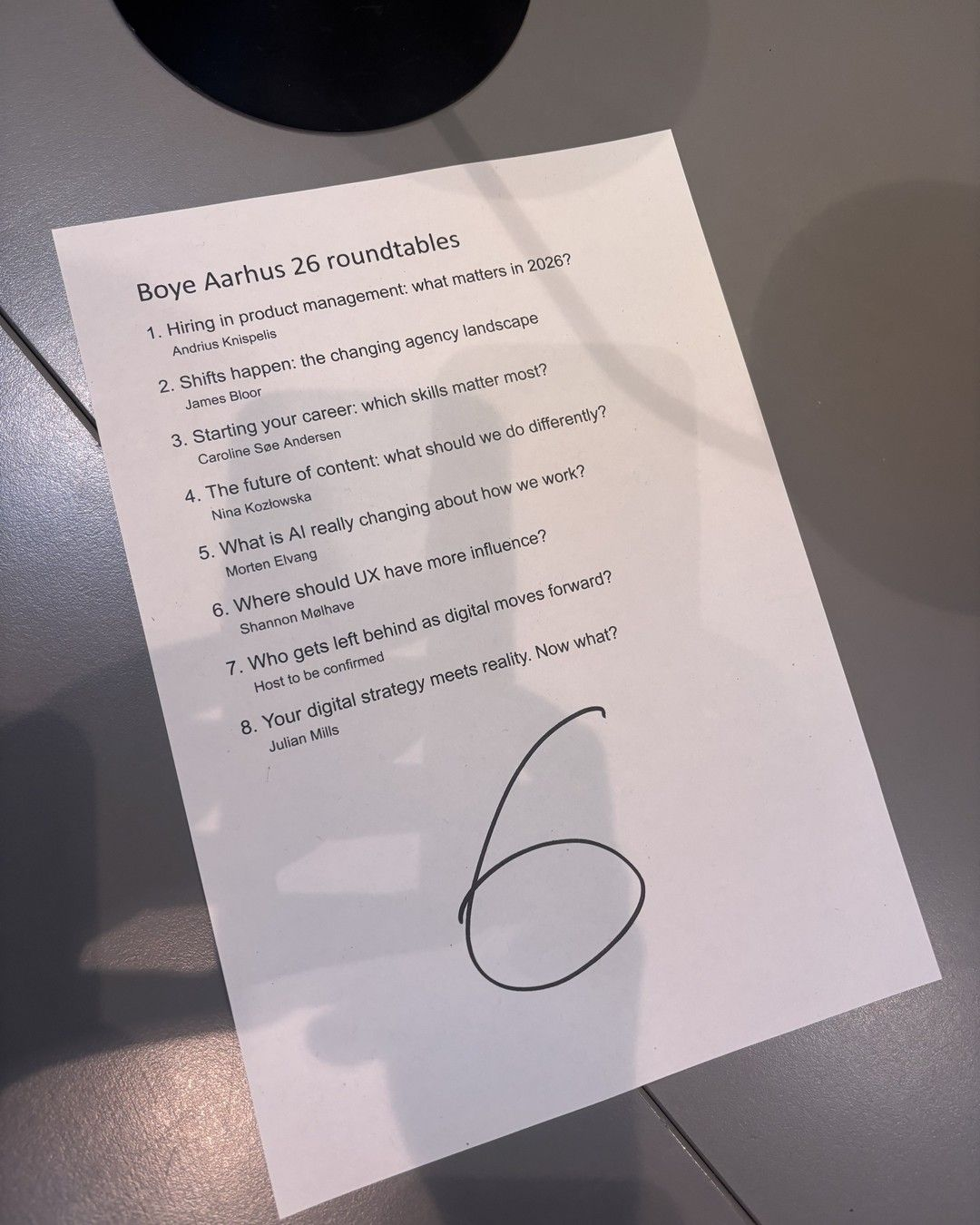
The Boye Aarhus 26 roundtables, including “Where should UX have more influence?” and “Who gets left behind as digital moves forward?”
Where should UX have more influence? And who gets left behind as digital moves forward?
We discussed these questions at two roundtables at Boye Aarhus 26, which I attended Wednesday. Shannon Mølhave and Antonia Fedder facilitated them. At both tables, we explored the distinction between Agent Experience and Human Experience. Human needs should be the starting point for both.
At the table on who gets left behind, I suggested a different angle: not who, but what gets left behind? We talked about what we risk losing: creative craft, our ability to create and reinvent ourselves, ethical reflection, and critical thinking. And the risk that bias in systems could undermine democratic values.
These questions echoed themes from several talks:
Matthew Garrepy gave an excellent and entertaining keynote. He emphasized that AI intelligence is not the same as judgment, highlighting the many points where people can and must hit the stop button before agents make mistakes. In other words, it’s humans who let it happen!
Natasha Skov explored what new tools and features mean for her design system team. They no longer decide on their own when the system needs to adapt. And where does design system guidance end and tool training begin?
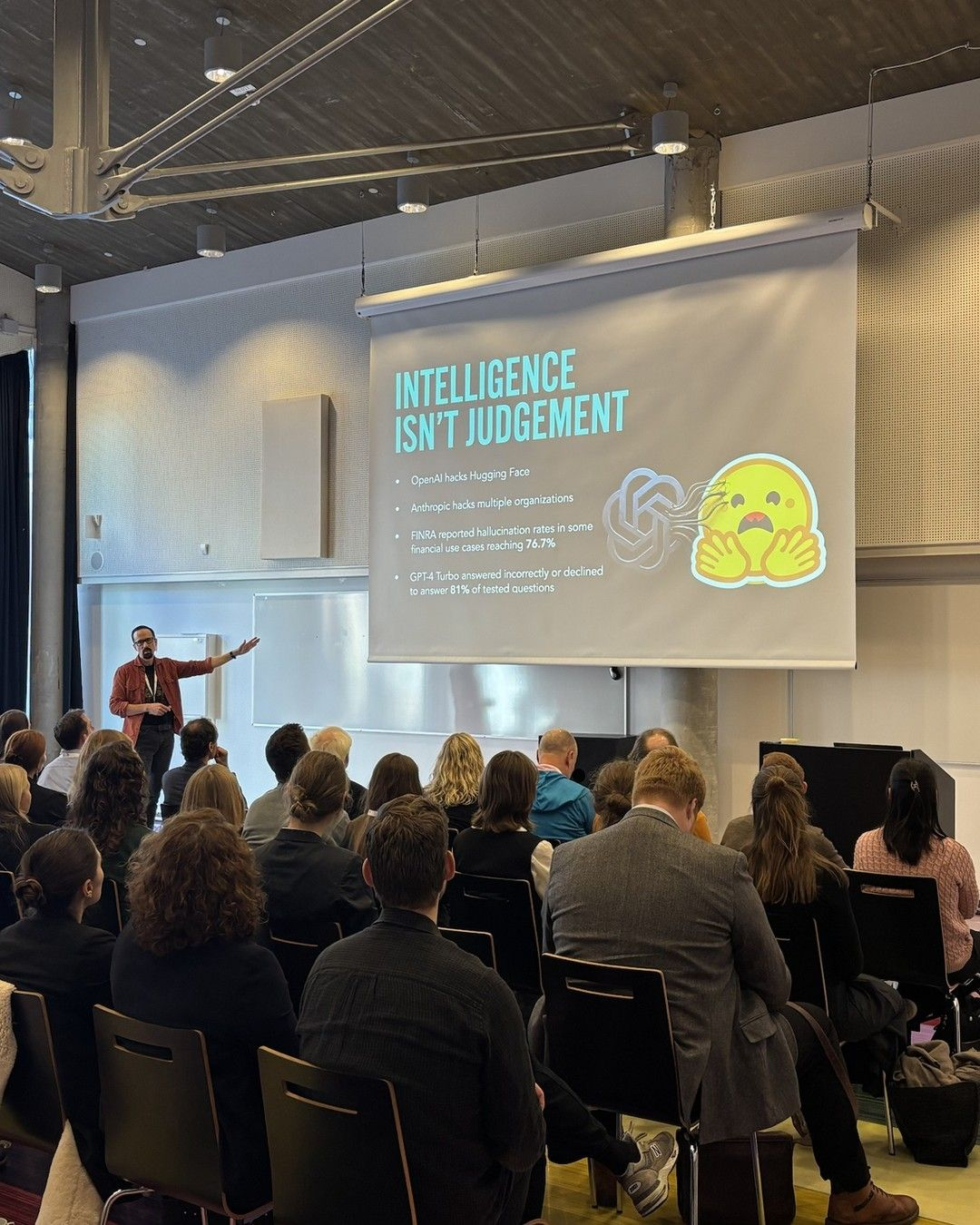
Matt Garrepy’s keynote at Boye Aarhus 26
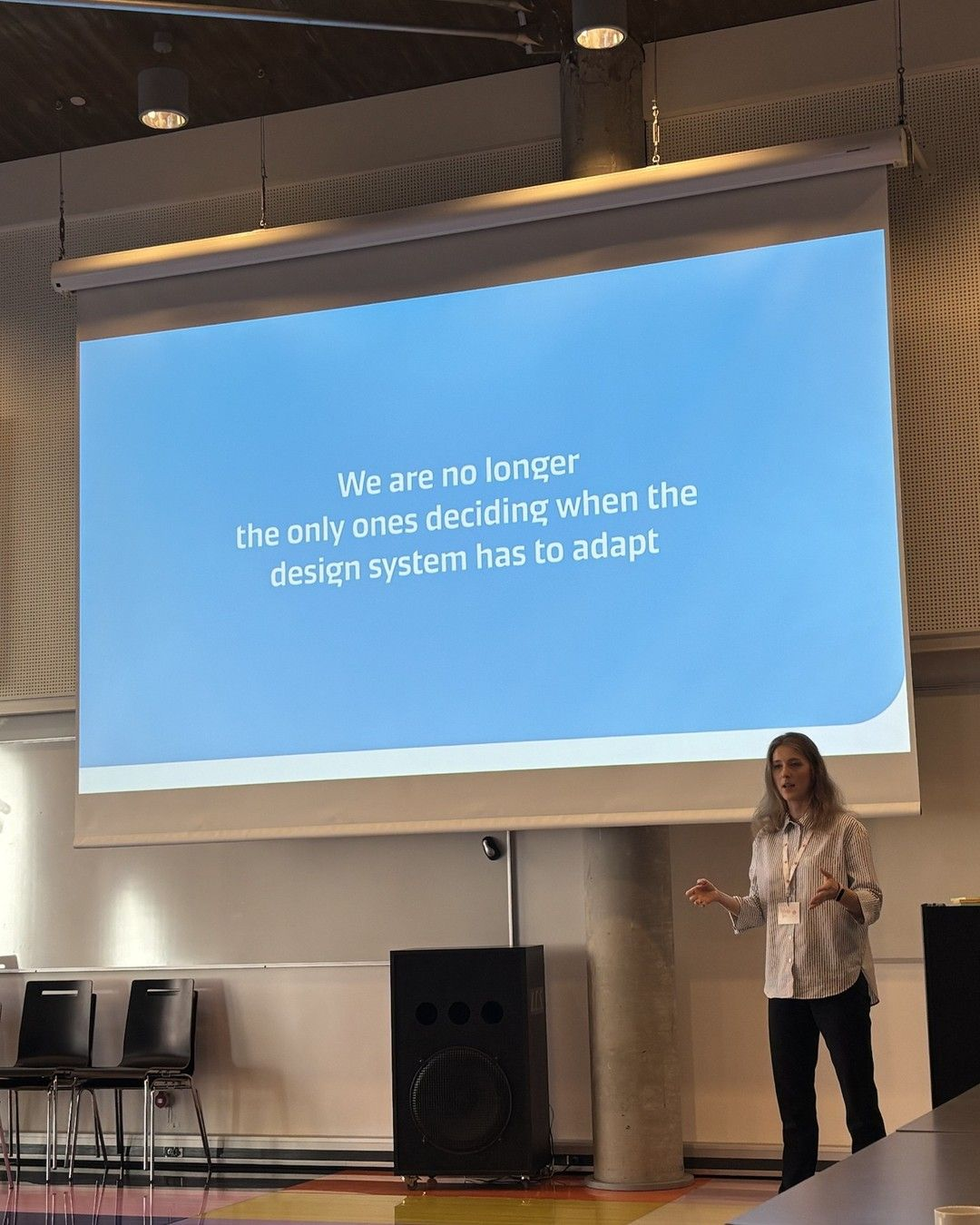
Natasha Skov at Boye Aarhus 26: “We are no longer the only ones deciding when the design system has to adapt”
Ditte Marie Aschelund Hæstrup showed that AI’s usefulness depends on the information, structure, and context we give it. This led to a discussion about the boundaries of capturing employees’ knowledge. Both from key people approaching retirement and across the wider organization. And the risk that employees might feel replaceable.
Ema Filipova asked what happens when experience, capability, and seniority no longer develop at the same speed. How do you demonstrate what you can actually do when AI can produce polished work in minutes? And how do we make room for junior talent to grow?
Ulla Ladegaard-Mortensen showed that the harder a task is for the user, the greater the need for consistent design. She asked how we can design to inspire trust and described their focus on familiar patterns and standards. I suggested regular testing to explore which aspects of the design support trust and what users already associate with the organization behind it.
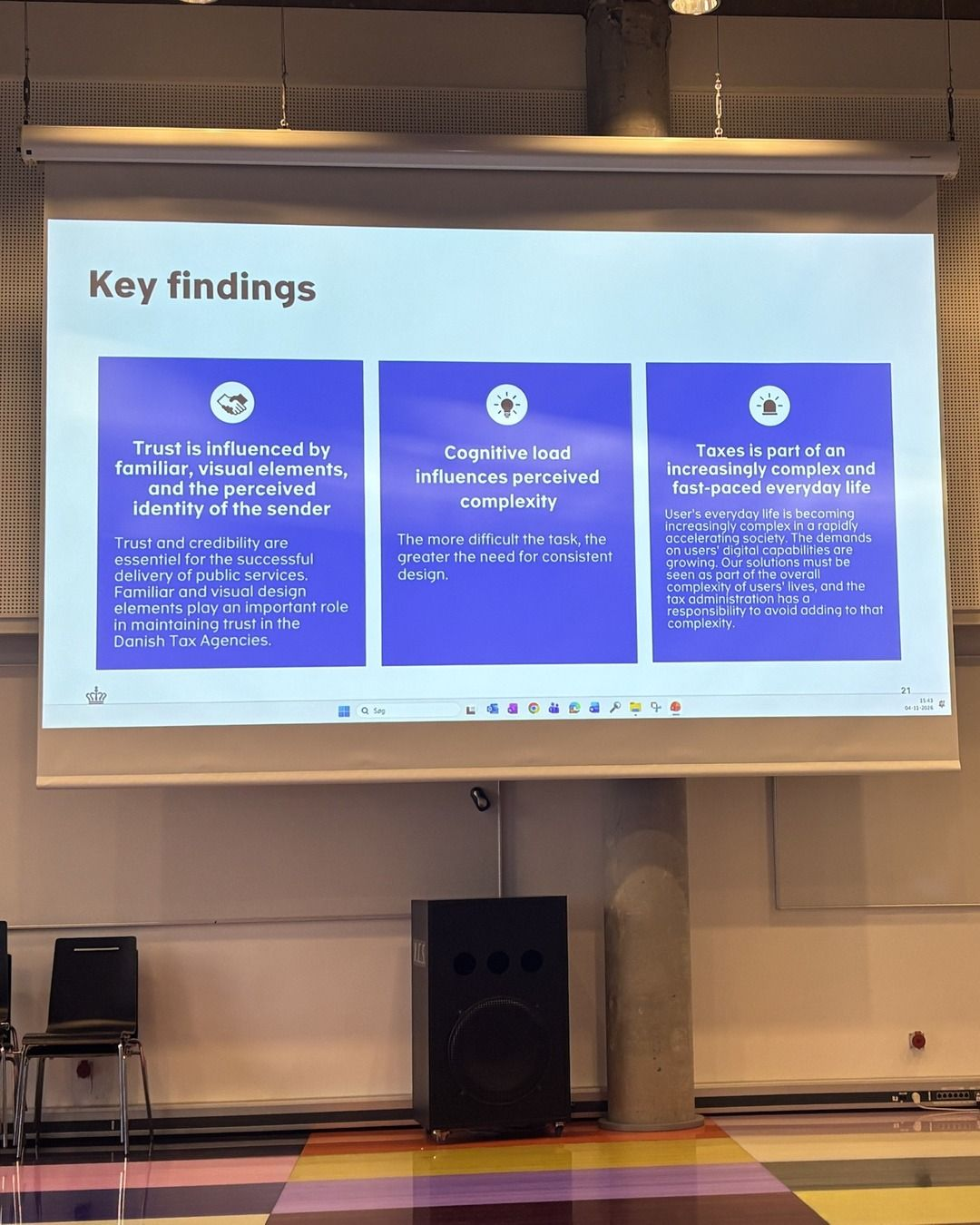
Key findings on trust and consistent design from Ulla Ladegaard-Mortensen’s talk at Boye Aarhus 26
My main takeaway from the day: As we produce more, faster, we have a greater responsibility to understand the context and consider the consequences.
In many organizations, UX still needs to be involved earlier, which is why designers must speak a language the business understands and recognizes. We need to help shape decisions about which problems to solve, which assumptions to build on, and who and what we risk overlooking. As more of the process becomes automated, we need people who can understand and explain how that affects the human experience.
Thank you to the speakers, everyone who joined the discussions, and especially Boye & Company for bringing us together at a time when there is much to address.