By Janus Boye
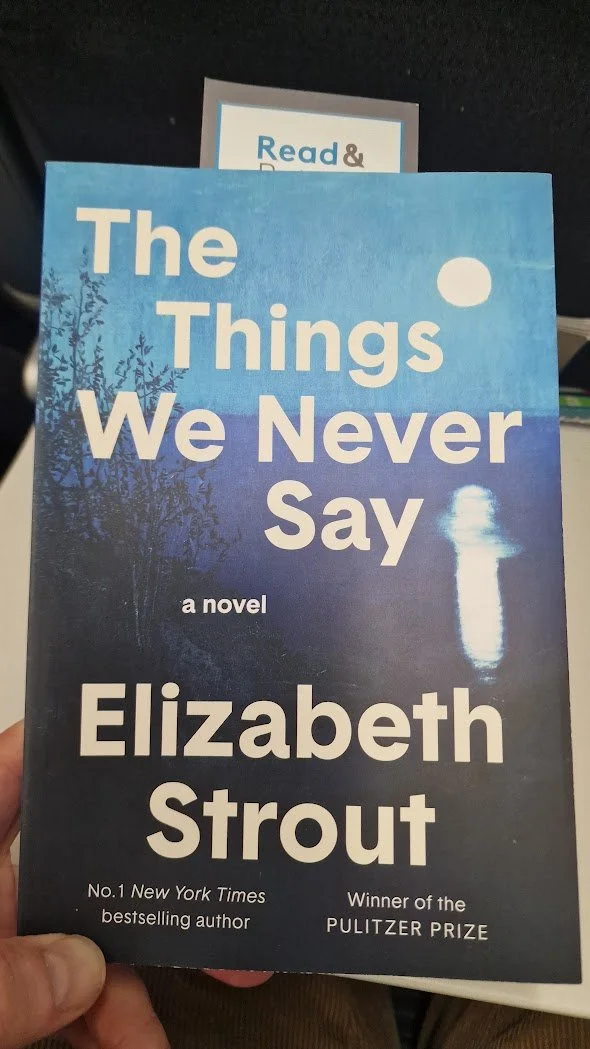
In Elizabeth Strout’s new novel The Things We Never Say, the teacher Artie asks a memorable question that has stayed with me over the past few months:
“I wonder why people never say anything real.”
Later, he comes to understand that “it was a private thing to be alive”.
There is something recognisable in the distance between those two observations. Much of what matters inside an organisation remains private, even when many people are experiencing the same uncertainty. Difficult decisions are presented as settled. Experiments become success stories. Doubts are removed before the work is shared.
Perhaps that is why the most useful professional conversations rarely begin with polished answers. They begin when someone says something real about what is working, what is difficult and what they still do not understand.
The distance between the official story and the real story
Every organisation has an official account of how work gets done. Strategies have clear priorities. Transformation programmes have milestones. Technology investments have business cases. Responsibilities appear to sit neatly within teams and job titles.
The reality is usually less orderly. It is closer to what Morten Elvang calls “a black market for common sense”: the informal conversations, relationships and practical workarounds that allow progress to happen despite the official structures.
Responsibility is distributed, decisions depend on relationships that do not appear on an organisational chart, and older systems continue to shape what is possible. People are expected to make progress while the technology, language and expectations around them keep changing.
This distance between the official story and lived experience is where many of the most relevant questions begin.
Over the past quarter, AI appeared in almost every gathering. Yet the discussions were rarely about the technology alone. They were about judgement, responsibility and organisational readiness. Who decides where AI should be used? What happens when experimentation moves faster than governance? How do organisations build on years of accumulated platforms, processes and content without compounding the complexity?
These are not questions with polished answers. They require people to talk openly about incomplete work.
Trust changes what people are willing to share
Those conversations took us from CMS Summit 26 in Frankfurt to UX Connect 26 in Aarhus, alongside peer group meetings across Europe and North America and our regular member calls.
The settings were different, but a familiar pattern returned. The most useful exchanges often began when someone moved beyond the formal version of events.
A participant described a project that had not progressed as expected. Someone questioned an assumption that others had quietly shared. A leader admitted that responsibility was unclear. Once that happened, the conversation changed. Others could compare the situation with their own experience rather than respond to a finished success story.
This openness develops gradually, in spaces without marketing and sales agendas, where uncertainty will not be used against people. Trust determines what a community is capable of discussing.
Different realities create a fuller picture
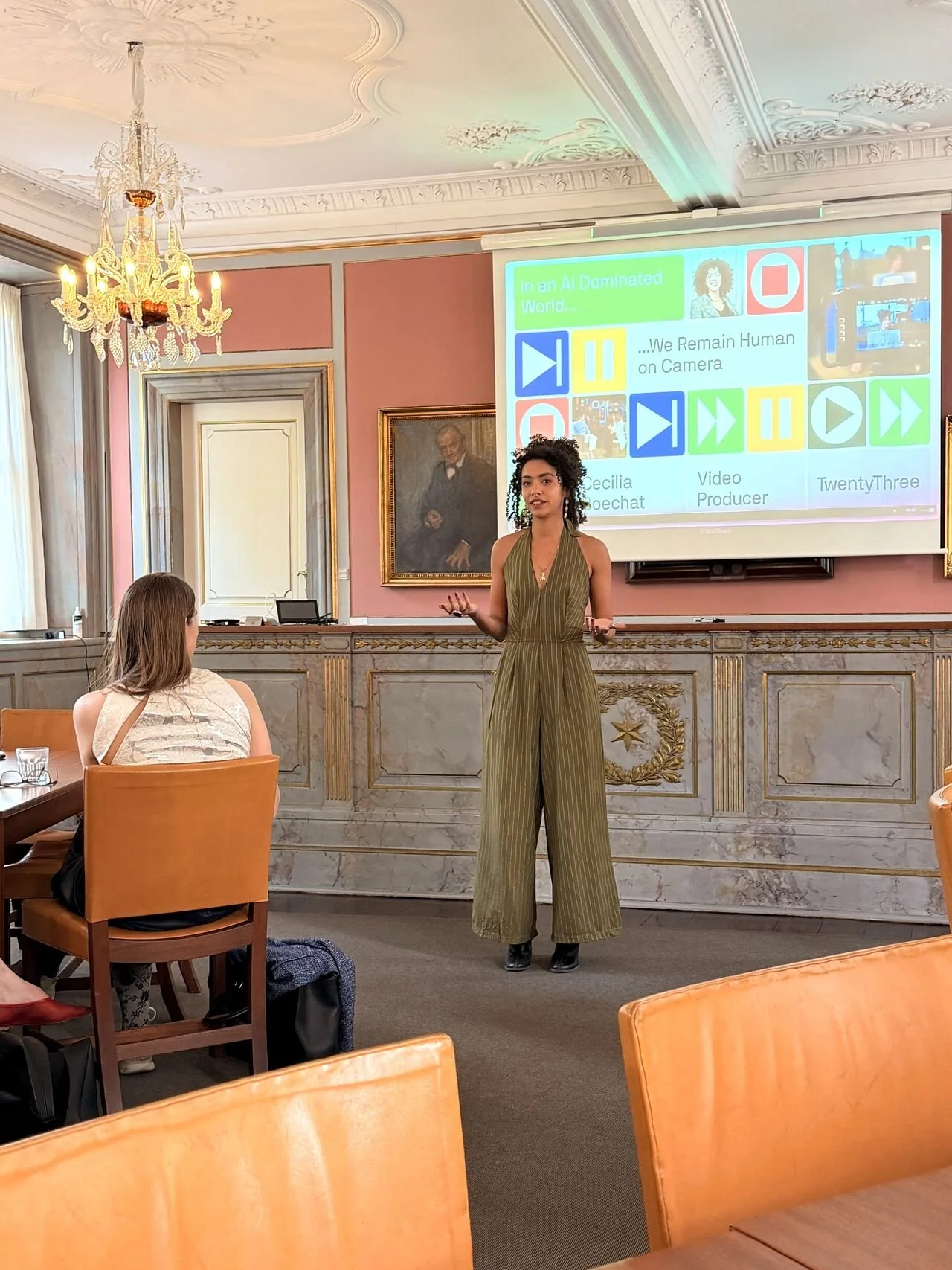
Cecília Boechat from TwentyThree speaking about video and AI at our annual summer meeting
Beyond our own conferences, another highlight of the past few months was the annual summer meeting at the University of Copenhagen. This year, it grew into an international gathering centred on an afternoon of shared learning. As Cecília Boechat from video firm TwentyThree wrote afterwards:
I have mixed feelings about AI, and yesterday's Boye & Company summer event proved I'm not the only one. The elephant in the room finally got addressed.
Her reflection captured the value of the afternoon: uncertainty about AI was treated as a legitimate starting point for conversation, rather than something to be edited out.
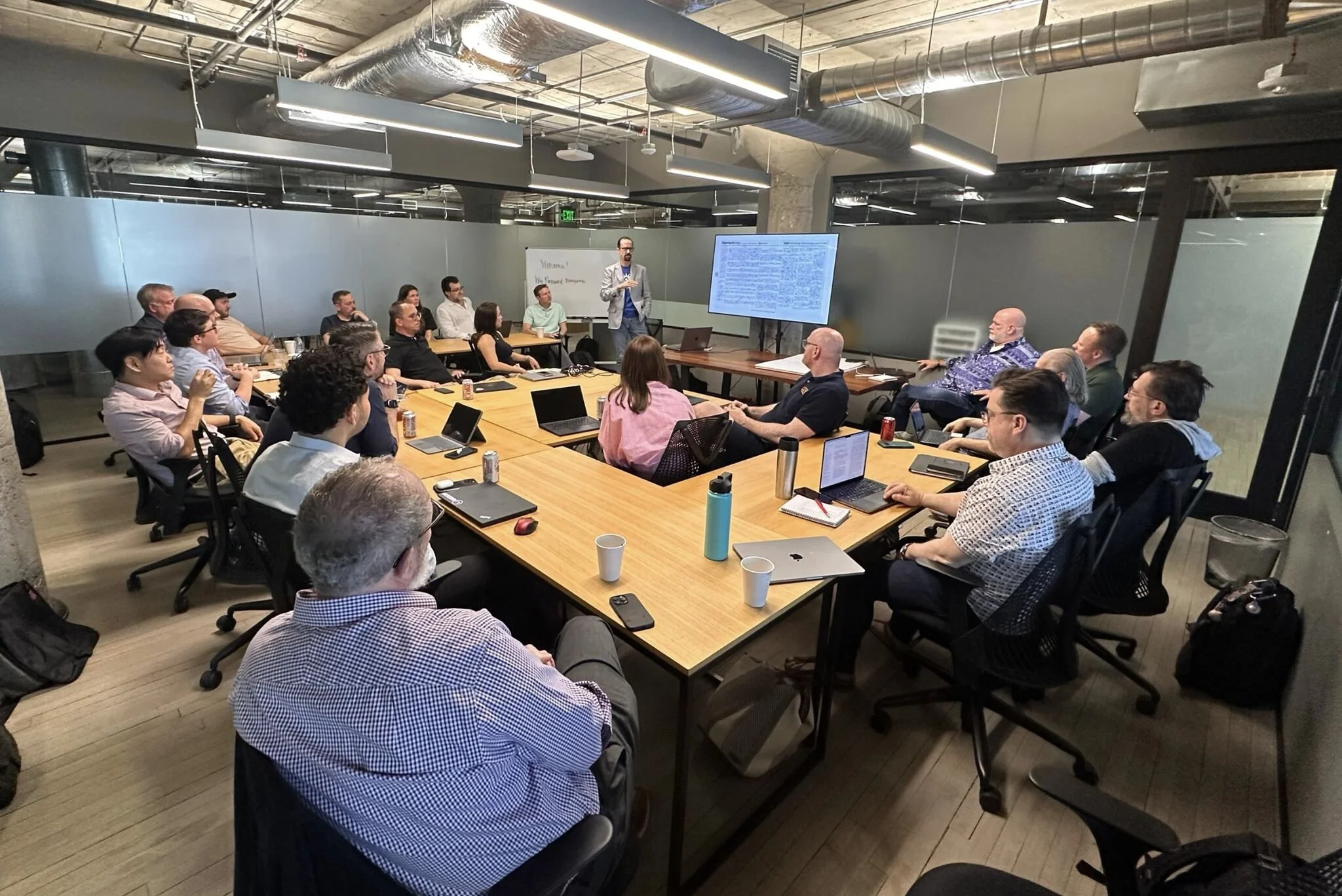
The room was packed when we met in Atlanta in May. Read more: Atlanta conversations on digital experience leadership
In North America, we continued to welcome new members. A large meeting in Atlanta alongside the TYPO3 North American Summit showed how far the community has come since we first gathered there last year.
We also began new activities in France and Spain and welcomed members from Hungary, Italy, Montenegro and Spain, where our community is only beginning to take root.
Bringing together people from different organisations, countries and professional backgrounds also makes it harder for the official version of reality to go unquestioned. A community naturally becomes more valuable as it grows, but growth of this kind matters for reasons beyond numbers. No single organisation sees the entire landscape. Analysts, vendors and consultants may recognise broad patterns, while practitioners understand the constraints that determine what can actually be done. The value comes from allowing these different forms of knowledge to meet without requiring one of them to dominate.
Communities are built through continuity
Meaningful communities are built gradually. They grow when people return, contribute honestly and make room for perspectives beyond their own. A single strong meeting can create momentum, but continuity changes the quality of the conversation. Participants no longer need to establish the full context each time. They remember earlier questions, notice what has changed and can ask what happened after the previous meeting.
Peer group leaders play a particularly important role in creating that continuity. They do more than prepare agendas or facilitate meetings. They notice where a conversation needs more time, invite quieter perspectives into the room and help establish the trust that makes candour possible. Perhaps most importantly, they care about what happens between meetings, when people change roles, earn promotions, navigate reorganisations or encounter the inevitable complications of working life.
A special thank you to the peer group leaders who made those conversations possible this past quarter: Andrius Knispelis, Brian Tomlinson, Christian Paredes, Jörg Schäffer, Julian Mills, Kristina Larsen Brink, Mark Demeny, Matt Garrepy, Matthew McQueeny, Simon Jones, Thorsten Jonas and Tina Schmechel.
Behind the scenes, this was also a period of change for Boye & Co. After 13 years, Anders Skjønnemann Hansen moved on to his next chapter. Much of the practical work that allows a community to gather is largely invisible: finding venues, coordinating dates and making sure each meeting actually happens. Anders helped build the structures behind much of what we do, and I remain deeply grateful for his contribution over the years.
We also welcomed three new colleagues: Emma Elaine Brown in finance and operations, Rostislava Kenebas working with groups and digital, and Peter Dahlstrøm Andersen as Director of Strategy and Partnerships. Starting something new requires trust on both sides. They have all made a good start, and on a personal level, it has been genuinely refreshing to welcome new colleagues to the team.
Outside perspectives matter
Stepping outside our own events, and a little outside my comfort zone, is always useful. Over the past quarter, that included three quite different gatherings.
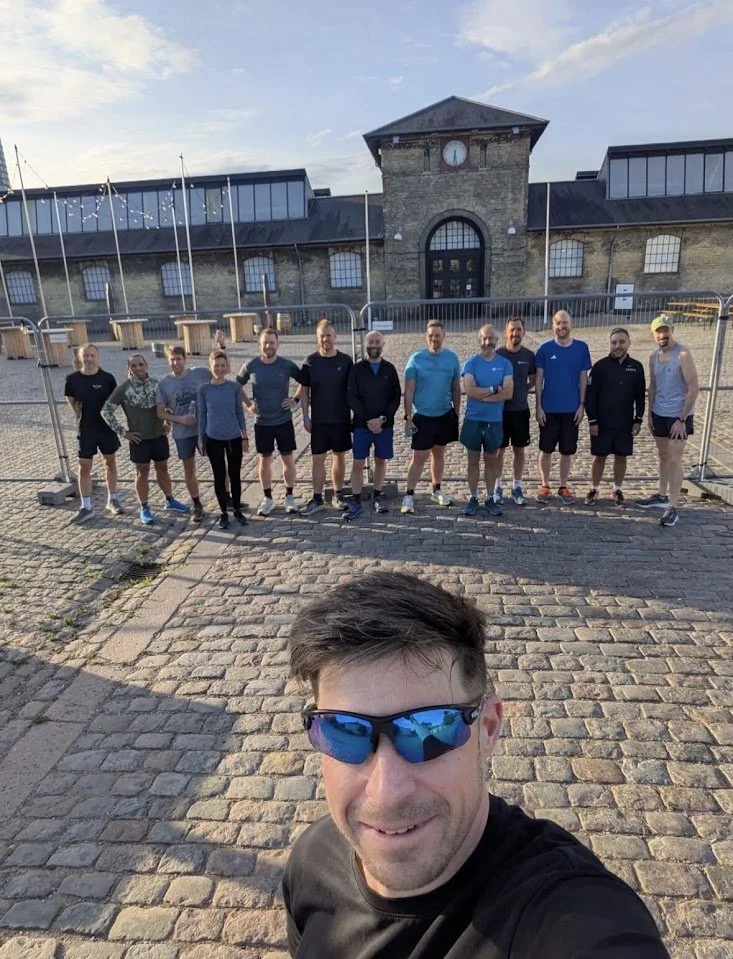
A good group up early in Copenhagen for a morning run before Codegarden. Matt Garrepy is on the far right, with me fourth from the right
Umbraco Codegarden is a large celebration of the self-described “friendly CMS”. Umbraco remains open source, although the company is now owned by Swedish private equity. This year, the annual gathering moved to Copenhagen after many years in Odense. It was impressive to see how the community has retained its quirkiness while Umbraco, as a company, has moved from early caution around AI towards actively embracing it.
Sitecore Silver, held in Tivoli Gardens to celebrate the company’s 25th anniversary, was a worthy celebration of a CMS vendor that began in Denmark and has since travelled a remarkable distance. It was good to reconnect with old friends and members from the years when Sitecore was still Danish. The event also offered a window into another vendor navigating growing complexity and changing market dynamics. In fact, there is no obvious comfort zone anywhere in the CMS market right now.
Further reading on CMS Critic: How to Thrive at 25: As Sitecore Charts an AI Future, Community Remains its Greatest Asset
The quarter ended, as tradition now has it, at Web Summer Camp in Opatija, organised by our Croatian friends at Netgen. Bringing 200 digital leaders together on the Adriatic coast for a few days is impressive. It is a slower kind of conference, built around practitioners comparing experiences and exploring questions that do not come with a vendor roadmap. Its speakers consistently bring new insights, and it was also a great pleasure to moderate the first day of the Business/Founders track.
Different communities may use different language and technologies, yet many of the underlying questions are remarkably similar. Spending time in these communities provides perspective on our own work. It also creates opportunities to meet brilliant minds willing to share not only what worked, but what they are still trying to understand.
A final thank you to everyone who hosted, spoke, contributed and showed up. To the organisations that opened their doors, the participants who shared what was really happening inside their teams, and those who did the quiet work of bringing people together: thank you. It is noticed, and it genuinely makes a difference.
Soon, it all starts again with CMS Connect 26 in Montréal, followed by New York City meetings for our new AI Transformation Leadership group, hosted by Joe Toppe, and our Product Leadership group. Then the pace picks up for a busy autumn across the community.
Perhaps the work ahead begins by making more room for people to move beyond polished answers and say something real.
Whether you are currently part of our community, have been in the past or simply cross paths with us from time to time, I hope to see you somewhere along the way, in person.
PS: I highly recommend The Things We Never Say. I picked it up at Toronto Pearson Airport before flying home to Aarhus
PPS: At the end of March, before the Easter break, I reflected on the previous quarter in From change fatigue to complexity fatigue