
By Janus Boye
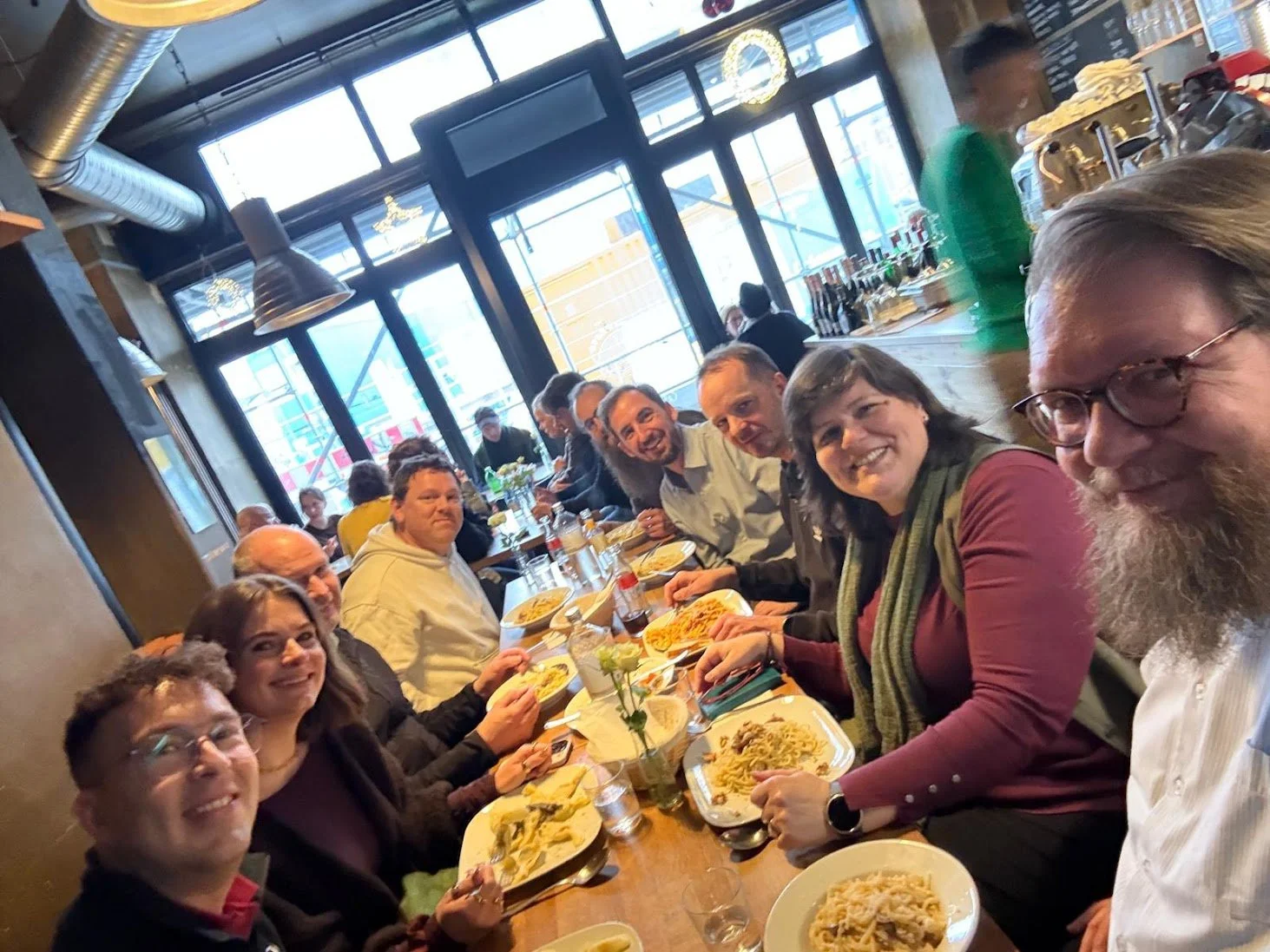
Lunch after the product managers peer group meeting in Hamburg. Morten Elvang joined us from Copenhagen as a guest speaker and Florian Keitgen from B13 was among the new participants in the group
A few themes kept resurfacing this quarter, across conversations, conferences, and member calls.
AI and digital sovereignty stand out as areas where organisations are willing to invest significantly. Budgets are being found, and in some cases expanded, as decisions, discovery, and web traffic patterns begin to shift. Some of this is already visible in how AI is changing the employee experience and in the growing attention to the invisible users shaping digital systems.
Digital sovereignty has moved from slogan to strategy. In 2026, it is no longer about abstract positioning, but about deliberate choices in procurement, governance, cost, and collaboration.
What many teams are dealing with is not change in isolation, but accumulated complexity. Tools, processes, and expectations have been layered over time, often without being removed again. The question is increasingly where to simplify.
All of this has played out over a packed quarter, from early January at our Kickoff in Florida through to a long stretch of peer group meetings across North America and Europe, and conversations that continue to evolve across the wider ecosystem.
Taken together, these signals point to a shift from managing change to managing complexity.
From change to complexity
Across many of these conversations, the nature of the challenge has shifted.
Change is no longer the primary issue. Most organisations have adapted to a steady flow of new tools, platforms, and expectations. The strain comes from how these layers interact.
Technology stacks expand. Governance models become more complex. Responsibilities are distributed across teams, often without being clearly redefined. What looks like progress in isolation can create friction when combined.
This is where complexity begins to slow things down. Decisions take longer. Ownership becomes less clear. Effort increases, without always improving outcomes.
The question that keeps returning is not what to add next, but what to simplify, remove, or rethink.
At the same time, a smaller group of vendors, agencies, and analysts seem to be finding ways to grow in this environment. They are not avoiding complexity, but working more deliberately with it.
The conversation turning inward
There is less focus on launching new initiatives, and more attention on how organisations actually work. Where responsibility sits. How decisions are made. How leadership adapts when the ground keeps shifting.
In practice, this often surfaces in discussions about governance and coordination. Who owns what. How teams align. Where bottlenecks form.
Content is part of this as well. It rarely works as a standalone discipline, and instead depends on how the organisation is structured. Many teams are still trying to make content work within systems that were not designed for it.
This shift towards organisational questions reflects a broader recognition. Technology alone does not resolve complexity. It often exposes it.
The people behind the work
What stays with me is simple: The people behind it.
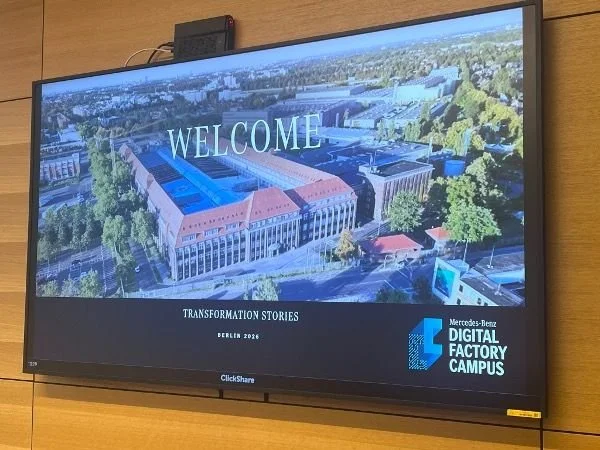
Across the quarter, we were welcomed into a wide range of organisations, including Adobe, Assemblin, BBL, Danish Red Cross, Fielmann, Folketingets Ombudsmand, Havas, JYSK, Lynfabrikken, Mercedes Benz, MSQ DX, Muskelsvindfonden, NKT, NTT, Rambøll, Sydbank, Tangerine and TYPO3.
These settings shape the discussions in important ways. They ground the discussions in real organisational contexts, with different constraints, priorities, and levels of maturity.
Across peer groups, a small number of individuals carry a large part of the conversation. They bring examples, share challenges openly, and create continuity between meetings.
The real progress happens less in formal presentations, and more in the exchange between peers dealing with similar constraints.
A sincere thank you to the peer group leaders who continue to grow this community, not just in numbers, but in depth and generosity:
Anja Saabye, Brian Tomlinson, Jörg Schäffer, Kristina Larsen Brink, Mark Demeny, Matthew Garrepy, Matthew McQueeny, Simon Jones, Thorsten Jonas and Volker Graubaum.
And to my colleague Anders S. Hansen, who quietly keeps everything moving, from securing venues to making sure each gathering happens.
In a more complex environment, no single organisation has the full picture. Insight is distributed. Experience is uneven. The ability to compare notes, test ideas, and learn from others becomes more important.
That is the role these peer groups increasingly play. They are not just forums for discussion, but part of how organisations make sense of what is changing.
Stepping outside
I made time to step outside our own events, and outside my comfort zone.
At Ibexa Summit, Bertrand Maugain, CEO at Ibexa, framed the event around a shift from composition to orchestration. The emphasis moves away from assembling components towards coherence, continuity, and value over time. That perspective aligns closely with many of the conversations from the quarter, particularly in a European context where regulation, trust, and long-term relationships shape technology decisions as much as, if not more than, feature velocity. It reinforced how these questions are being worked through inside organisations, not just across them.
CloudFest offered a broader view still. A larger, more commercial setting, with a different mix of vendors, platforms, and priorities. AI and digital sovereignty were just as present, but framed through infrastructure, hosting, and scale.
What stood out was how quickly AI is moving into operational reality. Less about experimentation, more about integration into products, services, and hosting environments. At the same time, digital sovereignty showed up in discussions around data location, control, and dependency, often driven by regulation as much as strategy.
This shifts the nature of the conversation. Questions that might start at the application or experience layer increasingly connect back to infrastructure decisions.
Curated environments become more valuable in this context. Smaller conversations, focused groups, and trusted networks help filter what matters and connect it back to real decisions.
Looking ahead
CMS Summit 26 in Frankfurt in May is just ahead, followed by UX Connect 26 in June.
The pace is unlikely to slow. The question is how to work within the complexity that continues to build, and how to decide, deliberately, what to simplify.
That work continues.